
This isn't a "nice-to-have" optimization problem anymore. It's survival.
This guide covers the strategies actually moving the needle: robotic automation, smarter staffing, predictive maintenance, lean process discipline, and real-time data tracking. None of these work in isolation. Small gains across all five compound into something much bigger than any single fix.
Key Takeaways
- Efficiency means getting more output from the resources you already have
- Robotic machine tending, predictive maintenance, and staffing flexibility deliver the fastest returns
- Track 3-5 KPIs tied to real pain points instead of drowning in dashboards
- Lean tools like VSM and Kanban expose waste that's often invisible day-to-day
What Does Manufacturing Efficiency Actually Mean?
Efficiency and productivity get used interchangeably, but they measure different things. According to NIST, productivity is output per input: more parts per labor hour. Efficiency asks a sharper question: could you get the same output using fewer resources?
A plant can be highly productive and still inefficient. Think about a line that's cranking out record volume but burning through excess material, running unnecessary overtime, or generating scrap along the way. High output with wasted resources is productivity without efficiency.
The basic formula:
Efficiency = (Hours of quality productive work ÷ Total available hours) × 100
Example: A shift runs 8 hours. Machine downtime, changeovers, and rework eat up 90 minutes. That leaves 6.5 hours of quality output — an 81% efficiency rate.

Why It Matters Now
The labor equation is getting harder, not easier. Deloitte and The Manufacturing Institute project the industry will need 3.8 million new employees between 2024 and 2033, with as many as 1.9 million of those roles potentially going unfilled.
Combine that with rising material costs, and the math only works if manufacturers extract more value from the resources they already have.
Invest in Robotic Automation for High-Impact Processes
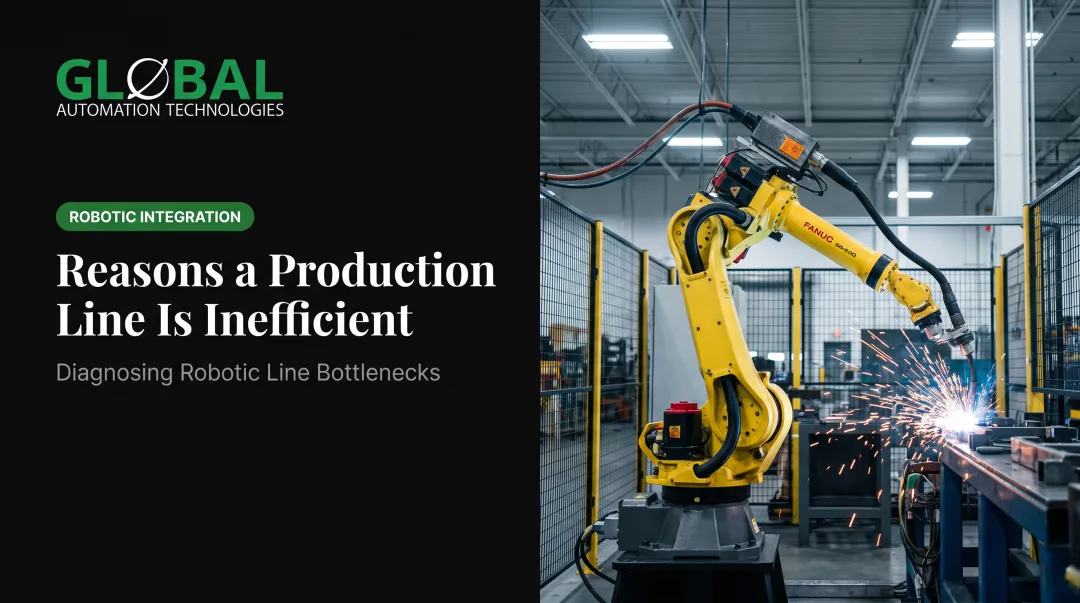
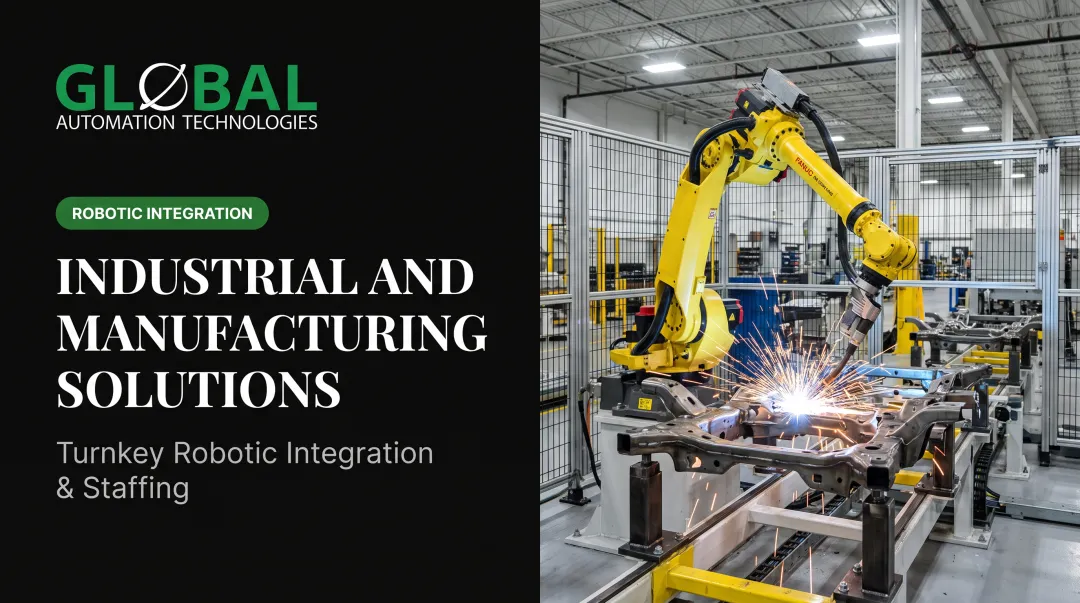
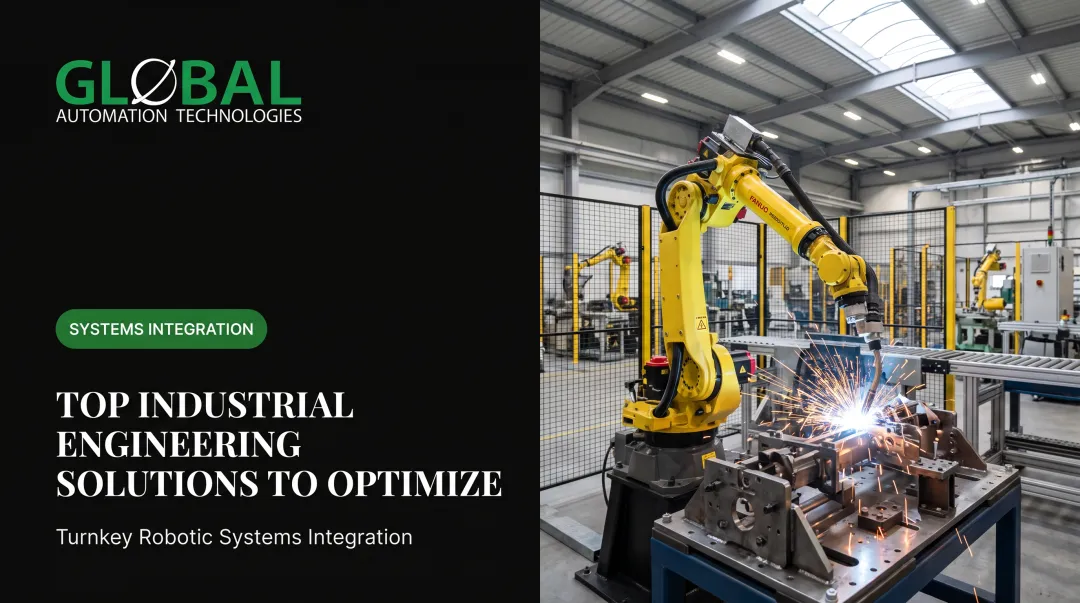
Repetitive tasks (machine tending, material handling, dispensing) are the lowest-hanging fruit for automation. They tie up skilled workers on work a robot can do more consistently, freeing your best people for problem-solving that actually needs a human.
Machine Tending: Keep Spindles Running
Robotic machine tending keeps CNC and injection molding equipment running through breaks, shift changes, and overnight hours. No operator means no idle time between load cycles.
These cells typically pay for themselves in 12 to 18 months, according to GLOBAL Automation Technologies. The economics improve when a cell:
- Replaces substantial direct labor hours
- Supports multiple shifts or unattended overnight runs
- Serves high enough volume to fully use added machine capacity
Painting and Dispensing: Precision Over Guesswork
Robotic painting systems hold tighter tolerances than manual application. GLOBAL's systems, for instance, hold film build within specification, cutting overspray and reducing material waste per part.
Robotic dispensing adds sub-millimeter path accuracy with controlled flow rates, so beads land exactly where they should: no over-application, no missed spots.
There's a safety angle too: automating these processes removes operators from isocyanate, VOC, and overspray exposure entirely.

AI Simulation Speeds Everything Up
AI-assisted simulation lets engineers model and test robot programs before a single line of code touches the floor. That shifts programming timelines from weeks to days, cutting startup risk and commissioning downtime.
GLOBAL's turnkey process covers layout, programming, build, installation, commissioning, and training, so integration stays under one scope from day one.
One caveat: not every process deserves a robot. Prioritize bottlenecks and hazardous tasks first. That's where automation ROI shows up fastest.
Solve the Talent Bottleneck With the Right Staffing Strategy
The best robotic cell in the world is useless without someone who can program, run, and maintain it. One open programmer or maintenance tech position can stall an entire line.
With over a million skilled roles projected to go unfilled industry-wide, that risk isn't shrinking.
Flexible staffing models solve this without the long hiring cycle:
- Contract — scale technical talent up during a launch or ramp-up
- Contract-to-hire — evaluate fit before committing long-term
- Direct placement — bring permanent expertise in-house
Companies that combine automation solutions, services and technical staffing let manufacturers get the robotic system and the engineers to run it through one relationship instead of juggling vendors. GLOBAL, which holds Level 5 status in FANUC’s Authorized System Integrator program, operates on that model. Roles commonly filled include controls engineers, mechanical designers, PLC programmers, and project managers.

Cross-training existing staff on new equipment is a lower-cost complement here. It won't replace specialized hires, but it builds redundancy so one vacancy doesn't halt production.
Commit to Predictive and Preventive Maintenance
Unplanned downtime is one of the most expensive things that can happen on a production floor. Reactive repairs almost always cost more than scheduled work. The extras stack up fast:
- Rush parts
- Overtime labor
- Lost production time on top of the repair itself
AI-driven predictive maintenance flags equipment issues before they become failures. Rather than waiting for a breakdown, health assessments monitor equipment behavior and surface warning signs early, extending asset life and protecting maintenance budgets.
Build your maintenance calendar around floor data, not fixed intervals. A machine running three shifts wears differently than one running one shift. Treating them identically wastes maintenance resources on one and under-maintains the other.
ABB's 2023 global survey found unplanned outages cost roughly $125,000 per hour, with over two-thirds of businesses hit at least monthly. Stay purely reactive, and that scale of loss is on the table every month.
Apply Lean Principles to Eliminate Waste
Lean tools don't require new equipment. They require honest observation of where time and material actually go.
Value stream mapping (VSM) diagrams every step in your production flow — material and information alike — from order to delivery. According to the Lean Enterprise Institute, teams map the current state first, then design a future state that strips out non-value-adding steps.
Kanban works on a pull principle: downstream operations signal upstream what's needed, and when. This prevents overproduction and keeps excess inventory from piling up and driving carrying costs.
Beyond mapping and pull systems, walk the floor with fresh eyes:
- Measure actual travel distance between production steps
- Flag redundant handling or double-touching of parts
- Look for queue points where work waits on the next station
NIST's Manufacturing Extension Partnership reports over 80,000 lean projects have generated more than $18.8 billion in documented manufacturer savings . Those gains come from real plant floors, not slide decks.

Use Real-Time Data and KPIs to Drive Decisions
You can't fix what you can't see. Real-time data replaces guesswork with evidence about where bottlenecks actually live.
Core KPIs worth tracking:
- OEE (Overall Equipment Effectiveness) : combines availability, performance, and quality into one score
- Cycle time : actual time to complete a part or process
- Throughput : output rate against rated capacity
- First pass yield : percentage of units that meet quality standards without rework
- Labor efficiency : output relative to labor hours invested
Don't try to track everything on day one. Start with 3-5 KPIs directly tied to your current pain points. If downtime is your biggest issue, prioritize OEE and availability. If quality complaints are climbing, focus on first pass yield.

Frequently Asked Questions
What are the 5 KPIs for manufacturing?
The core five are OEE, cycle time, throughput, first pass yield, and downtime. Together they measure equipment effectiveness, production speed, output rate, quality, and lost production time.
What does manufacturing efficiency mean?
It's the optimal use of time, materials, and labor to produce output with minimal waste. It's distinct from productivity, which measures raw output volume regardless of resource use.
How can I improve my manufacturing productivity?
Focus on worker engagement, automating repetitive tasks, and real-time data monitoring. These three levers typically deliver the fastest visible improvement.
What is the difference between manufacturing efficiency and productivity?
Productivity measures how much you produce. Efficiency measures how well you used your resources to get there. A plant can boost one without improving the other.
How long does it take to see ROI from manufacturing automation?
Machine tending and similar robotic cells often pay back within 12 to 18 months, depending on labor costs, shift structure, and production volume.
What is the first step to improving manufacturing efficiency?
Run a full workflow audit covering people, processes, and equipment before making any changes. You need a clear baseline before you can measure improvement.