
Automation isn't a futuristic concept for Montana—it's a practical, modern tool to amplify the state's industrial strengths and solve its specific operational hurdles. Robotic systems can handle repetitive, dangerous, or physically demanding tasks, allowing existing workers to focus on higher-value roles while boosting throughput, quality, and safety. This article explores Montana's industrial landscape, identifies key sectors where automation delivers the most impact, details the robotic solutions that fit these environments, and provides a guide for selecting the right integration partner to bring automation to your facility.
Key Takeaways
- Montana's 63% labor-force participation and 32% manufacturer worker shortage make automation essential to scale without scarce labor
- Machine tending, robotic welding, and material handling cells often pay for themselves in 12 to 24 months
- Ag, mining, heavy equipment, and lumber can adopt robotic solutions proven in automotive and industrial plants
- Choose partners with turnkey integration, technical staffing, AI-assisted simulation, and cross-industry experience
The Industrial Landscape of Montana: Challenges and Opportunities
Montana manufacturers face a persistent labor challenge. The state's labor-force participation rate stands at 63%, and with 22.2% of residents aged 65 or older, retirements continue to pressure the available workforce.
In 2024, 32% of surveyed Montana manufacturers reported significant worker shortages, with worker retention and missing expertise topping the list of staffing problems. For manufacturers spread across a vast geography, often in remote towns far from technical training centers, finding skilled welders, machinists, and CNC operators is an uphill battle.
Global competition compounds these challenges. Montana's traditional industries—agriculture, mining, and lumber—face volatile commodity prices, rising input costs, and pressure to deliver consistent quality at competitive prices. In 2024, wheat prices dropped from $8.80 to about $5.70 per bushel, and Montana mining GDP fell more than 14%.
To remain viable, Montana businesses must increase efficiency, tighten quality control, and cut operational costs without adding headcount they can't find or afford.
Automation gives Montana businesses a way to raise output without depending on a large local labor pool. Robotic systems help shops:
- Run production around the clock with repeatable precision
- Free existing employees for setup, oversight, quality checks, and process improvements
- Scale output and hit delivery commitments from towns under 5,000 people
- Compete on quality and cost at a national or global level

Key Montana Industries Primed for Automation
Agriculture and Food Processing
Montana agriculture generated steady growth, averaging 1.7% annually since 2020, but volatile prices and production volumes demand higher efficiency. Automation can improve efficiency in ranching and farming operations through:
- Automated harvesting: Vision-guided apple-picking robots have demonstrated 100% fruit-detection accuracy, with picking rates around 70% in research trials
- Robotic sorting and packaging: USDA-backed systems inspect each truckload with non-destructive imaging, grading internal quality and sorting for packaging without human contact
- Automated feeding systems: Midwest dairy farms using robotic feed delivery averaged 10.7 deliveries per day, with more consistent bunk nutrition and less manual labor
These systems address Montana's rural labor shortage while delivering consistent output quality that meets buyer specifications.
Mining and Natural Resources
Safety and efficiency drive automation decisions in Montana's mining sector, where work often sits in remote, hazardous environments. Automation removes human workers from dangerous conditions while maintaining or increasing output:
- Autonomous hauling vehicles: Komatsu's FrontRunner fleet has collectively moved 11.5 billion metric tons worldwide, with 290-metric-ton trucks operating in fully autonomous mode
- Automated drilling: Modern systems handle precision drilling with operator oversight from safe, climate-controlled stations
- Automated sorting and processing: Ore-sorting systems use sensors and AI to separate material by grade, reducing waste and improving recovery rates
In FY2025, MSHA reported a fatal-injury rate of 0.0101 per 200,000 hours, a reminder that cutting human exposure to mine hazards remains urgent.
Manufacturing and Heavy Industry
Montana's manufacturing sector generated over $2 billion in labor earnings in 2024, covering wood products, metal fabrication, machinery, and equipment production. Robotic systems fit naturally into these operations:
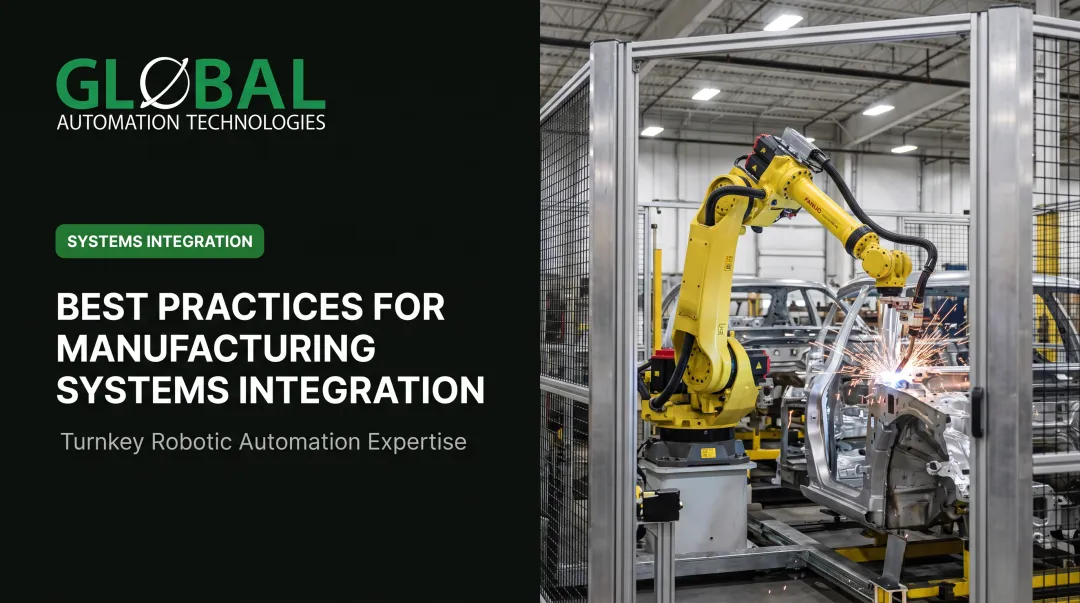
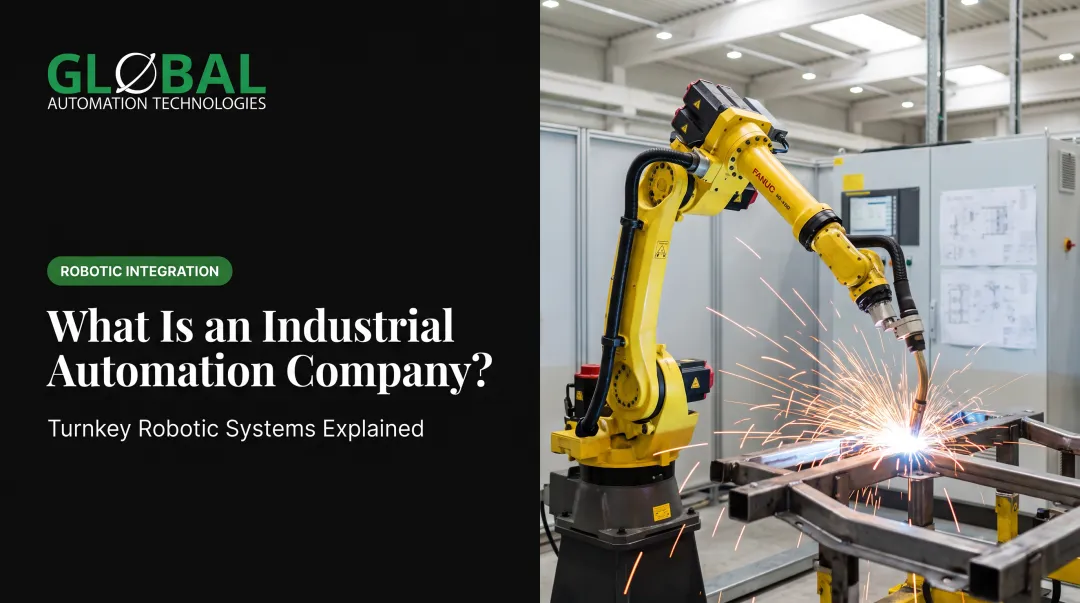
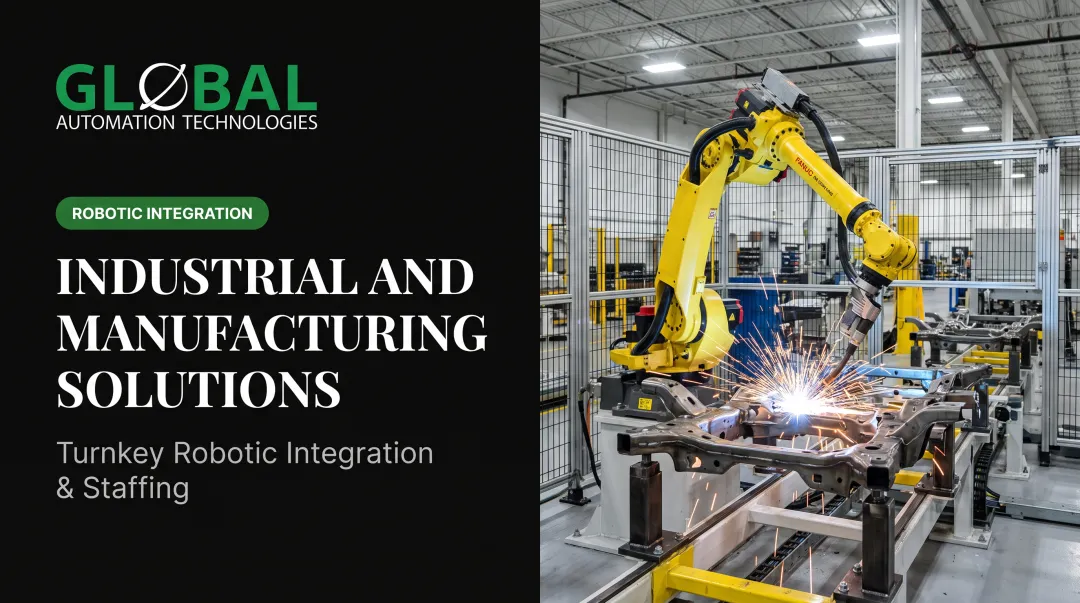
- Robotic welding: Creates stronger, more consistent joints for heavy equipment frames, agricultural machinery, and structural assemblies using FANUC arc and spot welding systems
- Robotic material handling: Safely moves large timber sections, metal plates, and fabricated parts using vision-guided systems that adapt to variable part positioning
- CNC machine tending: Runs "lights out" shifts, loading and unloading parts automatically to maximize spindle utilization and increase output without adding operators
Northwest Montana wood products alone employed nearly 1,200 workers with $82 million in wages in 2024—scale that rewards gains in weld quality, handling speed, and unattended spindle time.

Warehousing and Logistics
Montana's vast geography requires efficient distribution networks. Weyerhaeuser opened a distribution center in Billings in January 2026, and DSG added a 60,000-square-foot facility in Butte in 2024, signaling growing demand for warehouse automation:
- Autonomous Mobile Robots (AMRs): Move loads dynamically without fixed conveyor paths, adapting to changing inventory layouts and order priorities
- Automated Storage and Retrieval Systems (AS/RS): Maximize vertical storage density and speed retrieval for high-throughput operations where floor space is limited
These systems reduce reliance on manual forklift operators and pickers, roles that are difficult to staff in remote locations.
Core Automation Solutions for Montana's Industrial Needs
Montana manufacturers need higher spindle time, consistent quality, and relief from hard-to-fill production roles. These core robotic solutions target the bottlenecks most common in the state’s industrial shops.
Robotic Machine Tending for CNC Operations
Machine tending addresses one of Montana's most common manufacturing bottlenecks: keeping CNC machines running when operators are unavailable or managing multiple machines. FANUC M-20 robots handle payloads of 12–35 kg with reach up to 3.1 meters, while M-710 models handle 12–70 kg and can serve high-mix, low-volume work.
Benefits include:
- Increased spindle utilization by automating load, unload, door operation, and cycle start
- Extended unattended operation during second and third shifts
- One operator overseeing multiple machines instead of standing at one station
- Typical ROI of 12–18 months, depending on part complexity and labor savings

A Montana machine shop could run two or three CNC lathes overnight with a single robot cell, producing parts around the clock without hiring night-shift operators.
Robotic Welding (Spot and Arc)
Robotic welding delivers the repeatable, high-quality joints required for heavy equipment, agricultural machinery, and metal fabrication. FANUC R-2000 spot welding robots handle payloads of 100–270 kg for large weld guns and structural assemblies, while the M-710iC/12L arc welding robot supports MIG, TIG, plasma, and laser processes.
Key advantages:
- Consistent weld penetration, bead size, and joint strength on every part
- Faster cycle times and higher throughput compared to manual welding
- Removes operators from hot, spark-filled environments
- Optional vision systems for seam location, adaptive path correction, and weld-quality verification
For a fabricator building frames for agricultural equipment, robotic welding means every weld meets spec, every time. That consistency cuts rework and warranty claims.
Automated Dispensing Systems
Dispensing systems apply adhesives, sealants, gaskets, coatings, and protective films with precision and repeatability. Applications relevant to Montana include:
- Sealing cab assemblies on heavy equipment
- Applying bed liners or anti-chip coatings to utility vehicles
- Bonding composite panels in recreational vehicles
- Protecting metal surfaces with cavity wax or underbody coatings
FANUC M-710 robots deliver consistent bead width and placement, reducing material waste and eliminating operator exposure to hazardous chemicals. Real-time vision inspection and flow monitoring catch defects before parts move downstream.
Robotic Material Handling
Material handling—pick-and-place, palletizing, part transfer, and conveyor integration—is physically demanding, repetitive, and hard to staff. Vision-guided FANUC systems adapt to variable part positioning, reducing the need for precise upstream fixturing.
Applications include:
- Palletizing bagged feed, lumber bundles, or finished goods for shipping
- Loading and unloading parts from CNC machines, presses, or ovens
- Transferring heavy castings or forgings between workstations
- Random bin picking for small parts in high-mix production
These systems run beyond a single shift between scheduled maintenance windows, reduce lifting injuries, and free workers for quality checks, setup, and process optimization.
Advanced Vision Systems for Quality Control
Cognex machine vision systems inspect parts for defects, dimensional accuracy, surface flaws, and component presence at high speed. AI and rule-based models adapt to different inspection conditions, supporting applications such as:
- Weld quality verification in metal fabrication
- Dimension checks on machined parts
- Surface inspection for wood products
- Label and barcode verification before shipping
Vision catches errors during production, not after shipment—reducing scrap, rework, and customer complaints.

The Tangible Benefits of Automation for Your Montana Business
Addressing the Labor Shortage Without Adding Headcount
Automation directly solves Montana's 32% manufacturer-reported worker shortage by re-tasking existing employees to higher-value roles. Instead of standing at a machine loading parts for eight hours, an operator can oversee two or three robotic cells, perform quality checks, adjust programs, and troubleshoot issues.
That shift raises throughput and lets shops scale production without competing for scarce labor in towns where unemployment sits near record lows.
Robotic systems also extend production well beyond a single shift, between scheduled maintenance windows. A CNC shop can run unmanned second and third shifts, producing parts overnight and on weekends without hiring additional operators. This maximizes equipment investment and shortens lead times when customers demand faster turnaround.
Enhanced Worker Safety
Robots take over dangerous jobs, reducing workplace accidents and improving employee morale. Examples include:
- Welding: Removes operators from hot, spark-filled environments with fume exposure
- Material handling: Eliminates repetitive lifting of heavy timber, metal plates, or castings that cause back injuries
- Hazardous spray environments: FANUC robots with intrinsically safe designs keep operators out of booths filled with isocyanates, VOCs, and overspray
While automation introduces new hazards such as unexpected robot contact, proper guarding, risk assessments, and training mitigate these risks. The overall safety profile improves when robots handle the tasks most likely to injure workers.
Improved Product Quality and Consistency
Robots perform tasks with precision every time, reducing human error and minimizing waste. A robotic welder delivers the same arc length, travel speed, and heat input on the first part and the thousandth part. A vision-guided palletizer places every box in the correct position, reducing damage during shipping.
This consistency boosts the reputation of Montana-made products. Customers know they'll receive the same quality in every shipment, reducing returns, warranty claims, and the need for sorting or rework. For manufacturers competing with low-cost imports, consistent quality is a differentiator that justifies premium pricing.
How to Choose the Right Automation Partner for Your Montana Operations
Look for Comprehensive, Turnkey Solutions
Select a partner who manages the entire project lifecycle, from initial design and layout through installation, commissioning, and ongoing support. That matters for Montana manufacturers without large internal engineering teams or the bandwidth to coordinate multiple vendors.
A turnkey provider should deliver:
- Automation assessment and feasibility study
- Conceptual layout and simulation
- Controls engineering and programming
- Safety guarding and risk assessment
- Installation, commissioning, and production launch
- Operator and maintenance training
- Technical documentation and spare-parts support
Verify that the integrator takes responsibility for the robot, end-of-arm tooling, fixtures, conveyors, upstream and downstream interfaces, and post-startup troubleshooting. One point of contact simplifies communication and accountability.

Prioritize Partners with Both Integration and Staffing Capabilities
Installing a robotic system is only half the challenge. You also need skilled personnel to run and maintain it. Montana's labor market makes it difficult to find controls engineers, robot programmers, and PLC technicians locally.
A partner who offers both robotic systems and technical staffing gives you one contact for the machine and the people who run it. GLOBAL Automation Technologies, a Level 5 FANUC Authorized System Integrator, built its model around this approach: the engineering services delivers turnkey robotic systems, while the technical staffing supplies controls engineers, commissioning technicians, and project managers on contract, contract-to-hire, or direct-placement terms.
You can launch a new cell with a trained engineer on-site to program, troubleshoot, and optimize it—no job ads, interview loops, or relocating candidates to Montana.
Ask About Advanced Simulation and AI Tools
Modern engineering tools accelerate implementation and reduce risk. Partners using AI-assisted simulation can design and validate a robotic cell virtually, cutting programming time from weeks to days. ABB's RobotStudio AI Assistant, for example, provides real-time programming guidance and automatic path planning, speeding setup and reducing energy and waste.
Ask potential integrators:
- Do you simulate robot programs before installation?
- Can you model cycle times, reach, and interference digitally?
- How do you validate safety zones and emergency stops before going live?
- Do you use AI tools for predictive maintenance or process optimization?
Pre-deployment validation catches problems in the office, not on your production floor, reducing commissioning time and minimizing disruption.
Verify Cross-Industry Experience
Solutions from one industry can often be adapted to solve problems in another. A partner with experience in automotive, aerospace, heavy equipment, and agriculture brings a wider range of proven ideas to the table.
For example:
- Automotive-frame welding cells adapted for agricultural equipment subassemblies
- Appliance material-handling systems reused to palletize bagged feed or lumber bundles
- Aerospace vision-guided part ID applied to high-mix CNC machine tending
Ask integrators for case studies or references from industries adjacent to yours. Adjacent-industry work usually surfaces proven layouts faster than starting from a blank slate.
Frequently Asked Questions
How can automation help with the labor shortage in Montana?
Automation handles repetitive and dangerous tasks so you can scale production without hiring more people. Existing staff oversee robotic cells, run quality checks, and handle setup—higher-value work that keeps output growing even when candidates are scarce.
What is the typical ROI for a robotic automation project in manufacturing?
Many applications like machine tending see payback in 12–18 months through higher throughput, lower labor costs, and better quality. Simpler cobot installs often pay back faster; complex integrated systems may take longer.
Are automation solutions affordable for small to medium-sized businesses in Montana?
Yes. Cobots, pre-engineered cells, and single-machine tending systems make automation more accessible than ever. A feasibility study can pinpoint your highest-ROI application and a phased plan that spreads capital costs over time.
What are the first steps to introducing automation into my facility?
Start with an automation assessment covering bottlenecks, cycle times, facility constraints, and pilot ROI. Partner with an experienced integrator and automate one cell first to reduce risk and build internal expertise.
Which industries in Montana are using automation the most?
Manufacturing, agriculture, and warehousing lead adoption for welding, palletizing, machine tending, sorting, and inspection. Heavy equipment, metal fabrication, and food processing are especially well suited given their repetitive, labor-intensive work.
Do I need to hire new staff to manage automated systems?
Some upskilling is needed, but a strong integration partner trains your operators and maintenance staff. Partners with staffing divisions, like GLOBAL Automation Technologies, can also supply controls engineers, robot programmers, and technicians so you don't have to recruit in a tight market.