
Introduction
Tighter tolerances. A shrinking skilled workforce. Pressure to run lines beyond a single shift, closer to lights-out between scheduled maintenance windows. These three forces are reshaping how manufacturers think about quality control on the plant floor.
The labor piece alone is significant. Deloitte and The Manufacturing Institute project the U.S. may need 3.8 million net new manufacturing workers between 2024 and 2033, with as many as 1.9 million of those roles potentially going unfilled if the skills gap isn't addressed (Deloitte Insights, 2024).
Vision systems often get pitched as a technical spec. Their real value shows up in scrap rates, cycle times, and downtime logs. This guide breaks down what advanced vision systems actually do inside a robotic cell—and why manufacturers are adopting them now, not only how the technology works in theory.
Key Takeaways
- Vision systems let robots see, verify, and adapt in real time, catching problems before they become scrap.
- Gains: earlier defect detection, flexible robotic guidance, tighter dispense and coating control.
- First-pass yield, cycle time, and material cost move; abstract quality scores do not.
- Pair the right vision hardware with engineers who can tune it inside a working cell.
What Is an Advanced Vision System?
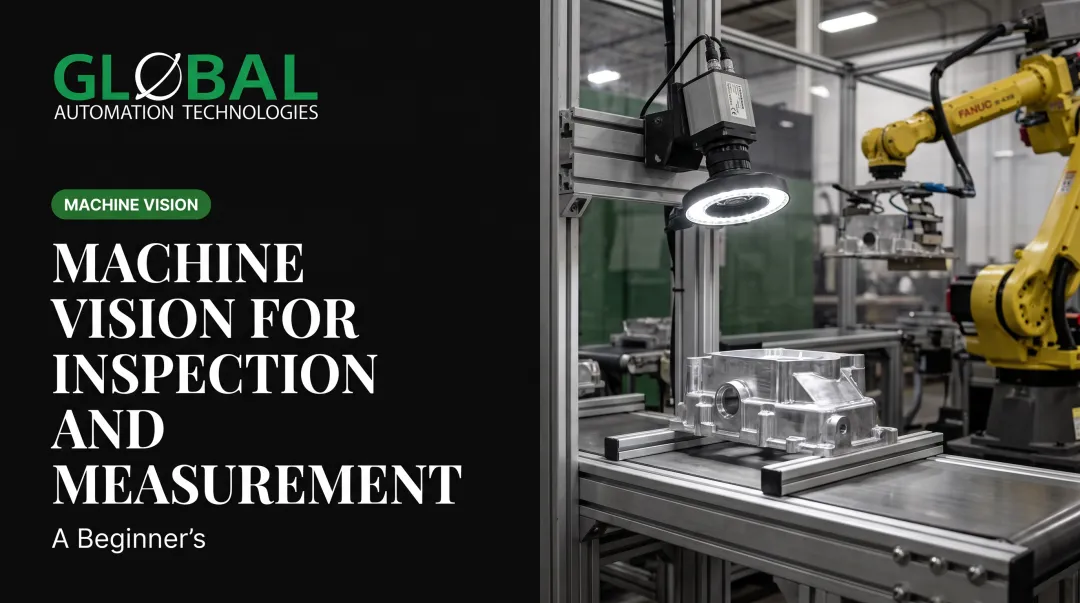
An advanced vision system is cameras, lighting, and software that let a robot or production line "see" a part, check it against a standard, and decide on the spot.
Inside a manufacturing cell, that typically means:
- Robotic guidance and pick-and-place: locating parts that aren't in a fixed position
- Weld seam tracking: following joint geometry in real time
- Dispensing and bead inspection: verifying adhesive or sealant application
- Paint and coating guidance: keeping the spray path repeatable, with film-build inspection handled downstream
- Part presence checks: confirming a component is there before the next step fires
Imaging alone isn't the goal. Vision gives the automated system judgment to catch problems a human inspector would spot too late—or miss entirely.
Key Advantages of Advanced Vision Systems
The advantages below tie directly to metrics manufacturers already track daily: scrap, cycle time, uptime, and material cost.
Real-Time Defect and Quality Detection
Instead of waiting for an end-of-line check or a manual spot inspection, vision systems inspect parts, welds, and dispensed beads as they're produced.
Take robotic dispensing as an example. In seam sealing, structural adhesive bonding, or PurFoam cavity fill applications, an inline system combining vision inspection with flow monitoring can flag:
- Bead width variation (too narrow or inconsistent)
- Placement errors along the programmed path
- Skips or missed spots that break continuity
- Voids from under-fill, particularly in foam applications
- Over-application that can damage parts through over-packing
Why this matters: A defect caught at the dispensing head costs far less to fix than the same defect found at final assembly, or after the part ships.
Quality frameworks from ASQ separate "internal failure" costs (defects caught in-house) from "external failure" costs, which climb once a defect reaches the field (ASQ Cost of Quality). Catching the problem early keeps it in the cheaper category.
There's also a speed benefit for operators. They don't wait for a batch to finish before learning something went wrong. The line tells them in real time.
KPIs impacted: scrap rate, first-pass yield, rework hours, warranty and return rate.
When it matters most:
- High-volume production runs
- Tight-tolerance components like EV battery packs and safety-critical assemblies
- Processes using hazardous materials such as isocyanates or VOCs, where manual inspection exposure is limited
Improved Robotic Guidance and Precision
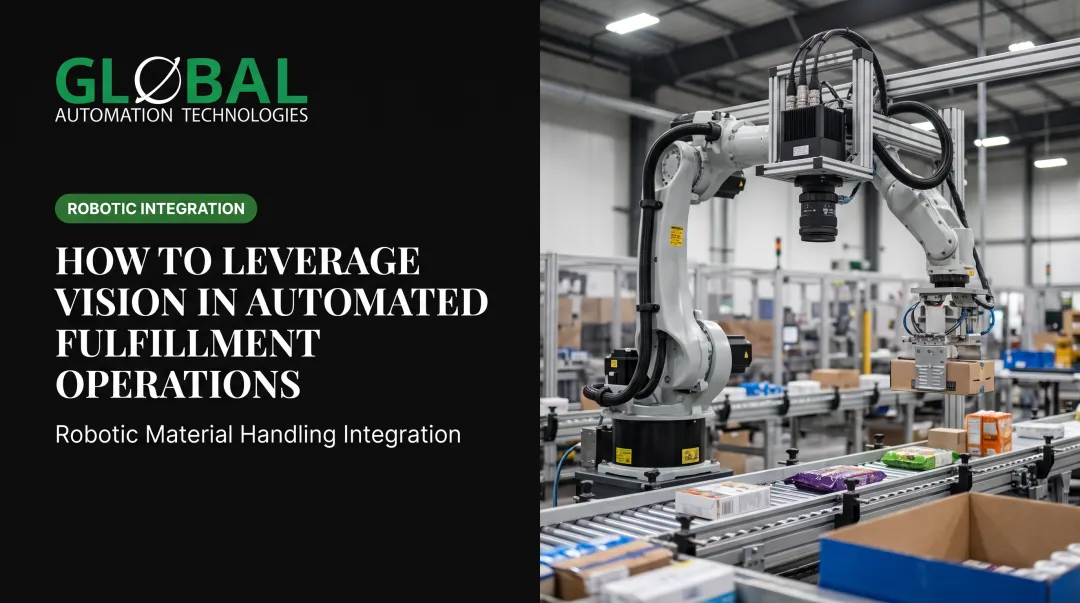
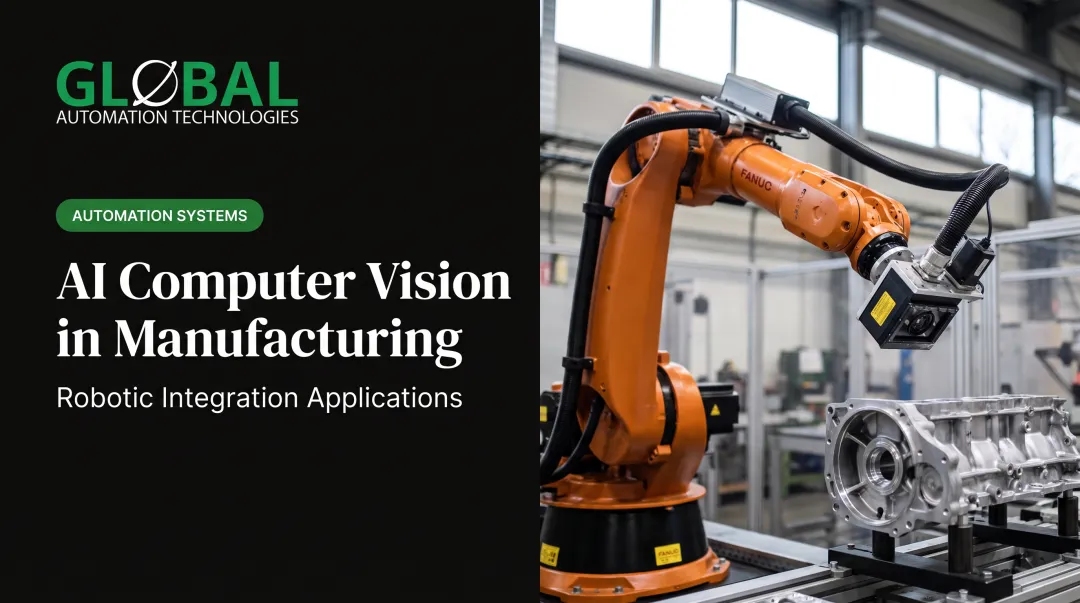
Vision-guided robotics let a robot locate, orient, and adjust to parts that aren't sitting in a fixed, repeatable position. Cameras feed part-position data straight to the robot controller, enabling pick-and-place, machine tending, and assembly without rigid fixturing.
This shows up across several application types:
- CNC machine loading — vision confirms orientation before a part enters the machining cycle
- Press tending — precise pick-and-place at full production speed, no operator loading variability
- Injection molding — accurate extraction and insert loading within tight cycle windows
- Random bin picking — 3D area sensors locate parts in completely unstructured orientations
- Inter-station transfer — robots track and act on moving parts without stopping the line
The precision payoff is documented. One vision-guided assembly cell achieved part placement accuracy better than ±0.2 mm at 3.4 seconds or less per part (ASSEMBLY Magazine). That kind of repeatability is difficult to hit with fixed fixturing alone, especially once part variation enters the picture.

Fewer misfeeds and jams mean fewer reasons for the line to stop. The robot self-corrects instead of waiting on an operator, which extends run time beyond a single shift and keeps machine utilization high.
KPIs impacted: cycle time, spindle/machine utilization, changeover time, unplanned downtime.
When it matters most: mixed-model or high-mix production, and machine tending cells where part orientation varies load to load.
Consistent Process Control and Reduced Waste
Vision guidance keeps the robot on the same programmed path every cycle, so spray pattern and film build stay repeatable instead of drifting with operator technique and fatigue. Full finish inspection with robotic touch-up happens downstream, not live in the booth.
GLOBAL's robotic painting systems, for instance, follow that programmed path every cycle to hold film build within specification shift after shift, through FANUC paint robot precision and spray pattern optimization, with finish inspection and robotic touch-up handled downstream.
Tighter control has a direct financial effect:
- Less overspray means less wasted material
- Fewer touch-ups mean less rework labor
- Predictable film build means more predictable material spend
ABB reports that its 3D-vision-coordinated PixelPaint system applies 100% of paint with no overspray, calling the result "zero waste" in a 2024 Mahindra deployment (ABB News Center, 2024). That is a vendor claim from one rollout, not an independent study, but it shows the ceiling this technology is aiming for.
KPIs impacted: material cost per part, waste and scrap percentage, rework rate.
When it matters most: painting, coating, and dispensing operations, and any process where operators would otherwise work in a hazardous spray environment.
What Happens When Advanced Vision Systems Are Missing or Ignored
Without inline vision inspection, quality control falls back on manual checks. That approach is slower, inconsistent between shifts, and prone to missing gradual drift. A slow slide in bead width or film build often escapes spot checks until it has already produced a run of bad parts.
Defects caught late cost more to fix. A part that fails inspection at the dispensing head is a quick correction. The same defect discovered after assembly, or after it ships, pulls in rework labor, disassembly, customer complaints, and sometimes a warranty claim.
Plants without vision-guided robotics also tend to stay reactive:
- Misfeeds and misalignments get fixed after they stop the line, not before
- Operators spend time firefighting instead of improving the process
- Run time past a single shift stays limited because someone has to be present to catch problems
That reactive posture caps how far a line can scale. Adding shifts or running lights-out becomes risky when the process depends on a person catching errors as they happen.
How to Get the Most Value from Advanced Vision Systems
Vision inspection pays off most when it's applied consistently across the process, not bolted on as a single end-of-line check. A camera at the end of the line tells you something already went wrong. A camera at each critical step tells you where it went wrong, while there's still time to correct it.
A few practical guidelines:
- Connect vision data to PLC/MES workflows so defects trigger corrective action or line response—not a report nobody reads.
- Feed torque capture, inspection results, and process parameters into the production record automatically.
- Design for changeovers so defect profiles can be retuned without a full re-engineering effort.

This is where the integration partner matters as much as the technology. A vision-equipped robotic cell is only as good as the engineers who tune it, maintain it, and adjust it when the process changes.
GLOBAL Automation Technologies, a Level 5 FANUC Authorized System Integrator, is built for that reason: its automation solutions and engineering services teams design and integrate the robotic system—including vision and machine tending—while its technical staffing places controls and robotics engineers to keep it running.
AI-assisted simulation is also changing the timeline here. GLOBAL uses it to compress overall robot programming time from weeks to days, so engineers can model and test logic changes before touching the floor. When a defect profile or product changes, that shorter cycle matters.
Conclusion
Advanced vision systems go beyond image capture. They bring process control and consistency to lines that once depended on someone catching problems after the fact.
These advantages compound. Fewer defects and less downtime today reduce the risk of costly rework and scaling problems six months from now, when the line is running more shifts and more product variants than it was when it launched.
Vision systems work best as an ongoing part of an automation strategy, not a one-time install. Partner with a team that can build the system and staff the engineers who keep tuning it as your parts, volumes, and defect profiles evolve.
Frequently Asked Questions
What's the difference between a standard camera and an advanced machine vision system on a robot?
A standard camera just captures images. An advanced vision system interprets what it sees using software, making real-time decisions like flagging a defect or guiding robot movement toward a target part.
Can advanced vision systems be retrofitted onto existing robotic cells?
Yes. Most modern vision systems can be added to existing cells with the right cameras, lighting, and controller integration, without replacing the robot itself.
How quickly can these systems detect a defect on a moving line?
Detection typically happens in milliseconds, fast enough to flag an issue before the part advances to the next station. Actual speed depends on the inspection complexity and hardware in use.
What industries benefit most from vision-guided robotics?
Automotive, EV battery, and high-mix general industrial manufacturing see the strongest documented results, largely due to tight tolerances and variable part positioning in these environments.
Do operators need special training to work with vision-equipped robotic systems?
Operators generally need only basic training to respond to alerts and review flagged parts. System tuning and calibration are handled by integration engineers, not floor operators.
How does an advanced vision system typically pay for itself?
ROI usually comes from reduced scrap, less rework, and more run time beyond a single shift. Many vision-equipped automation cells pay back in roughly 12 to 18 months, in line with broader industrial automation experience.