
Robotic systems matter because manufacturers are stretched thin. Throughput targets keep climbing, quality tolerances keep tightening, and labor pools keep shrinking. This article breaks down the main types of robotic systems, how they differ, and how to match the right one to your production line.
TL;DR
- A robotic system pairs a robot with tooling, sensors, and controls so tasks run with minimal human input
- Four types cover most plants: articulated arms, mobile systems, collaborative robots, and data/control systems
- Choose by task complexity, floor space, budget, and how much human interaction the cell needs
- Integrators like GLOBAL Automation Technologies match system type to a specific production line
What Is a Robotic System?
A robotic system is a network of components working together to execute a task, either autonomously or with minimal human oversight. That network typically includes:
- A robot arm or mobile platform
- End-of-arm tooling (grippers, welding torches, spray guns, dispensers)
- Sensors (vision, force, proximity)
- A controller running the program logic
- Safety devices (guarding, light curtains, e-stops)
You'll find these systems at work in welding, machine tending, painting, dispensing, palletizing, and material handling. Most systems on plant floors today are highly specialized, task-built cells designed to solve one production problem extremely well.
Why Are Robotic Systems Important in Manufacturing?
Robotic systems tie directly to outcomes plant managers actually track:
- Consistent quality with lower scrap rates
- Higher throughput and stable cycle times
- Lower labor cost on repetitive work
- Safer conditions away from paint booths, hot presses, and strain injuries
Without them, plants absorb the opposite: inconsistent cycles, higher scrap, and workers left in hazardous or hard-to-staff roles.
The scale of adoption backs this up. IFR reports that 542,000 robots were installed globally in 2024, more than double the figure from a decade earlier, with the global operating stock reaching 4.66 million units.
The labor angle is just as pressing. U.S. manufacturing may need 3.8 million net new employees between 2024 and 2033, and roughly 1.9 million of those positions could go unfilled, according to Deloitte's manufacturing workforce research. Robotic systems don't fill that talent gap by replacing people. They absorb repetitive, hazardous, or hard-to-staff tasks so remaining workers can focus on higher-value roles.
Types of Robotic Systems
Robotic systems aren't one-size-fits-all. They vary by mobility, autonomy level, and how closely they work with humans. Manufacturers need to match the type to the application, not the other way around.
Manipulation (Articulated) Robotic Systems
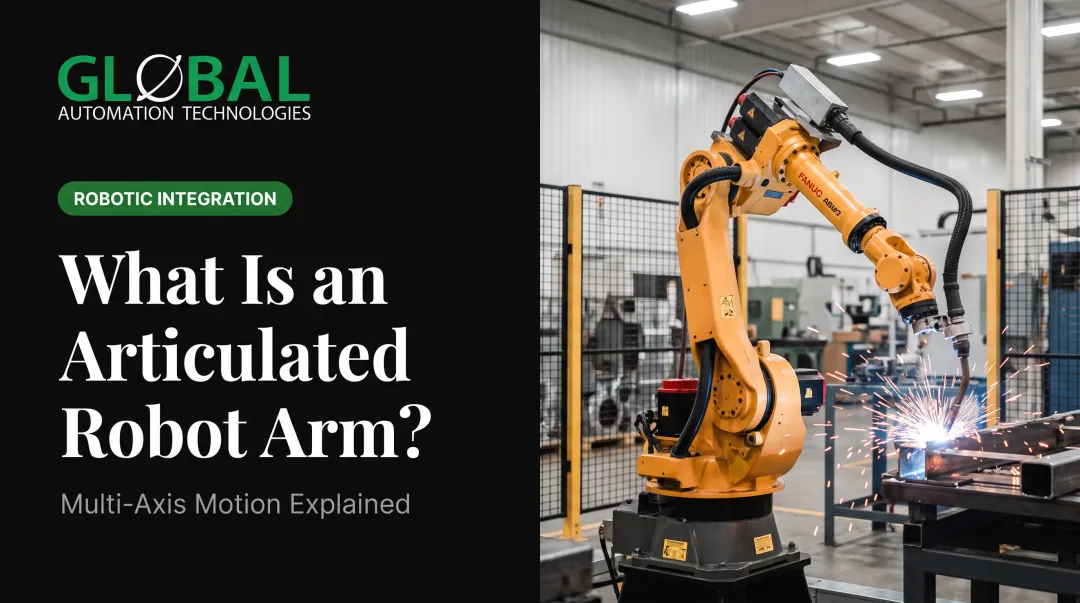
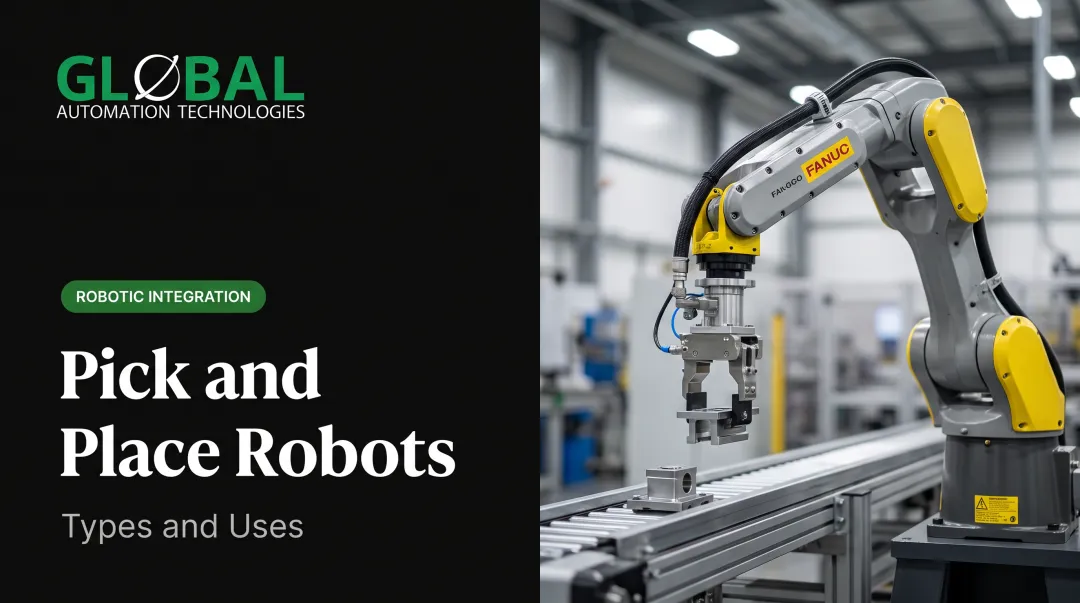
These are fixed robot arms with 4-6 axes of motion, performing welding, dispensing, material handling, and machine tending. End-of-arm tooling paired with programmed paths executes repeatable tasks with high precision.
What sets them apart from other types:
- Stationary base — no mobility across the floor
- High repeatability — some FANUC models hold repeatability as tight as ±0.10 mm
- Task-specific programming rather than free-roaming autonomy
Best suited for:
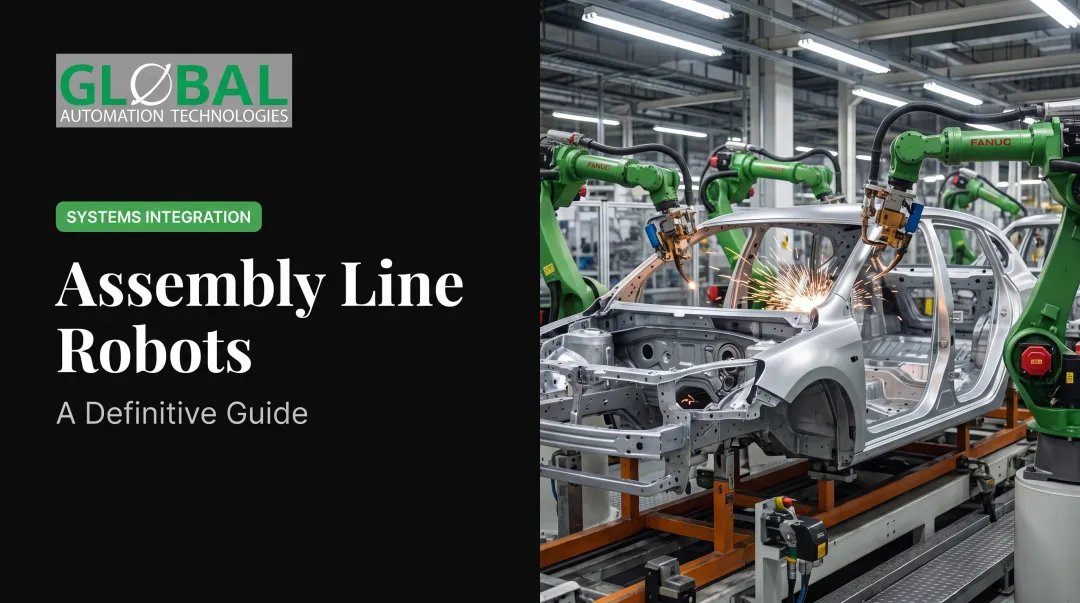
- High-volume, repetitive work such as spot welding, painting, and CNC or press tending
- Automotive OEM and Tier 1 lines that need consistent cycle times at scale
Automotive OEMs and Tier 1 suppliers already lean on this category: U.S. automotive plants installed 13,700 robots in 2024, a 10.7% jump year over year.
Strengths: speed, precision, and long-term reliability in structured environments.
Limitations: fixed workspace and less flexibility when product lines change often.
GLOBAL, which holds Level 5 status in FANUC’s Authorized System Integrator program, addresses the programming side of that constraint with AI-assisted simulation on its FANUC-based manipulation cells. Teams model, test, and optimize robot programs offline before anything runs on the floor, which typically cuts programming timelines from weeks to days.

Mobile Robotic Systems (AMRs/AGVs)
Mobile systems are automated platforms, wheeled or tracked, that transport materials or tools across a facility. They use navigation sensors, mapping, and localization to move autonomously between fixed points.
Unlike fixed arms, they bring the workspace with them across the plant floor.
Best suited for:
- Internal logistics and part transport
- Warehouse-to-line delivery in large facilities
- Reducing manual forklift or cart traffic
Strengths: route flexibility and less manual material-moving traffic.
Limitations:
- Facility infrastructure changes are often required
- Lower payload precision than fixed arms
- Meaningful upfront mapping and setup effort
Safety still needs formal treatment. ANSI/RIA's R15.08 standard covers risk management for industrial mobile robots and mobile manipulators.
Collaborative Robotic Systems (Cobots)
Cobots are designed to work safely alongside humans without full fencing. They're typically smaller manipulation arms with built-in force and vision sensing that detects human proximity and adjusts speed or force in real time.
The priority here is safe human-robot interaction, not raw speed or payload.
Best suited for:
- Lower-volume or high-mix lines
- Mixed human/machine tasks
- Smaller manufacturers with space or budget constraints
Adoption is climbing but still a smaller slice of the market. Cobots made up 19.6% of 2025 North American robot orders by unit but only 10.7% of order revenue, according to Automate.org's 2025 order data. That gap reflects their smaller size and lower price point compared to full industrial arms.
Strengths: quick deployment, small footprint, easy reprogramming for changeover.
Limitations: lower payload and speed than full industrial arms. As IFR puts it plainly, cobots "are not suited to processes requiring high payloads and high speeds" — traditional industrial robots still win on raw throughput.

Data Acquisition and Control Robotic Systems
This category focuses on gathering, processing, and transmitting sensor data rather than physical manipulation. These systems integrate with vision systems, flow monitors, and quality sensors to validate processes in real time.
The output here is data and decisions, not physical motion — and these systems often layer on top of manipulation or mobile robots rather than standing alone.
Best suited for: quality inspection, predictive maintenance, and process validation.
GLOBAL runs two examples of this category in production environments:
- AI-driven predictive maintenance health assessments that monitor equipment continuously to flag developing issues before they cause downtime
- Real-time bead quality validation in dispensing applications, where machine vision checks bead width, placement, and continuity while flow monitoring confirms material delivery, catching off-spec parts before they move downstream
The upside is measurable at the industry level too. McKinsey found predictive maintenance typically cuts machine downtime 30-50% and extends machine life 20-40%.
Limitations: these systems add complexity and require real integration expertise. Collecting data is easy. Turning it into actionable decisions is not.
How to Choose the Right Type of Robotic System
The right choice depends on your production goal, not on which system sounds most advanced.
Factors to Weigh
- Task type and required precision: welding demands different capabilities than transport or inspection
- Production volume and line speed: high-volume automotive lines need different systems than low-volume specialty runs
- Available floor space and facility layout: mobile systems need clear paths; fixed arms need a defined cell
- Budget and payback period: machine tending cells often pay for themselves in 12-18 months through increased spindle utilization and reduced idle time between load cycles
- In-house technical expertise: whether you have engineers who can program, validate, and maintain the system
- Long-term flexibility: whether product lines or volumes will change in the next 2-3 years
Common Mistakes to Avoid
- Choosing a fully autonomous mobile system when a simple fixed manipulator would solve the task at lower cost
- Ignoring integration and maintenance costs beyond the initial purchase price
- Underestimating the engineering talent needed to program, validate, and maintain the system over its lifespan
That last point trips up a lot of manufacturers. Buying the robot is the easy part. Finding the engineers to run it long-term is where projects stall.
GLOBAL structures its contracts to cover both automation solutions, services and technical staffing under one agreement. Clients get the robotic system and the people to run it without juggling separate vendors.

Conclusion
Robotic systems drive manufacturing efficiency, safety, and quality. Manipulation, mobile, collaborative, and data-driven systems each solve a distinct problem, and most production lines end up combining several types rather than relying on just one.
Getting the type right matters. Getting the integration partner right matters just as much: that relationship determines whether a robotic system delivers lasting ROI or becomes an expensive experiment. GLOBAL Automation Technologies helps manufacturers act on both choices with turnkey robotic integration and the engineers who keep those systems running.
Frequently Asked Questions
What are some examples of robotic systems?
Common examples include robotic welding cells, autonomous mobile robots (AMRs) for material transport, cobot pick-and-place stations, and painting or dispensing systems. Most facilities combine several types across a single production line.
What is the most common type of robotic system in manufacturing?
Manipulation, or articulated, systems remain the most widely used. Their precision in welding, material handling, and machine tending makes them the backbone of automotive and heavy industry lines.
How much does a robotic system cost?
Cost varies widely by type and complexity, from smaller cobot cells to full multi-robot welding lines. Machine tending cells specifically often pay for themselves in 12-18 months through increased throughput and reduced labor hours.
Can different types of robotic systems be combined on one production line?
Yes. Manufacturers regularly combine manipulation, mobile, and data acquisition systems within a single cell or line, using each type for what it does best.
Do robotic systems require dedicated engineering staff to operate?
Most systems need trained engineers for programming, validation, and ongoing maintenance. When that expertise isn't available in-house, manufacturers often bring in contract controls or mechanical engineers to fill the gap.
What industries use robotic systems most?
Automotive OEMs and Tier 1 suppliers lead adoption, with U.S. automotive plants installing 13,700 robots in 2024 alone. Heavy equipment manufacturers and data center infrastructure producers are increasingly adopting these systems too.