
Introduction
Walk through any modern manufacturing plant and you'll find two very different kinds of automation running side by side. Software bots process purchase orders in the back office. Robotic arms weld body panels on the floor.
Both get called "process automation," and that's where the confusion starts. Many manufacturers struggle to tell software-based automation (RPA, BPA) apart from floor-level robotic automation.
Picking the wrong category for the wrong bottleneck wastes budget and delays returns. This guide breaks down the top 8 process automation solutions spanning both IT and OT environments, so you can match the right one to the constraint actually slowing your operation down.
TL;DR
- Process automation covers two worlds: digital workflow tools (RPA, BPA) and physical robots (welding, painting, dispensing, machine tending)
- Match the solution to your bottleneck—data workflows or the production floor
- Robotic floor automation often pays back in 1–3 years when matched to the right application
- AI now sits inside both software and robotic automation, speeding up deployment and flagging maintenance issues early
- Judge vendors on integration, safety, and whether they can deliver the technology and the talent to run it
Overview of Process Automation in Manufacturing
Process automation is the use of software, sensors, controllers, or robotics to run repeatable tasks with minimal manual intervention. Inside a plant, it splits into two distinct worlds:
- IT-side automation: Software tools like RPA and BPA that move data, trigger approvals, and manage digital workflows
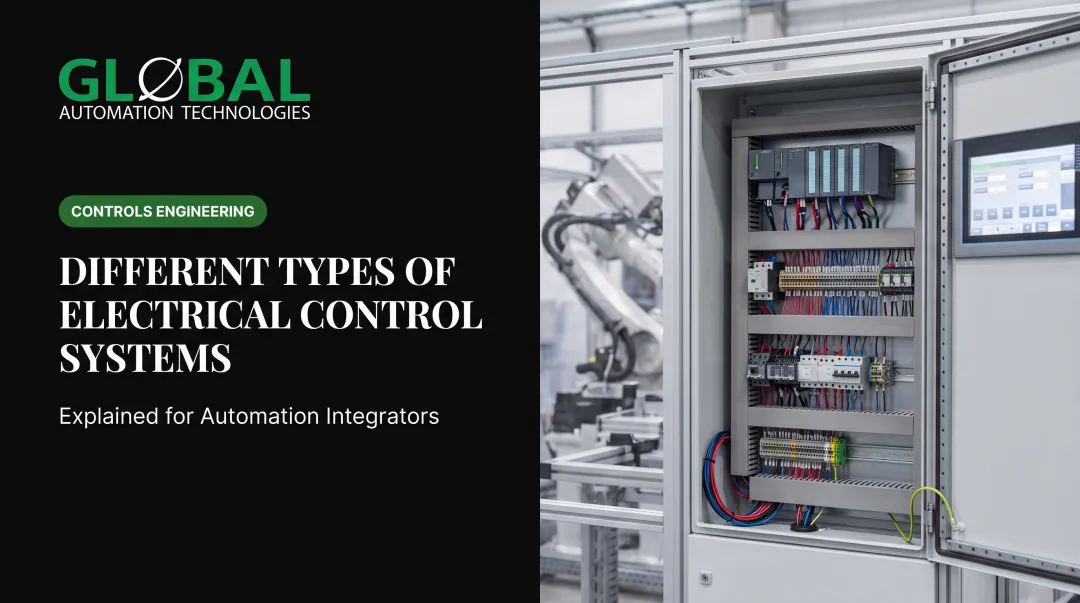
- OT-side automation: The physical layer—DCS, SCADA, and robotics that control machinery, chemical processes, and production lines

The industrial automation services market hit $175.4 billion in 2024 and is projected to reach $321.8 billion by 2030, a 10.8% CAGR, according to Grand View Research's 2025 industrial automation services report. That growth reflects both software and hardware investment across manufacturing.
The eight categories below cover the most impactful process automation solutions manufacturers should evaluate today, spanning digital workflows to full robotic production systems.
Top 8 Process Automation Solutions
These eight categories were chosen based on adoption breadth, measurable business impact, and relevance across both discrete and continuous manufacturing industries.
Robotic Process Automation (RPA)
RPA uses software robots to automate rule-based, repetitive digital tasks like data entry, invoicing, or system updates, working at the user-interface level without needing deep system integration.
It fits back-office and administrative workflows because it deploys fast and requires little IT overhead. One McKinsey supply-chain example found that automating an order-input process with RPA cut order-confirmation time by more than 75%.
| Category | Details |
|---|---|
| Best For | Repetitive digital and administrative tasks (data entry, reporting, invoicing) |
| Key Capability | Rule-based UI-level task automation without deep system integration |
| Typical Outcome | Reduced manual processing time and fewer data entry errors |
Business Process Automation (BPA) & Workflow Management
BPA orchestrates entire processes, approvals, and decisions across teams and systems using defined workflows. Unlike RPA, which automates isolated tasks, BPA manages the full lifecycle of a process, improving accountability and giving managers real visibility into where things stand.
Think purchase-order matching through invoice approval, or customer-order fulfillment across multiple departments. It's less about speed on a single task and more about coordination across many.
| Category | Details |
|---|---|
| Best For | Multi-step approval chains and cross-department workflows |
| Key Capability | End-to-end process orchestration with tracking and visibility |
| Typical Outcome | Faster cycle times and reduced operational risk |
Distributed Control Systems (DCS) & SCADA
DCS and SCADA form the backbone of continuous process industries: chemicals, oil and gas, pulp and paper. A DCS supervises production within one physical location, using sensors and PID control loops to regulate variables like temperature, flow, and pressure. SCADA extends that supervisory control across geographically dispersed assets.
These systems earn their place through proven reliability in continuous operations with strict regulatory and safety requirements. Plants that run continuously can't afford control-loop failures, and DCS/SCADA architectures are built specifically to prevent them.
| Category | Details |
|---|---|
| Best For | Continuous process industries (chemicals, oil and gas, utilities) |
| Key Capability | Real-time control loop monitoring of temperature, flow, and pressure |
| Typical Outcome | Improved plant safety and consistent output quality |
Robotic Machine Tending
Robotic machine tending loads and unloads CNC machines, injection molders, or presses, enabling continuous production runs through breaks, shift changes, and overnight hours—lights-out running between scheduled maintenance windows.
GLOBAL Automation Technologies, a top-tier Level 5 FANUC Authorized System Integrator, builds machine tending cells across CNC machining, press tending, and injection molding. ROI typically comes from two levers: more parts per shift from continuous spindle utilization, and lower direct labor cost as operators move into inspection and process-improvement roles. Machine tending cells like these commonly pay back in roughly 12-18 months.
That timeline lines up with broader industry data. McKinsey reports current manufacturing-automation payback periods of one to three years, down from five to eight years historically.
| Category | Details |
|---|---|
| Best For | CNC machining, press operations, injection molding |
| Key Capability | Continuous loading and unloading with higher spindle utilization |
| Typical Outcome | Payback in 12-18 months and extended runtime between scheduled maintenance windows |

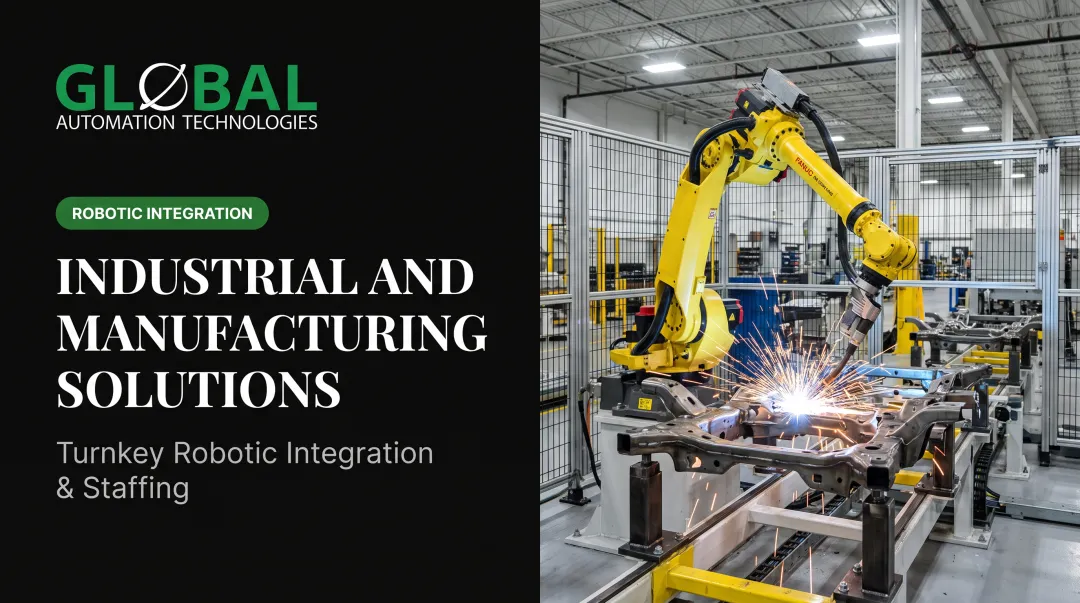
Robotic Welding & Assembly Automation
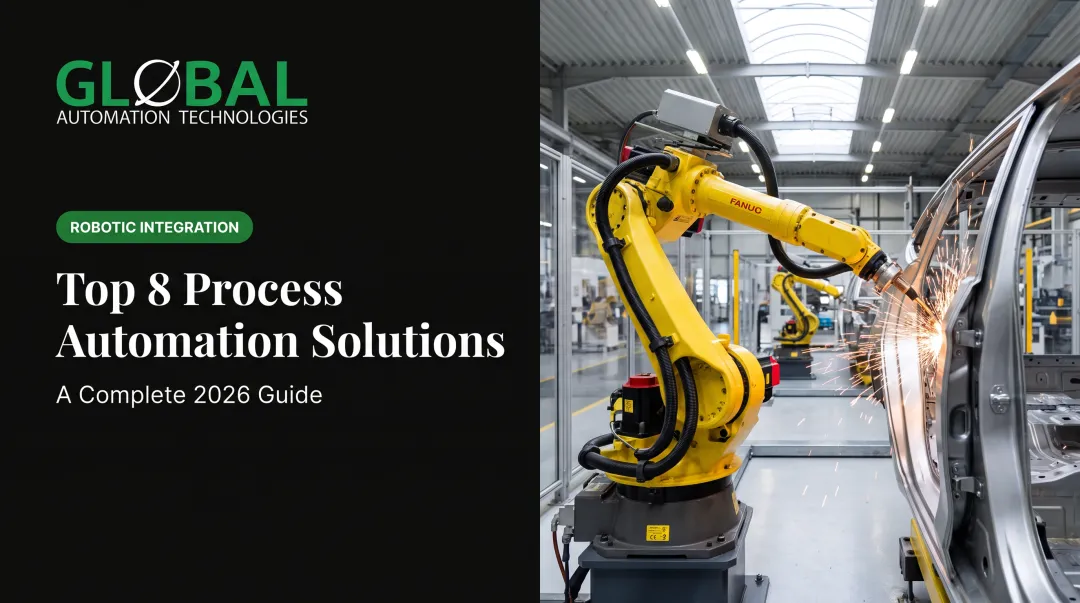
Robotic welding and assembly systems perform spot welding, arc welding, and multi-part assembly with repeatable precision at high production volumes. For automotive, Tier 1, and heavy equipment lines, that repeatability translates into fewer weld defects and higher throughput than manual welding can consistently deliver.
US automotive plants installed 13,700 industrial robots in 2024, up 10.7% year over year, and automotive represented roughly 40% of all new US robot installations, according to the International Federation of Robotics.
GLOBAL has engineered welding and assembly cells for automotive OEMs, Tier 1 suppliers, agricultural equipment makers, and aerospace lines, integrating vision systems for seam location and adaptive path correction.
| Category | Details |
|---|---|
| Best For | Automotive, Tier 1, and heavy equipment production lines |
| Key Capability | High-precision, repeatable welding and multi-part assembly |
| Typical Outcome | Higher throughput with reduced weld defects |
Robotic Painting & Coating Systems
Robotic painting and coating systems apply consistent film builds while removing operators from hazardous spray environments entirely. That matters more than it might sound: OSHA notes isocyanate exposure can cause skin and mucous membrane irritation and, in sensitized workers, serious asthma reactions.
GLOBAL builds its paint systems around FANUC paint robots with hollow-wrist routing and intrinsically safe designs, holding film build within specification shift after shift through spray pattern optimization, booth airflow management, and precise path programming.
Higher transfer efficiency means less overspray and lower material cost per part. It also keeps operators out of the booth and away from VOCs and overspray particulates.
| Category | Details |
|---|---|
| Best For | Automotive body/component paint lines, heavy equipment coating |
| Key Capability | Repeatable film build within specification with reduced overspray and material waste |
| Typical Outcome | Lower material costs and elimination of operator hazard exposure |
Robotic Dispensing with Real-Time Quality Validation
Robotic dispensing applies adhesives, sealants, or beads while vision-based inspection validates quality in real time, checking bead width, placement, and continuity on every single cycle. Catching a thin bead or a missed path before the part moves downstream avoids rework and warranty risk later.
GLOBAL pairs vision inspection with flow monitoring in its dispensing cells, built on FANUC robots with complex 3D bead path programming. If material goes on off-spec, the system flags it immediately instead of letting a bad bead reach the next station or final inspection.
| Category | Details |
|---|---|
| Best For | Sealant/adhesive dispensing in automotive and industrial assembly |
| Key Capability | Real-time bead quality validation via vision and flow monitoring |
| Typical Outcome | Fewer downstream defects and reduced warranty claims |
AI-Assisted Simulation & Predictive Maintenance
AI-assisted simulation optimizes robot programming and cell layout before a system ever hits the floor. AI-driven predictive maintenance flags equipment issues before they cause a failure, using historical machine data to catch abnormal patterns early.
GLOBAL applies AI-assisted simulation to model and test robot programs virtually, compressing programming timelines from weeks to days and cutting surprises during commissioning. On the maintenance side, AI health assessments monitor equipment continuously so problems surface as warnings, not shutdowns.
McKinsey research on manufacturing analytics ties predictive maintenance to 30-50% less downtime and 20-40% longer machine life.
| Category | Details |
|---|---|
| Best For | Pre-deployment optimization and ongoing equipment health monitoring |
| Key Capability | AI-driven simulation plus predictive maintenance health scoring |
| Typical Outcome | Faster robot startups and reduced unplanned downtime |
How to Choose the Right Process Automation Solution
The most common mistake manufacturers make? Choosing a solution based on brand recognition or the lowest upfront quote, rather than matching it to the actual bottleneck.
A digital task problem needs RPA or BPA. A physical production constraint needs robotics. Confusing the two burns budget on a fix that never touches the real issue.
Before committing, weigh these factors:
- Integration capability — Does it connect cleanly with your existing ERP, MES, or controls systems?
- Scalability — Can the solution extend across additional product lines or plants without a full redesign?
- Safety impact — Does it remove operators from hazardous tasks like painting, welding, or spray environments?
- Talent support — Can the vendor supply skilled engineers to run and maintain the system, not just install it?

Request a documented ROI and payback timeline from any automation partner before signing anything. A vendor that can't walk you through cycle-time analysis, capital requirements, and expected returns hasn't done the homework required to earn your commitment.
Conclusion
The best process automation solution is the one that fits your actual bottleneck, not the one with the biggest name attached. Whether that's RPA cleaning up back-office data entry or a robotic welding cell replacing manual production, the fit matters more than the label.
Before finalizing any decision, weigh scalability, safety impact, and total cost of ownership, not just the sticker price on day one.
GLOBAL Automation Technologies delivers turnkey robotic systems (welding, painting, dispensing, machine tending, material handling) through its automation solutions and engineering services work, plus the technical staffing to run them, backed by 17+ years in the field and a proven global base of robotic deployments.
If you're weighing which process automation solution fits your floor, reach out for a consultation.
Frequently Asked Questions
What are process automation systems?
Process automation systems use software, sensors, and/or robotics to monitor and control repeatable industrial or business tasks with minimal manual input. They span both digital workflow tools and physical production equipment.
What are examples of process automation systems?
Examples include RPA, SCADA/DCS, robotic machine tending, robotic welding, and robotic painting systems. Each targets a different type of bottleneck, from digital tasks to physical production constraints.
What are the four types of process automation systems?
From a factory-floor perspective: fixed, programmable, and flexible automation, each varying by volume and changeover flexibility. The fourth type, rule-based software process automation, covers tools like RPA and BPA for digital workflows.
What industries rely most on process automation?
Automotive, chemical, oil and gas, heavy equipment, and data center infrastructure manufacturing are heavy adopters. Automotive remains one of the largest buyers of new industrial robots in the US.
How much do process automation solutions typically cost?
Costs vary widely by solution type and complexity, from software licensing for RPA to fully engineered robotic cells. Robotic cells like machine tending often pay back within 12-18 months once running.
What is the difference between process automation and business process automation (BPA)?
Process automation broadly includes both physical/industrial control systems and software workflows. BPA specifically refers to software-driven orchestration of business tasks, approvals, and cross-department processes.