
A temperature drifts. A flow rate creeps outside spec. A batch runs three minutes long. By the time someone notices on the plant floor, you've already got scrap, rework, or a quality escape heading toward a customer.
Industrial process control systems exist to catch these deviations before they become problems. They're the feedback-driven backbone that keeps temperature, pressure, flow, and dozens of other variables inside a target range, automatically and continuously.
This guide covers the types of control systems in use today, the components that make them work, the benefits manufacturers see, and what a smart implementation actually looks like.
Key Takeaways
- Closed-loop process control continuously measures and corrects deviations, unlike fixed-sequence automation
- Three main types—discrete, continuous, and batch—are often combined in hybrid setups
- Sensors, controllers, actuators, and HMIs work together to cut variability, waste, and safety risk
- Tighter control improves quality, throughput, and maintenance planning together
What Are Industrial Process Control Systems?
Process control automatically monitors variables like temperature, flow rate, pressure, and chemical composition, adjusting them in real time to keep production inside a defined operating window. It's the difference between a machine that runs a set sequence and one that actually reacts to what's happening.
Feedback vs. Feedforward Control
Feedback (closed-loop) control is reactive. A sensor measures the actual output, compares it to the setpoint, and corrects the difference. Think of a home heating system: the thermostat reads the room temperature, sees it's below target, and fires the furnace until the reading matches the setpoint again.
Feedforward control works differently. It anticipates a disturbance before it hits the output and compensates in advance, rather than waiting for the error to appear. In practice, feedforward is usually paired with feedback. Feedforward handles known disturbances; feedback PID action cleans up whatever error remains.
This distinction matters because a lot of "automation" isn't actually process control. Basic open-loop automation applies a control effort and assumes the result happens, with no confirmation loop back to the controller. True process control closes that loop.
Core Components of a Process Control System
Every control loop, regardless of industry, relies on the same four building blocks:
- Sensors and transmitters: Measure temperature, pressure, flow, or level, and convert the physical reading into a signal the controller can use
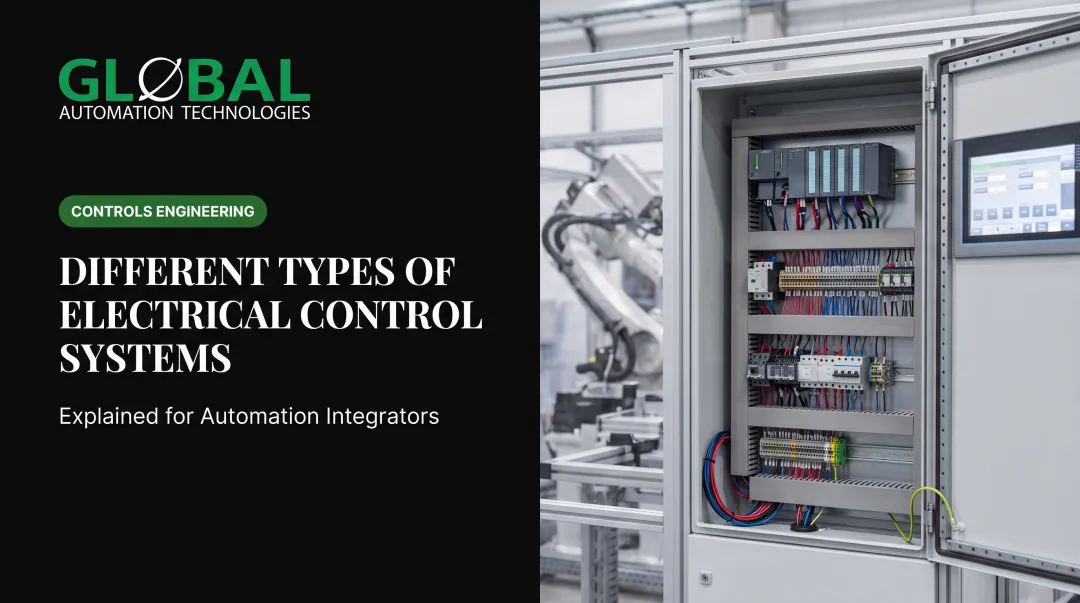
- Controllers (PLCs, DCS, SCADA): Compare the sensor signal to a setpoint and calculate the correction, typically using a PID algorithm
- Final control elements: Valves, actuators, and motors that physically execute the correction
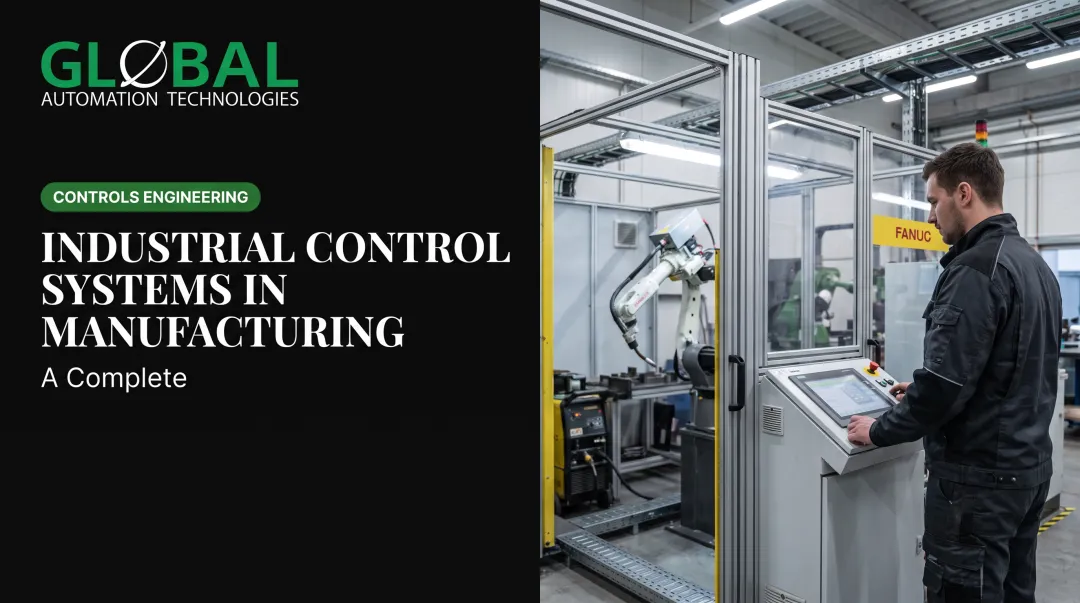
- Human-machine interfaces (HMIs): Give operators visibility into the process and manual override capability when needed
A flash-tank level-control application from ISA shows the loop in action. A level transmitter (LT 15) sends a reading to the controller (LC 15). The output then travels through an I/P converter to a pneumatic valve (LV 15) that adjusts flow. That measure-compare-adjust cycle repeats continuously.

The Edge Computing Layer
IIoT sensors now feed data to edge devices close to the process, rather than routing everything through the cloud first. That proximity matters for safety-critical decisions: an abnormal pressure spike on a pipeline can trigger a local emergency shutdown immediately, where a cloud round-trip might take several seconds longer. Industrial-edge platforms increasingly combine classic automation and analytics in one layer as IT and OT converge on the plant floor.
Types of Industrial Process Control Systems
Most facilities don't run one type of control. They layer several together.
Discrete control manages individual steps with clear start and stop points. Think packaging lines or assembly stations: a sensor confirms a part is present, an actuator fires, the cycle ends.
Continuous process control maintains steady-state operation for materials that never stop flowing. Chemical processing, oil refining, and food production depend on it. Controllers constantly adjust valves and flow rates to hold variables steady over hours or days.
Batch control manages recipe-based production with precise sequences and ingredient quantities. ISA cites bioreactors, rubber mixing, and pharmaceutical clean-in-place processes as common batch applications. Controller-based execution is preferred when tight process control matters most.
Cascade and ratio control add another layer for complex processes. Cascade control nests two controllers, where a primary loop sets the target for a faster secondary loop. Ratio control keeps one feed stream proportional to another, common in reactor feed blending.

Robotic Automation as Applied Process Control
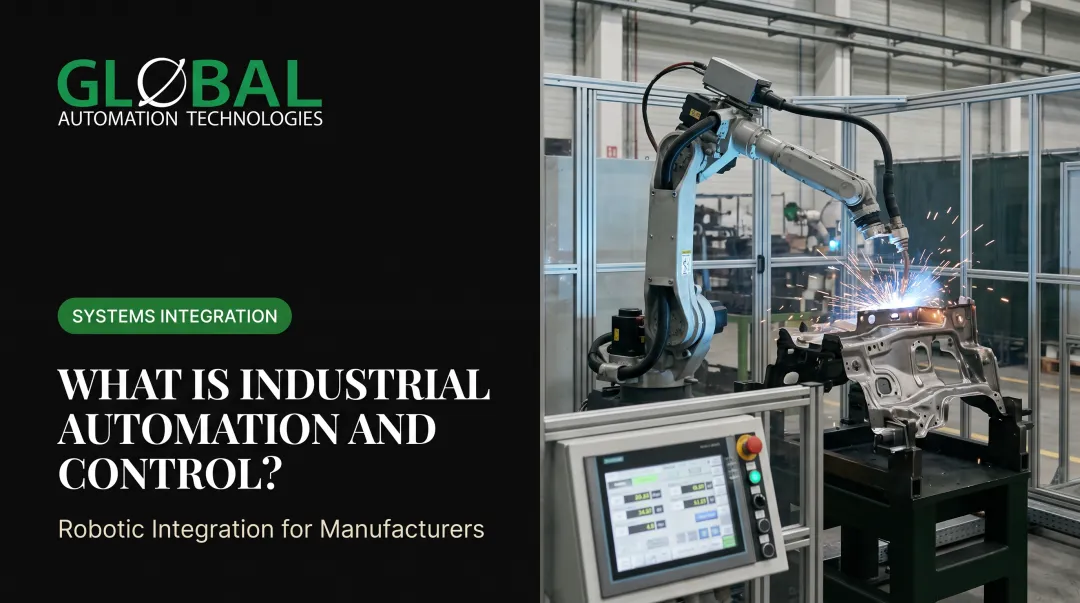
Robotic cells for machine tending and dispensing combine continuous and discrete control, using real-time sensor feedback to catch problems before parts move downstream.
GLOBAL Automation Technologies, a Level 5 FANUC Authorized System Integrator, builds this into its FANUC-based dispensing cells for body-in-white seam sealing. The robot follows a programmed three-dimensional bead path along panel flanges while sensors validate quality in real time:
- Vision inspection checks bead width, placement, and continuity
- Flow monitoring confirms material delivery stays in spec
- Skips, voids, or off-spec beads get flagged before the body moves further down the line
Key Benefits of Process Control in Manufacturing
Tighter control doesn't just improve one metric. The gains tend to compound.
- Reduces process variation and defects—especially critical in automotive, aerospace, and other high-spec manufacturing
- Catches deviations in real time so scrap doesn't pile up before a full batch is ruined
- Raises throughput by cutting upsets and unplanned stops, so equipment runs closer to capacity
- Improves safety with automated alarms and shutdown logic that don't wait on human reaction time
- Flags equipment issues earlier by layering condition monitoring into process control
The financial case is real. McKinsey documented a 20% average reduction in downtime across nine offshore oil-and-gas platforms after a predictive-maintenance rollout, adding production equivalent to more than 500,000 barrels of oil annually.
Scrap reduction tells a similar story. A 2023 study on edge-bending for refrigeration-appliance door cases found scrap rates fall from 2.96% to 0.0641% after implementing SPC and standardized process-control plans, cutting scrapped units from 509 out of 17,179 down to just 12 out of 18,715.

GLOBAL's own systems reflect this same principle at the equipment level. Robotic painting cells hold film build within specification with integrated machine-vision inspection, while dispensing cells validate bead quality in real time rather than catching defects downstream.
Common Applications and Implementation Best Practices
Where Process Control Is Used
Process control shows up wherever variability has a real cost:
- Automotive (welding, painting, assembly)
- Food and beverage (batching, pasteurization, packaging)
- Chemicals and oil and gas (reactor control, refining)
- Pharmaceuticals (batch control, cleanroom processes)
- Power generation (boiler control, turbine regulation)
Automotive and Tier 1 supplier operations lean on process control heavily for exactly this reason. Robotic painting needs film-build consistency to meet finish standards, and robotic dispensing needs bead-quality validation to prevent leaks or structural failures downstream.
Best Practices for Implementation
- Start with a process audit — Identify the highest-variability, highest-impact areas before automating anything
- Get instrumentation right first — A control system can only manage what it can accurately measure
- Build in cybersecurity from day one — When control systems connect to IT networks, NIST recommends network segmentation, least-privilege access, and systematic OT patch management
- Train operators on control principles, not just screen navigation — They need to understand what the loop is doing, not just where the buttons are
- Bring in outside engineering bandwidth when needed — Many manufacturers simply don't have enough controls engineers on staff to commission and tune new systems
This last point is where a lot of projects stall. Manufacturers often have capital for a new control system but not the headcount to commission it. GLOBAL's staffing division fills that gap, placing controls engineers and PLC programmers on contract, contract-to-hire, or direct-hire terms so the system and the people running it arrive together.
Frequently Asked Questions
What are process control systems?
Process control systems are automated systems that monitor and regulate industrial process variables, like temperature, pressure, and flow, to maintain efficiency, safety, and product quality. They use feedback loops rather than fixed sequences.
What are the three main types of process control systems?
The three main types are discrete, continuous, and batch control. Discrete handles individual steps, continuous manages steady-state flow, and batch follows recipe-based sequences. Many facilities run hybrid combinations of all three.
What is SPC in Six Sigma?
Statistical Process Control (SPC) is a data-driven method for monitoring process variation using control charts, separating normal variation from signals that a process has drifted out of control. It's one of several tools used within Six Sigma's broader quality-improvement framework.
What is the difference between process control and automation?
Basic automation executes a preset sequence and assumes the outcome is correct. Process control uses feedback loops to measure the actual result and adapt in real time, correcting deviations as they occur.
Can process control systems work with older equipment?
Yes. Legacy equipment can typically be retrofitted or integrated in phases rather than requiring a full replacement. A phased approach with a parallel test environment and a rollback plan reduces the risk of downtime during cutover.
What skills do operators need to work with process control systems?
Operators need foundational process awareness rather than deep controls engineering expertise. Modern HMIs are designed to make monitoring and manual override intuitive, so operators can understand what's happening without programming knowledge.