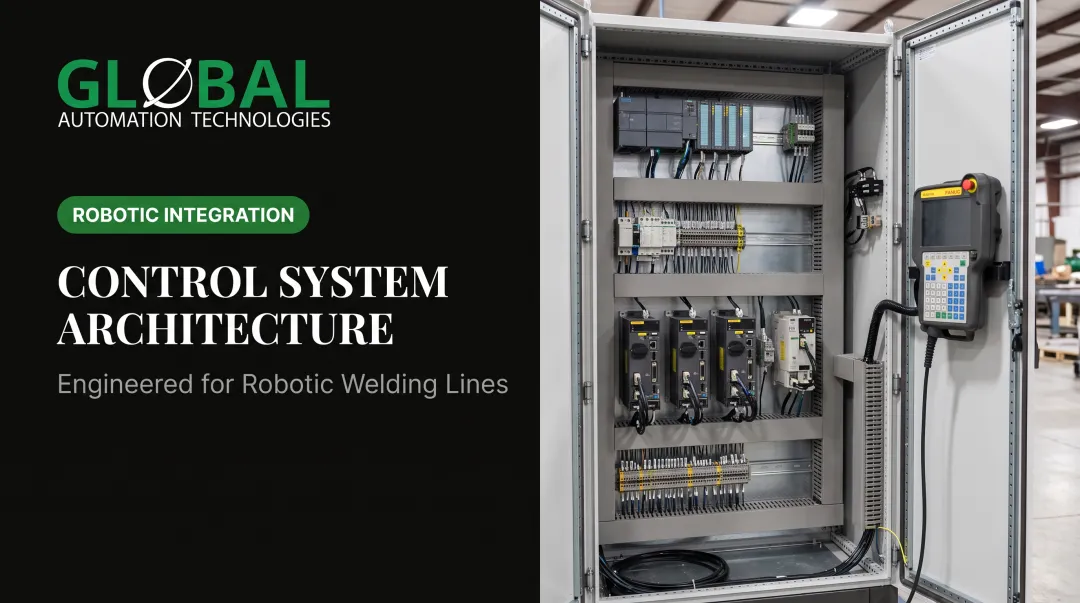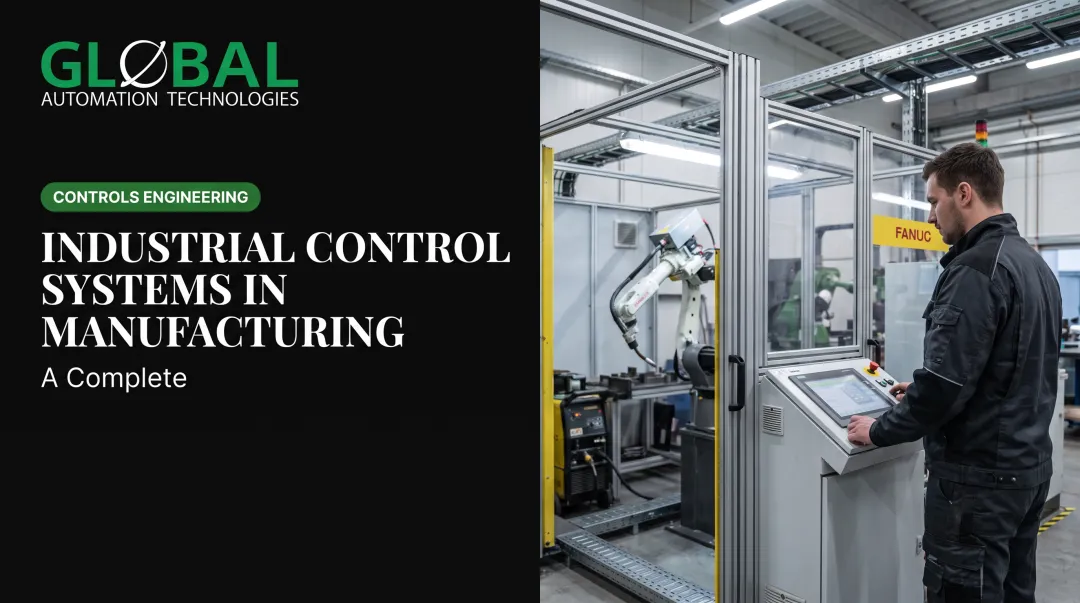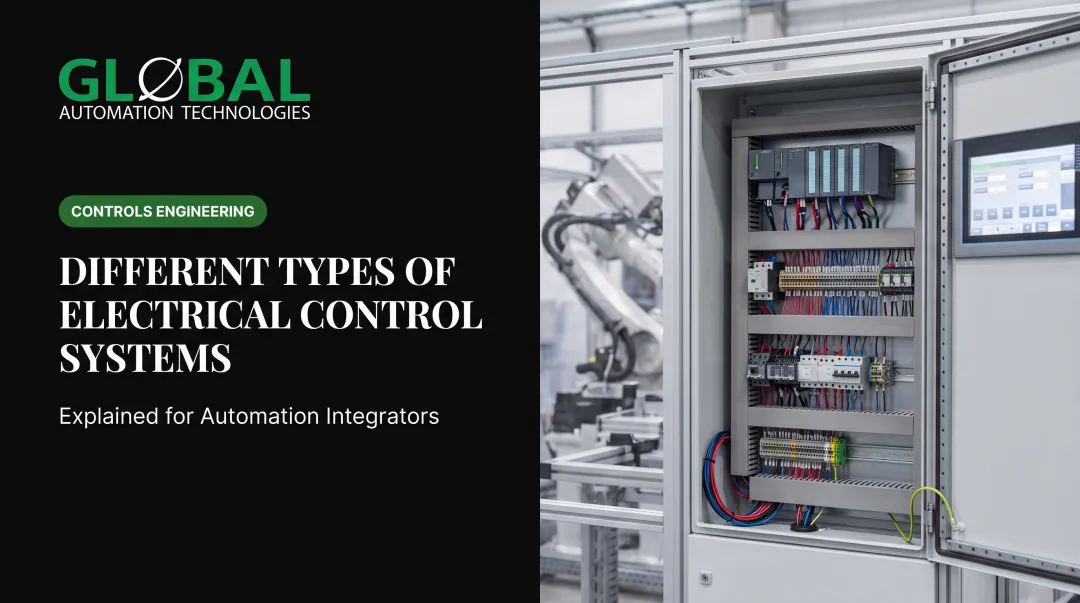

That invisible backbone, the layered network of sensors, controllers, and software connecting the plant floor to the front office, determines whether a facility runs smoothly or fights fires every shift. As manufacturers push toward IIoT sensors, AI-assisted operations, and tighter cybersecurity mandates, architecture decisions carry more weight than ever. 12.6% of U.S. manufacturers now use AI on the plant floor, with another 17.4% planning to adopt it soon — and every one of those AI tools needs a control architecture built to support it.
This article breaks down what ICS architecture actually is, why it matters, the three main architecture types, and how to choose the right one for your operation.
Key Takeaways
- ICS architecture layers controllers, networks, and software to link field devices with enterprise systems
- Architecture choices directly shape uptime, safety, product quality, and cyber exposure
- Three primary types: SCADA (wide-area), DCS (continuous process), PLC-based (discrete machines/lines)
- Fit depends on process type, geographic scope, latency, budget, and engineering talent
What Is an Industrial Control System (ICS) Architecture?
ICS architecture is the structured arrangement of controllers, networks, HMIs, and field devices designed to automate and manage a physical process. You don't buy it as a single off-the-shelf product. It is a blueprint describing how components at different levels talk to each other and share control.
You'll find this concept applied across wildly different environments: automotive body shops, oil refineries, water treatment plants, and increasingly, data center infrastructure manufacturing. The specific hardware changes. The underlying logic of how information moves up and down the stack doesn't.
The Layers of ICS Architecture
Most engineers reference the Purdue Model, formalized in the ISA-95 standard, to describe this hierarchy. It runs across five levels:
- Level 0 — Physical production processes (the actual machines, valves, motors)
- Level 1 — Sensing and manipulation devices (sensors, actuators, smart field instruments)
- Level 2 — Monitoring and supervisory control (PLCs, DCS controllers, SCADA)
- Level 3 — Manufacturing operations management (MES)
- Level 4 — Business planning and logistics (ERP systems)

Here's the point that trips people up: SCADA, DCS, and PLC-based systems aren't competing categories sitting at one level. They're different ways of implementing and distributing these layers across a facility. That's why understanding architecture matters more than memorizing device names — a PLC can live inside a SCADA system, a DCS, or stand entirely on its own.
Why Is ICS Architecture Important in Modern Manufacturing?
Architecture design directly shapes uptime, throughput, and product quality. When it's done poorly, the effects show up fast—and they get expensive.
According to NIST SP 800-82r3, poorly managed OT systems can drive health and safety risk, environmental damage, production loss, economic impact, and compromised proprietary information. Those outcomes follow when control architecture wasn't planned with the full picture in mind.
Without a deliberate architecture, plants typically run into:
- Blind spots between the plant floor and IT systems, making root-cause troubleshooting slow and frustrating
- Unsegmented networks that let a single compromised device become a pathway into the entire operation
- Fragmented data, where machine-level information never makes it to the systems that could act on it
As plants layer in IIoT sensors and AI-driven predictive maintenance, architecture stops being only a day-to-day control concern. It becomes a long-term scalability and security decision. A network built five years ago for basic PLC control may lack the segmentation or bandwidth to support today's data demands without a redesign.
Types of ICS Architectures
ICS architecture isn't one-size-fits-all. The right structure depends on how spread out, fast, and complex your process actually is. Each of the three main types represents a different way of distributing control, data, and supervisory functions.
| Dimension | SCADA | DCS | PLC-Based |
|---|---|---|---|
| Scope | Geographically dispersed | Single plant or site | Machine, cell, or line |
| Core function | Central data acquisition & supervision | Coordinated local control loops | Deterministic logic & I/O |
| Timing focus | Near-real-time supervision | Continuous process coordination | Millisecond scan cycles |
| Best fit | Pipelines, grids, water networks | Refining, chemical, power generation | Assembly, packaging, robotic cells |
Type 1: SCADA (Supervisory Control and Data Acquisition)
SCADA is a centralized software architecture built to gather data and provide supervisory control across assets spread across a wide area. Remote terminal units (RTUs) and PLCs stationed at distant sites feed information back to a central master station over WAN, radio, or cellular links.
Unlike the other two architectures, SCADA is optimized for wide-area visibility, not tight millisecond-level control loops. It tells you what is happening across the whole network—not how to drive a single valve in real time.
Best suited for: pipelines, power grids, water and wastewater networks, and remote well sites managed by utilities and infrastructure operators.
Strengths:
- Centralized visibility across large geographic areas
- Remote diagnostics without a site visit
- Consolidated alarm management from one control room
Trade-offs:
- WAN latency limits fast closed-loop control
- Every remote communication link widens the cybersecurity attack surface
Type 2: DCS (Distributed Control System)
A DCS distributes control functions among multiple networked controllers, all within a single plant or site. Local controllers manage individual process loops independently while staying connected to a central control server for coordinated supervisory functions.
Where SCADA is built for wide-area visibility, DCS is built for fast, continuous control concentrated in one physical location. Think of it as depth over distance.
Best suited for: continuous process industries such as oil refining, chemical processing, power generation, and pulp and paper.
Strengths:
- Fast, reliable closed-loop control
- Built-in controller redundancy for high availability
- Tight integration across interconnected process loops
Trade-offs:
- Higher upfront cost and more complex commissioning than PLC-based systems
- Not designed for geographically dispersed assets
Type 3: PLC-Based Control Architecture
A PLC-based architecture centers on one or more programmable logic controllers handling discrete or sequential logic for a machine or line. The PLC scans inputs and outputs continuously and executes IEC 61131-3 logic—such as ladder logic or structured text—to drive actuators in millisecond cycles.
This architecture is simpler, more modular, and typically less costly than DCS or SCADA. It's scoped to the machine or line level rather than the entire plant.
Best suited for: discrete manufacturing environments like automotive assembly, packaging, material handling, and robotic work cells.
This is the architecture underneath the robotic machine tending, painting, and dispensing cells GLOBAL Automation Technologies builds on FANUC platforms. PLC integration coordinates real-time signals between robots, conveyors, sensors, and safety systems.
In a typical machine tending cell, the PLC handles speed matching, part-transfer triggers, fault handling, and E-stop coordination. The line responds as one system instead of a set of disconnected devices.
Strengths:
- Rugged, flexible, and cost-effective
- Fast local response with no network round-trip delay
- Easy to scale by adding PLCs or HMIs as the line grows
Trade-offs:
- Limited native support for plant-wide analytics without SCADA or MES on top
- Standalone PLCs can become fragmented data islands without early integration planning
How to Choose the Right ICS Architecture
The "right" architecture depends on your process needs and constraints, not on what's most advanced or most familiar to your team. A refinery doesn't need PLC-only control, and a packaging line doesn't need a full DCS.
Weigh these factors before committing:
- Process type and continuity: Continuous processes lean toward DCS; discrete manufacturing points toward PLC-based systems.
- Geographic scope: Single-site control calls for a different architecture than assets spread across a region.
- Real-time performance needs: How much latency can your process actually tolerate before quality or safety suffers?
- Budget and total cost of ownership: Factor in long-term maintenance, not just installation cost.
- Cybersecurity requirements: Network segmentation should be part of the design stage, not an afterthought.
- In-house engineering expertise: Someone has to commission, program, and maintain whatever you build.
That last factor is where a lot of plants get stuck. Many manufacturers can design or spec the right architecture but don't have the bench strength to commission and support it long-term.
That gap is why GLOBAL, a Level 5 FANUC Authorized System Integrator, pairs automation solutions, services and on-demand technical staffing. Controls engineers, PLC programmers, and commissioning specialists go into client operations so the architecture and the people running it arrive together. If your team is weighing a design without the staff to back it up, it's worth a conversation with an integration partner before you lock it in.
Common Mistakes to Avoid
- Over-engineering the solution: Choosing SCADA or DCS-level complexity when a simpler PLC-based line would do the job just fine
- Bolting on security later: Adding cybersecurity segmentation after deployment instead of designing it in from day one
- Underestimating engineering effort: Assuming existing staff can absorb commissioning and long-term support on top of their regular workload
Conclusion
ICS architecture determines a plant's efficiency, safety, and ability to scale. SCADA, DCS, and PLC-based systems each solve a different problem: wide-area visibility, continuous process control, or fast discrete machine logic. No single architecture wins everywhere. The right choice fits your process, your footprint, and your team's capacity to run it.
Pairing the right architecture with the right engineering talent, whether an internal hire or an integrated systems-and-staffing partner, cuts startup surprises and gets new lines to production faster.
Frequently Asked Questions
What are industrial control systems?
Industrial control systems (ICS) are the combined hardware, software, and network systems used to monitor and control industrial processes. They span manufacturing, energy, and infrastructure sectors.
What's the difference between ICS and SCADA?
SCADA is a subset of ICS focused on supervisory monitoring and control over geographically distributed assets. ICS is the broader umbrella term covering SCADA, DCS, PLCs, and related systems.
What's the difference between DDC and DCS?
Direct Digital Control (DDC) typically refers to localized, single-loop digital control, commonly found in building automation systems. DCS refers to a distributed architecture coordinating many controllers across an entire industrial plant.
What are the common types of control systems?
The most common categories are SCADA, DCS, and PLC-based systems. Hybrid or IACS architectures blend elements of each.
Is a PLC part of a DCS or SCADA system?
Yes, in many cases. PLCs often serve as field-level controllers within both DCS and SCADA architectures, handling local control while feeding data upward to the supervisory layer.
How do I know if I need a DCS or a SCADA architecture?
DCS suits continuous, single-site processes that need fast closed-loop control, like refining or chemical processing. SCADA suits geographically dispersed assets where supervisory monitoring matters more than millisecond-level control.