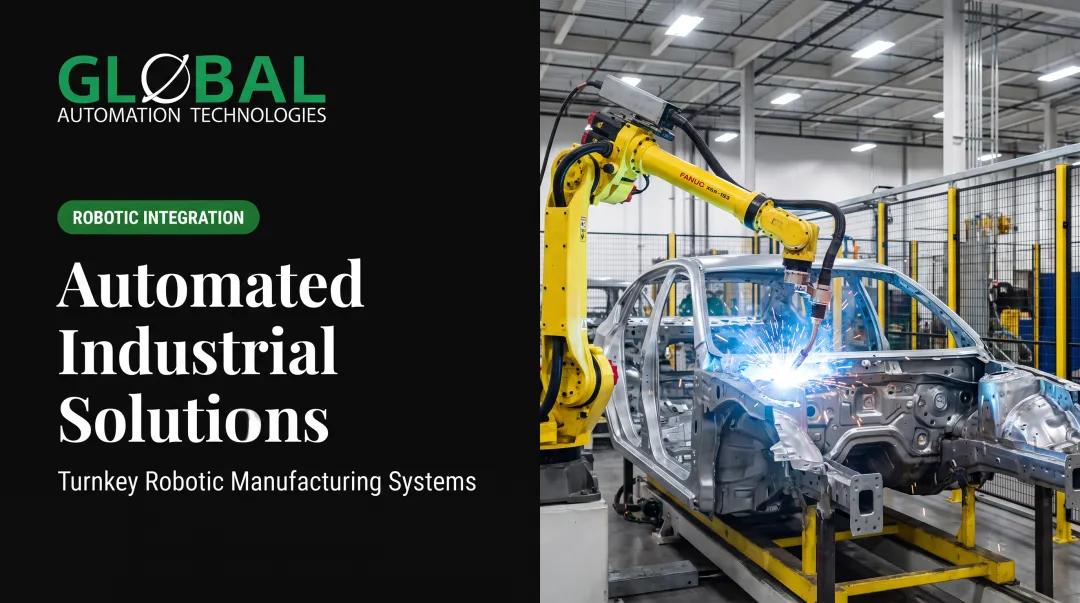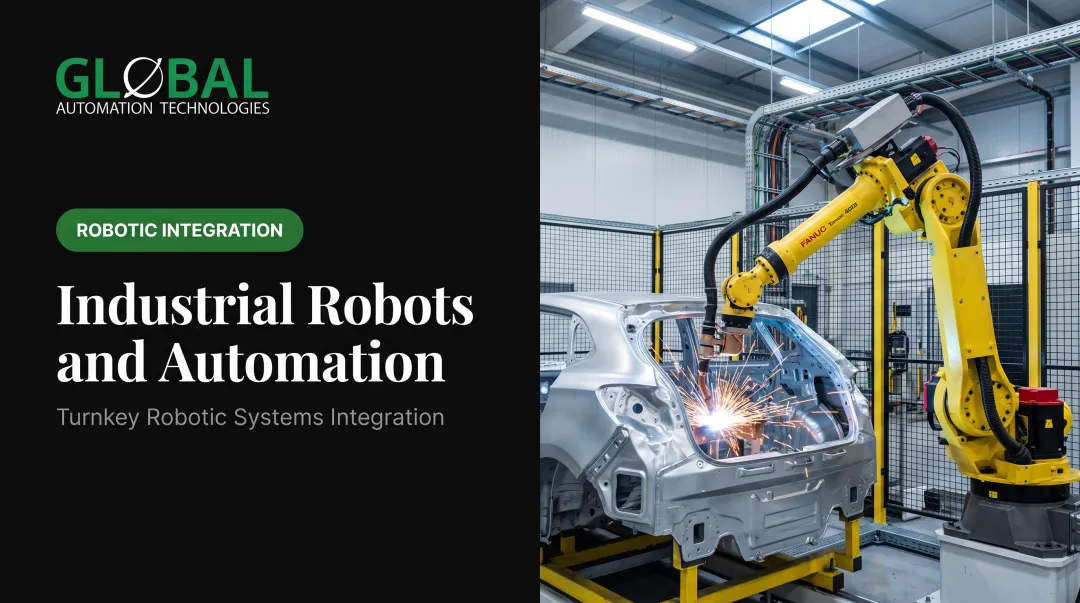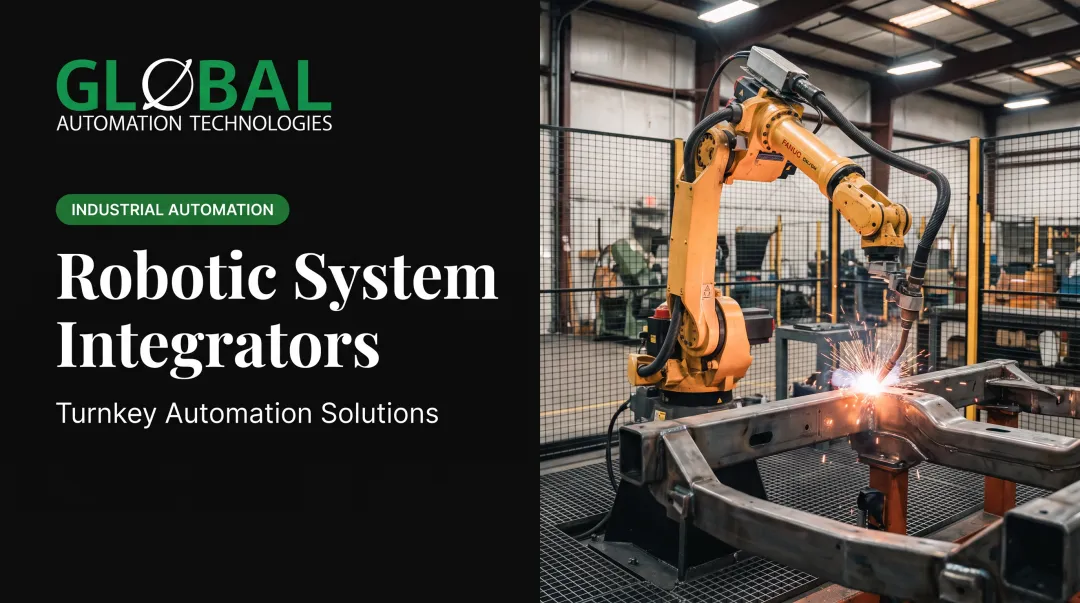

Manufacturers are moving to robotic routing and cutting because hand-trimming can't keep up with modern throughput demands, and it introduces risk that plants can no longer justify. Slow cycle times, inconsistent edges, high scrap rates, and injuries from spinning cutter heads are common pain points on manual lines.
This article covers how robotic routing and cutting actually works, the equipment types available, where it's being used across industries, and how to evaluate an automation partner if you're ready to make the switch.
Key Takeaways
- Robotic trimming cells cut cycle times from 24 minutes to 5 minutes in documented cases—nearly an 80% reduction versus five-axis CNC routers
- Six-axis articulated robots remain the most common choice for balancing reach, flexibility, and repeatability
- One robotic cell can process plastics, composites, rubber, foam, and light metals with consistent edge quality
- Automation removes operators from OSHA-flagged hazards like flying debris and rotating cutter heads
- Full turnkey integration, not piecemeal equipment buying, determines long-term uptime and ROI
What Is Robotic Routing and Cutting?
Robotic routing and cutting uses articulated or gantry-style robots, guided by computer-controlled tool paths, to trim, mill, cut, or deflash parts. Instead of a fixed spindle and a part that stays put, the tool moves. A router bit, drag knife, or waterjet nozzle is mounted directly on the robot, and the robot guides it around the workpiece.
That's the fundamental difference from traditional CNC machining. A CNC router holds the part fixed while tooling travels along a constrained set of axes, which works well for flat, highly repeatable geometries. Robotic routing flips that relationship: the robot reaches around or across the part, which matters when you're dealing with large, curved, or irregular 3D shapes that don't fit neatly into a CNC envelope.
Common materials processed on these cells include:
- Thermoformed, injection-molded, and blow-molded plastics
- Composites (fiberglass, carbon fiber)
- Light metals
- Rubber and foam
Articulated robots have lower inherent rigidity than fixed CNC machines, so they suit softer materials—plastics, foam, and composites—better than heavy metal removal.
Core Components of a Robotic Routing/Cutting Cell
A typical cell includes:
- 6-axis robot: the workhorse for most applications, balancing flexibility with repeatability
- End-effector: router spindle, drag knife, waterjet head, or saw, depending on material and cut type
- Rotating or servo-controlled fixture table: holds the part and often rotates to expose multiple faces without repositioning
- Vision and safety systems: part verification, tool-path correction, and personnel protection

Commercial systems like RPT's RoboTrim have historically paired FANUC-based robots (such as the M-16iB) with rotating tables and compliant knife tooling for non-metallic applications. GLOBAL Automation Technologies builds primarily on FANUC platforms in its integration work, so this architecture is a natural fit when clients evaluate trim and cut automation.
Key Benefits of Automating Routing and Cutting
The case for automating routing and trimming isn't theoretical. It shows up in cycle time, scrap rates, and safety incident logs.
Throughput Gains
Documented case studies show substantial speed improvements over five-axis CNC trimming. One thermoformed instrument panel dropped from a 9-minute CNC cycle to under 4 minutes on a robotic trim cell, contributing to a 35% production increase (A3/RIA case study).
Another manufacturer cut a trim cycle from 24 minutes on a five-axis CNC router to just 5 minutes on a seven-axis robotic trim router, nearly an 80% reduction.

These are application-specific results, not universal ratios. Part geometry, fixturing, and tool-change frequency all affect the outcome. But the direction is consistent.
Scrap and Safety Improvements
- Consistent tool paths: Eliminate gouging and quality swings caused by fatigue and hand-held routing variability
- Fewer returned-goods issues: One thermoforming case reported lower RGA rates after switching to robotic trimming
- Operators out of hazard zones: OSHA flags rotating cutter contact, flying chips, entanglement, and kickback as router-specific risks
Uptime and ROI
Quick-changeover tooling reduces downtime between part runs, and removing fatigue-related operator error improves consistency shift over shift. GLOBAL's internal data on machine tending and robotic trim cells suggests these systems typically pay for themselves in 12 to 18 months, driven by producing more parts per shift with fewer direct labor hours.
Flexibility is the other underrated benefit. One robotic cell, reprogrammed with new tool paths, can handle multiple part geometries. A dedicated fixed-tooling setup can't do that without a rebuild.
Types of Robotic Routing and Cutting Systems
Not every shop needs the same architecture. Here's how the main options break down:
| System Type | Best For | Characteristics |
|---|---|---|
| Articulated arm | High-mix, moderate-volume production | Smaller footprint, lower cost, moderate accuracy (0.010–0.015 in.) |
| Gantry/Cartesian | Large parts, multi-zone floor coverage | Higher rigidity and accuracy (down to ±0.002 in. in aerospace applications), larger footprint |
| Portable/wheeled | Small shops, on-site cutting | Flexible deployment, less suited to high-volume runs |

End-effector selection matters just as much as the robot platform:
- Router spindles for general cutting and carving
- Drag knives for thin, flexible materials
- Rotary chucks for cylindrical parts
- Waterjet heads for heat-sensitive or delicate materials that can't tolerate mechanical trimming
Gantry-mounted waterjet systems running pure water at 50,000–60,000 psi handle 3D soft-trim and textile parts without heat distortion. A spinning router bit simply can't avoid that heat on certain materials.
Where Robotic Routing and Cutting Are Used
Robotic routing and cutting show up wherever shops need flexible, multi-axis trim on parts that outgrow fixed CNC or manual finishing.
Automotive and EV Manufacturing
This remains one of the most mature application areas. Common work includes:
- Trimming bumpers, interior trim panels, and composite body components
- Cutting openings in fascias and instrument panels
- Composite center-pillar trimming
ABB-documented Lear plants used robotic waterjet and routing systems on Saab and Volvo lines to remove surplus material and cut panel openings.

Plastics Processing
Thermoforming, injection molding, blow molding, and rotational molding all leave trim waste that has to come off cleanly. Plastics has a long, well-documented track record with robotic trim cells.
Heavy Equipment and Industrial Manufacturing
Cutting and deflashing large fabricated parts and enclosures suits robotic routing, especially when part size or geometry makes fixed CNC impractical.
Data Center Infrastructure Manufacturing
Manufacturers building racks, panels, and modular enclosures need precision cutting that flexes across product variants without retooling. Robotic cells handle that mix without a dedicated fixture for every SKU.
How to Choose the Right Robotic Routing/Cutting Solution
Picking equipment off a spec sheet is the easy part. Getting the full system right takes more work.
- Match reach to your largest workpiece. Undersize the work envelope and you'll be stuck retrofitting within a year.
- Default to 6-axis unless you have a specific reason not to. Most manufacturers land here because it balances flexibility with repeatability across varied part geometries.
- Prioritize programmability. AI-assisted simulation can compress robot programming from weeks down to days by modeling and testing tool paths before deployment, which cuts startup surprises.
- Choose a true turnkey integrator. Layout, design, build, programming, validation, installation, and ongoing support should come from one partner, not five vendors you're coordinating yourself.
- Evaluate total cost of ownership, not sticker price. Payback period, maintenance access, and engineering support matter more over five years than the upfront quote.

GLOBAL Automation Technologies, a Level 5 FANUC Authorized System Integrator, delivers that turnkey model end to end: process study through commissioning and long-term support under one roof. Gaps between vendors are where startup delays and unplanned downtime tend to creep in.
Frequently Asked Questions
What is the difference between CNC machining and robotic routing?
CNC machines hold a fixed part while tooling moves along a constrained axis path. Robotic routers move the tool freely around or across the part, giving greater reach and flexibility for large or irregular geometries.
What materials can robotic cutting and routing handle?
Plastics, composites, rubber, foam, and light metals are the most common. End-effector choice (router spindle, drag knife, or waterjet) depends on the material and cut requirement.
How much does a robotic routing or cutting cell cost?
Costs vary widely based on robot count, tooling package, and fixture complexity. Turnkey cells often run into six figures, with payback for similar installations typically in the 12–18 month range.
What robot brands are commonly used for routing and cutting?
FANUC, KUKA, ABB, and Yaskawa Motoman are widely used for routing, trimming, and waterjet cutting on plastics and composites. Payload and rigidity still need verification for each model and use case.
Can robotic routing cells be integrated with existing production lines?
Yes. Most systems are modular and can be retrofitted into existing layouts with proper controls integration and floor-space planning.
How do I get started with robotic routing automation for my facility?
Work with a turnkey automation integrator to review part specs, throughput goals, and facility layout before you select equipment. That process study shapes every decision that follows.