
Introduction
In 2025, Audi recalled 89,417 vehicles after improperly tightened cover screws created an oil-leak and fire risk—a stark reminder that a single fastening error can cascade into catastrophic failure. Precision torque control is the foundation of quality in high-volume manufacturing. It keeps every fastener on spec and cuts the risk of recalls, warranty claims, and safety failures.
For manufacturers running lines that tighten thousands of bolts a day, the gap between proper torque and guesswork shows up in scrap costs, brand damage, and real safety risk.
Modern production needs systems that measure, verify, and document every fastening. Manual processes cannot deliver that at scale.
This guide covers what precision torque control is, why it fails on the line, and how automated fastening and verification keep high-volume assembly consistent.
Key Takeaways
- Precision torque control eliminates fastening defects by verifying rotational force within set tolerances
- Controlling under- and over-tightening prevents joint failure, stripped threads, and material damage
- Automated torque verification with data logging builds permanent compliance and warranty records
- Robotic fastening delivers repeatability manual assembly cannot match in safety-critical work
What is Precision Torque Control?
Precision torque control is the accurate measurement and application of rotational force to fasteners within specified tolerances, using feedback systems to verify that each joint receives the correct clamp load.
The Physics Behind Torque Application
The torque formula T = F × r (torque equals force times radius) defines rotational force, but in fastening applications, torque is only a proxy for what truly matters: clamp load.
According to Atlas Copco's tightening guide, approximately 10% of applied torque becomes clamp load, with roughly 40% overcoming thread friction and 50% lost to under-head friction. Lubrication, coatings, and joint condition change this relationship, so the same torque value can produce different clamp loads depending on fastener preparation.
This is why precision control systems measure torque dynamically, rather than only presetting a clutch or current limit.
Torque Control vs. Simple Tightening
Basic tightening tools stop at a preset clutch or current setting, but they don't know what torque was actually delivered. True torque control incorporates three elements:
- Measurement systems: Torque sensors (transducers) embedded in the tool or spindle that measure real-time rotational force
- Control systems: Feedback loops that compare measured torque to programmed targets, abort conditions, and acceptance windows
- Application systems: Electric or pneumatic actuators that respond to controller commands and stop, continue, or abort the cycle
Closed-loop transducerized systems feed actual measured torque back to the controller in real time, enabling stop logic based on measured values rather than estimates.
Control Strategies
Modern fastening controllers implement multiple strategies:
| Control Mode | How It Works | When to Use |
|---|---|---|
| Torque-only | Stops when target torque is reached | Simple joints with consistent friction |
| Torque + Angle | Monitors torque and rotation; accepts only results inside min/max windows | Joints where torque alone may miss cross-threading or stripped threads |
| Yield Control | Tightens into the plastic region where clamp load becomes predictable | Critical aerospace and automotive joints needing max strength |

Industry Tolerance Expectations
While no universal tolerance table governs all industries, representative expectations include:
- Automotive assembly: Typical programs specify ±5% for many powertrain and chassis joints
- Aerospace: NASA-STD-5020B requires joint-specific testing and documentation; some programs target ±3% or tighter
- Medical device assembly: High-precision applications may require ±2% to prevent damage to delicate components
ISO 5393:2017 defines laboratory test methods for power tools from 0.5 to 2,000 Nm, but it does not set production tolerances. Those are determined by joint design, safety criticality, and regulatory requirements.
Why Precision Torque Control Matters in Manufacturing
Quality Assurance and Warranty Protection
Fastening defects generate warranty claims and product recalls that cost manufacturers millions. Audi's 2025 recall of 89,417 vehicles due to improperly tightened screws illustrates the scale of risk: a single fastening process error can trigger a recall affecting nearly 90,000 units.
Consistent torque application prevents:
- Under-tightening that allows joints to loosen, separate, or fail under service loads
- Over-tightening that strips threads, cracks housings, or plastically deforms components
- Process variation that creates unpredictable joint behavior across production lots
Safety and Catastrophic Failure Prevention
In safety-critical applications such as automotive braking systems, aircraft control surfaces, and heavy equipment boom attachments, fastening errors can be deadly. The FAA documented a Beechcraft incident in which improperly torqued connecting-rod bolts separated in flight, causing complete engine power loss.
Under-torqued fasteners allow:
- Joint separation under dynamic loads (vibration, thermal cycling, mechanical stress)
- Fatigue crack initiation at loose interfaces
- Shear loading on fasteners designed to work in tension
Cost Impact: Rework, Scrap, and Downtime
One Atlas Copco customer reported $250,000/year savings after implementing error-proofing and traceability in manual assembly. While the case is vendor-reported and does not break down the calculation, it highlights the labor-intensive rework burden fastening errors create.
Cost drivers include:
- Rework labor to disassemble, retighten, and re-inspect failed joints
- Scrap when over-torqued fasteners strip threads or crack components
- Line stoppages when quality holds are triggered by out-of-spec results
- Unplanned maintenance when improperly assembled equipment fails in service
Regulatory Compliance and Traceability
Automotive, aerospace, and medical device manufacturers operate under strict quality-management standards:
- IATF 16949:2016 for automotive suppliers
- AS9100D for aerospace manufacturers
- ISO 13485 for medical device producers
These standards require documented evidence that fastening processes are capable, controlled, and verified.
Precision torque systems with data logging create a permanent record for every fastener: torque value, angle, timestamp, tool ID, operator ID, and pass/fail result. That trail supports warranty defense and narrower recall scope.
Productivity and Predictive Maintenance Benefits
Automated torque control accelerates cycle times by eliminating manual double-checks and rework. Operators no longer need to verify fasteners with hand wrenches or send samples to inspection.
Properly torqued joints also last longer. When clamp load is correct, fasteners maintain preload through service life, reducing fatigue failures and unplanned downtime. This supports predictive maintenance strategies by creating baseline assembly quality that maintenance teams can trust.

Applications of Precision Torque Control in Automated Assembly Systems
Automotive Manufacturing
Engine, transmission, and chassis assembly demand precise torque for safety and performance:
- Engine assembly: Connecting-rod bolts, main bearing caps, cylinder-head fasteners
- Transmission assembly: Case bolts, gear-carrier fasteners, valve-body screws
- Chassis fastening: Suspension mounts, subframe bolts, brake-caliper fasteners
In 2026, Honda recalled vehicles for improperly tightened rear subframe bolts, showing that even major OEMs face fastening-process risk.
Heavy Equipment Production
Construction, agricultural, and mining equipment require high-torque fastening at scale. Joints must withstand extreme vibration, shock loads, and environmental exposure. In 2020, Genie recalled equipment after some bolted joints received correct pretorque but failed to reach final torque, underscoring the need for torque-plus-angle verification in multi-stage tightening.
Electronics Assembly
Delicate components require low-torque precision to prevent damage while ensuring secure attachment. Atlas Copco's transducerized electronics tools use internal torque sensors and closed-loop feedback to control fastening at fractional Newton-meter levels, protecting circuit boards and housings from over-stress.
Robotic Integration Advantages
Robotic fastening systems eliminate human variability. The Weber SEV-P servo spindle, for example, achieves ±3% repeatability across 10-60 Nm, far exceeding manual capability. Robots maintain consistent approach angles, speeds, and seating forces cycle after cycle.
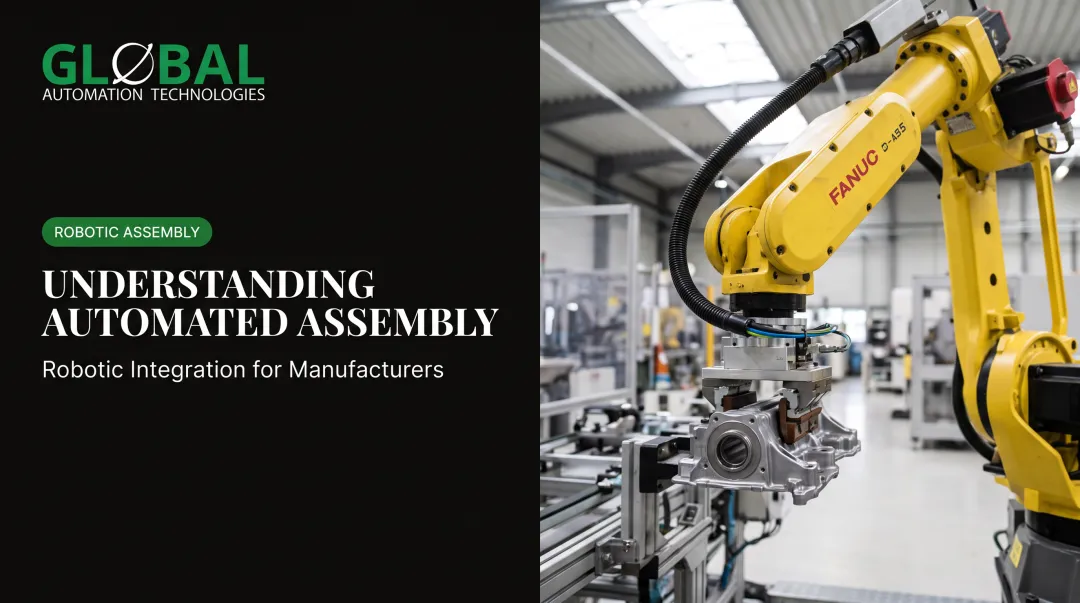
Spindle repeatability alone is not enough—full assembly cells also need coordinated positioning, insertion, inspection, and data capture. GLOBAL's robotic assembly systems integrate precision fastening with those upstream and downstream steps for automotive, heavy equipment, and aerospace lines.
Typical cell capabilities include:
- Automated positioning, component insertion, and fastening in one sequence
- In-process testing and inspection before parts move downstream
- AI-assisted simulation to optimize robot programs before deployment
- Traceability records for torque values, test results, and serial numbers
That combination cuts commissioning surprises, shortens time-to-production, and gives quality teams a complete fastening history for every joint.
Common Challenges in Precision Torque Control
Environmental Factors
Temperature, humidity, and vibration affect sensor accuracy and joint behavior:
- Temperature: HBK specs list sensitivity drift of ≤0.1% and zero-point drift of ≤0.05% over a 10°C range. Performance drops outside calibrated bands.
- Vibration: High-frequency vibration damages transducers or adds measurement noise—stay within the sensor’s vibration-endurance limits.
- Humidity: Moisture corrodes electrical connections and changes lubricant properties, shifting torque-to-preload relationships.
Tool Calibration Drift
Torque tools lose accuracy over time from mechanical wear, electronic drift, and accidental overload. Atlas Copco ties calibration intervals to usage, criticality, and quality-system requirements:
- 12 months as a standard fallback
- 3–6 months for safety-critical or medical applications
- Quarterly or monthly checks for high-cycle production tools
Operator Variability in Semi-Automated Systems
Even with torque-controlled hand tools, human factors introduce variability:
- Inconsistent approach angles
- Variable trigger pressure and hold time
- Fatigue-induced errors on high-repetition tasks
- Inadequate training on tool operation and error codes
Full automation removes these variables in critical applications and holds performance steady shift after shift.

Solutions and Best Practices for Torque Control Implementation
Strong torque control comes from three practices: verify every joint as it is fastened, log the result to the product, and calibrate tools on a usage-based schedule.
Automated Torque Verification
In-line checking systems verify every fastener as it's installed, rather than relying on end-of-line batch sampling. Integrated torque-measurement spindles compare actual results against programmed acceptance windows and immediately flag non-conforming joints for rework.
Benefits:
- Delivers 100% verification instead of statistical sampling
- Stops defective assemblies before they move downstream
- Creates permanent data records for each fastener
Data Logging and Traceability
Connected fastening systems create digital records that link torque results to product serial numbers, operators, tools, and timestamps. This traceability is critical for:
- Warranty defense (proving correct assembly when field failures occur)
- Recall-population reduction (identifying only affected serial ranges)
- Root-cause analysis (correlating defects with specific tools, shifts, or batches)
NASA-STD-5020B requires as-built records for spaceflight hardware, including fastener type, torque range, tightening method, and verification results.
Preventive Calibration Schedules
Establish calibration frequency based on:
- Usage intensity: Tools running 1,000+ cycles/day require more frequent checks than occasional-use tools
- Criticality: Safety-critical applications demand tighter intervals
- Historical drift: Tools with faster drift histories need shorter intervals between checks
- Regulatory requirements: Automotive and aerospace programs may mandate specific intervals
ISO 6789-2:2017 addresses calibration for hand torque tools, but production spindles require manufacturer-specific procedures and traceable calibration equipment.

Frequently Asked Questions
What does torque control mean?
Torque control is the process of measuring and regulating the rotational force applied to fasteners, ensuring bolts and screws are tightened to exact specifications. It uses sensors and feedback loops to verify each joint receives the correct clamp load.
What are the benefits of torque control?
Torque control improves product quality and safety while cutting warranty claims, rework, and scrap. It also supports automotive and aerospace compliance and creates permanent traceability records for every fastener.
What is computed torque control and how is it used in robotic manipulators?
Computed torque control is an advanced motion-control algorithm used in robotic manipulators that calculates required motor torques based on desired joint movements and dynamic models. It is a robot-control technique, not a fastening strategy, and should not be confused with threaded-fastener torque control.
What is a torque motor controller?
A torque motor controller is an electronic device that regulates motor current to achieve specific torque output in electric fastening tools. It uses feedback from torque sensors to maintain constant torque regardless of speed or load variations, enabling precise fastening control.
Need precision torque control for your assembly line? GLOBAL Automation Technologies, which holds Level 5 status in FANUC’s Authorized System Integrator program, integrates turnkey robotic fastening systems with torque verification, data logging, and AI-assisted simulation for automotive, heavy equipment, and industrial manufacturers. Contact +1 (810) 877-0329 or info@globalat.com to discuss your application.