
That gap is exactly why packaging line automation has moved from "nice to have" to a core operating strategy. Done right, it protects throughput, tightens quality control, and keeps workers out of harm's way.
This article breaks down the four main types of packaging line automation, the benefits each one delivers, and how to figure out which combination actually fits your line.
Key Takeaways
- Four stages drive packaging line automation: case erecting, case packing, case sealing, and palletizing.
- Robotic case packing and palletizing pay back fastest via labor savings and less product damage.
- Match automation to throughput targets, SKU mix, and the flexibility you need later.
- Automation cuts injury risk by removing repetitive lifting and bending from case building.
- Overspecced or underspecced equipment wastes capital and leaves bottlenecks in place.
What Is Packaging Line Automation?
Packaging line automation refers to the machinery and controls that handle case forming, product packing, sealing, and palletizing with little to no manual labor. It ranges from a single semi-automated station bolted onto an existing line to a fully integrated, robotic end-of-line system running across shifts between scheduled maintenance windows.
Without automation, these tasks fall to manual labor, which brings real costs beyond wages.
The safety case is hard to ignore. Overexertion caused 492,140 days-away-from-work injuries in the U.S. in 2023-2024, the second-highest injury category tracked, according to the National Safety Council.
OSHA specifically flags repetitive lifting and repetitive task performance—the exact profile of manual case building and palletizing—as ergonomic hazards.
Beyond safety, manual packing introduces variability:
- Inconsistent seals
- Uneven pack patterns
- Throughput that swings with staffing levels rather than demand
Automation exists to remove that variability.
The 4 Types of Packaging Line Automation
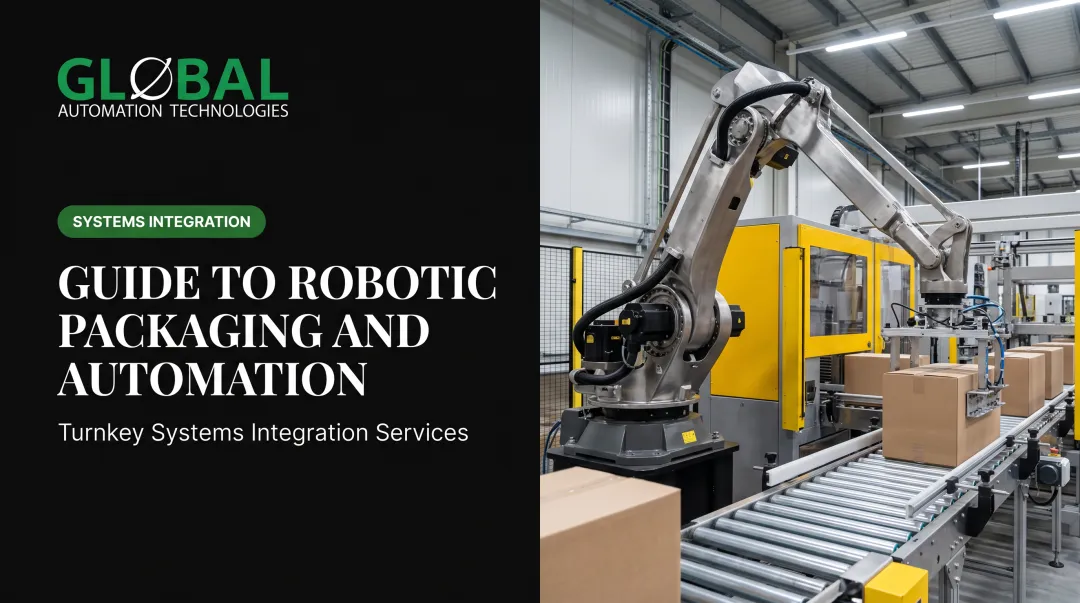
Packaging line automation covers four distinct stages that typically run in sequence: form the case, pack the product, seal it, then palletize for shipping. Companies don't have to automate all four at once. Many start with whichever stage is bleeding the most time or causing the most injuries, then expand from there.

Type 1: Case Erecting (Forming) Automation
Case erectors take flat cardboard blanks and automatically fold, glue, or tape them into square, ready-to-fill cases. A PLC and sensor network drive the process. Modern units run on a programmable controller with a color HMI, live sensor mapping, and guided fault recovery, and can be rated up to roughly 15 cases per minute.
Best suited for:
- High-volume lines with frequent case-size changeovers
- Operations where manual box-folding is a repetitive strain risk
Key strengths:
- Eliminates the manual folding motions tied to hand injuries
- Produces consistently square cases, which matters for every downstream step
Limitations: Case erectors only solve the forming problem. You still need separate automation (or manual labor) for sealing and palletizing.
Type 2: Robotic Case Packing Automation
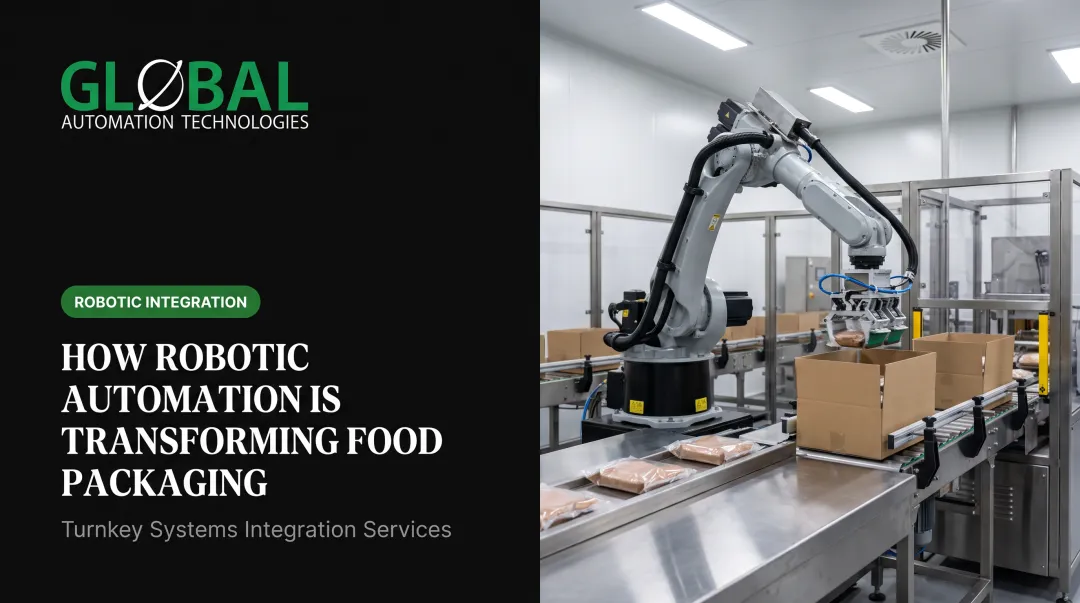
Here, robotic arms (often equipped with vision-guided grippers) pick products and place them into the formed cases. Machine vision identifies part orientation and location in real time, which matters when you're running multiple SKUs through the same cell rather than one uniform product.
Best suited for:
- Multi-SKU lines with frequent product changes
- Fragile or irregularly shaped products that punish manual handling
- Facilities struggling to staff repetitive pick-and-place roles
Key strengths:
- Delivers consistent pack patterns and reduces product damage from inconsistent manual placement
- FANUC-based cells that GLOBAL integrates use iRVision and 3D sensing for mixed-product flows, extending unattended run time between interventions
Limitations: Higher upfront cost than a manual station, and reprogramming for new pack patterns takes engineering time unless the cell was built with flexible tooling and simulation-based programming from the start. GLOBAL, which holds Level 5 status in FANUC’s Authorized System Integrator program, addresses this using AI-assisted simulation, which models and validates new pack patterns virtually before deployment, cutting programming time from weeks to days.
Type 3: Case Sealing Automation
Case sealers close the top and bottom flaps automatically using tape or hot-melt glue. Better units auto-adjust height and width settings so the same machine handles varying case sizes without manual resets.
Best suited for:
- Lines running mixed case sizes
- High-speed dispatch operations that need tamper-resistant, repeatable seals
Key strengths:
- Produces square cases with uniformly closed flaps and properly applied tape
- Holds seal consistency that is hard to maintain by hand at volume
- Per 3M, lines hand-taping more than 200 same-size boxes a day typically see better results after switching to a sealer
Limitations: A sealer can only move as fast as the case erecting and packing stages feeding it. It also does nothing for load stability once cases hit the pallet — that's a separate problem.
Type 4: Palletizing Automation
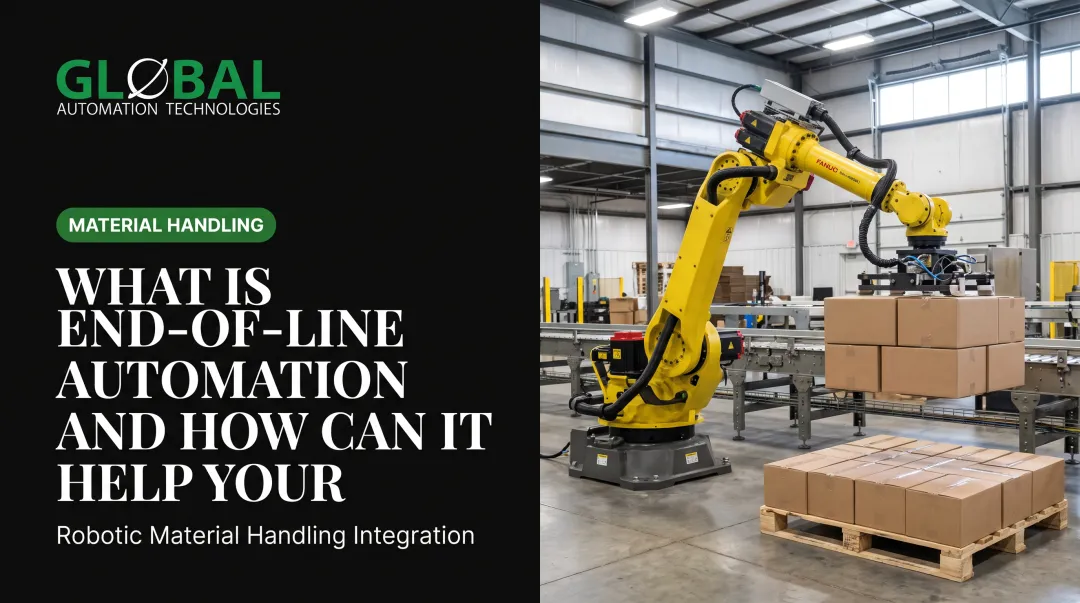
Robotic palletizers stack finished cases onto pallets using end-of-arm tooling such as vacuum grippers, following programmed stacking patterns designed for load stability and SKU mix.
Best suited for:
- End-of-line operations shipping high pallet volumes
- Facilities where manual stacking creates ergonomic risk from repeated lifting, bending, and twisting
Key strengths:
- Delivers consistent stack patterns that hold up better in transit
- Runs across multiple shifts between scheduled maintenance windows once commissioned
Limitations: Robotic palletizing cells need floor space and safety guarding, and the return on investment scales with pallet volume. A lower-throughput line may not generate enough pallets to justify a full robotic cell. A semi-automated or manual solution might make more sense there.
Key Benefits of Packaging Line Automation
Each automation type solves a specific bottleneck, but stacked together, the benefits compound across the whole line.
Increased throughput. Robotic top-load case packers can run up to 20 cases per minute, and multi-robot lines have hit 20,000 units per hour in dairy packaging deployments. Systems also hold output during demand spikes without temp-labor ramp-up.
Reduced labor dependency. Fewer workers stay locked on repetitive tasks. In a recent Packaging World outlook, 65% of packaging industry respondents planned to invest in automation within the next year, citing labor shortages as a primary driver.
Improved consistency. Precision equipment cuts variability in seals, pack patterns, and pallet stacking, which means fewer rejected shipments and fewer damaged goods in transit.
Better workplace safety. Automation pulls workers off the repetitive lifting, bending, and cutting tied to manual case building and palletizing. OSHA and the National Safety Council flag those same motions as leading injury drivers.
Faster payback. Robotic material handling deployments, including machine tending and case packing cells, typically pay for themselves in 12 to 18 months through labor savings and reduced waste. Industry buyers often treat a two-year ceiling as the approval threshold, and some cobot palletizing projects have hit payback in as little as nine months.
Scalability. Automated lines flex with changing volumes and SKU counts more easily than a manual crew that needs hiring and retraining every time the product mix shifts.

How to Choose the Right Type of Packaging Line Automation
Picking the wrong automation type is expensive in both directions: over-buy flexibility you don't need, or under-buy and leave the real bottleneck untouched.
- Identify the actual bottleneck. Walk the line and clock each stage. Is it case forming, packing, sealing, or palletizing that's capping throughput? Automating the wrong stage just moves the backlog somewhere else.
- Assess product and case variability. Running dozens of SKUs through varied case sizes favors programmable, vision-guided robotic systems. A single-SKU, high-volume line may do fine with fixed-format automation at a lower cost.
- Weigh budget against ROI timeline. Factor in floor space, safety guarding, and ongoing maintenance costs — not just the equipment price tag.
Common mistakes to avoid:
- Automating a stage that isn't actually the constraint
- Over-investing in flexibility the line will never use
- Ignoring changeover time and long-term maintenance costs
- Choosing equipment based on brand familiarity rather than application fit
Partnering with a systems integrator that also supplies the engineers to run the equipment helps avoid these missteps.
GLOBAL Automation Technologies covers the full path from feasibility study and engineering design through AI-assisted simulation, build, installation, commissioning, and training. When clients need embedded talent instead of a handoff, GLOBAL also places controls, mechanical, and project management engineers on-site.
Conclusion
Packaging line automation covers four decisions: erecting, packing, sealing, and palletizing. Each one fixes a different constraint on the line. The right mix of those types can raise throughput, improve safety, and cut cost—but only when it matches your real bottlenecks and volume.
Walk the line, mark where it slows or fails, and work with an integrator who sizes the fix to that problem. GLOBAL Automation Technologies helps manufacturers specify and deploy the right automation without overbuilding the cell.
Frequently Asked Questions
What is packaging line automation?
Packaging line automation is the machinery and technology that automate case forming, packing, sealing, and palletizing with minimal manual labor. Systems range from single semi-automated stations to fully integrated, robotic end-of-line cells.
What are the types of packaging line automation?
The four main types are case erecting, robotic case packing, case sealing, and palletizing automation. Each addresses a different stage of the packaging process and can be automated individually or combined into one line.
What is the ROI for packaging line automation?
Most systems — especially robotic case packing and palletizing cells — pay back within 12 to 18 months, depending on labor savings and production volume. Higher-volume lines with more manual labor to displace tend to see faster payback.
How much does a robotic case packer cost?
Pricing is quote-based and varies with throughput needs, payload requirements, number of robots, and SKU variability. Complex multi-SKU applications with custom tooling and vision guidance cost more than fixed-format, single-product cells.
How do I know if my packaging line needs automation?
Watch for missed throughput targets, high injury or strain rates among packing staff, inconsistent seals or shipment damage, and difficulty scaling output when demand increases. Any of these signals a bottleneck worth automating.
Can packaging automation be integrated with existing equipment?
Yes — most modern automation can be retrofitted into existing lines. Layout constraints and controls compatibility should be assessed first, typically through a feasibility study with an integrator before equipment is specified.