
Introduction
Off-the-shelf automation looks great in a brochure. Then it hits your production floor.
Many manufacturers discover that generic robotic cells can't handle unique part geometries, hold the tolerances their process demands, or safely manage hazardous tasks like spray painting and welding.
The result? Bottlenecks, inconsistent quality, and safety risks that a standard system was never designed to solve.
Forcing a one-size-fits-all system onto a non-standard line usually creates more problems than it fixes. It slows changeovers, frustrates operators, and leaves throughput gains on the table.
This guide breaks down what custom automated manufacturing actually means, walks through real applications, outlines the benefits worth caring about, and explains how to pick an automation partner who won't disappear after installation.
Key Takeaways
- Custom automation is engineered around your part geometry and process goals
- Most projects start in machine tending, painting, dispensing, welding, or material handling
- Payoffs show up in efficiency, cost per part, quality consistency, safety, and scalable capacity
- Strongest partners pair turnkey systems integration with hands-on engineering support
What Is Custom Automated Manufacturing?
Custom automated manufacturing means building an engineered system—robots, PLCs, sensors, vision, HMIs—around a specific part, process, or production goal. Nothing generic about it.
According to a 2026 industry article published by the Association for Advancing Automation, a custom automation machine is "purpose-built" around exact cycle-time, tolerance, quality, and integration requirements rather than a generalized application.
There are two operational models manufacturers typically choose between:
- Fully automated — no operator intervention in loading or unloading; the system runs the full cycle independently
- Semi-automated — manual loading paired with automated processing, giving operators control over part placement while the machine handles the repetitive or hazardous work
Many manufacturers start semi-automated. It's a lower-risk entry point that proves out the process before committing capital to a fully automated cell. As volume grows or labor becomes harder to source, that same system can often scale toward full automation.
The core difference from standard automation is fit. Off-the-shelf systems are built to a template. Custom systems are engineered to your exact part variations, cycle times, and tolerance windows, which matters enormously when your production line doesn't look like anyone else's.

The Role of Robotics in Modern Custom Automation
Industrial robots are the backbone of nearly every custom system built today. Global adoption backs this up: the International Federation of Robotics reports 542,000 industrial robots installed worldwide in 2024, more than double the figure from a decade earlier.
Global operational stock has reached 4.664 million units, up 9% year over year.
Platforms like FANUC robots have become a go-to choice for hazardous or high-precision work, including painting booths and machine tending cells. Their intrinsically safe designs and hollow-wrist routing suit flammable spray environments and repetitive load cycles where consistency matters more than flexibility.
GLOBAL Automation Technologies builds most of its systems on FANUC platforms as a Level 5 Authorized System Integrator. That status reflects sustained engineering depth with the line, not a one-time purchase.
Real-World Examples of Custom Automated Manufacturing Solutions
Theory is fine, but custom automation earns its keep on the floor. Here's where it shows up most often.
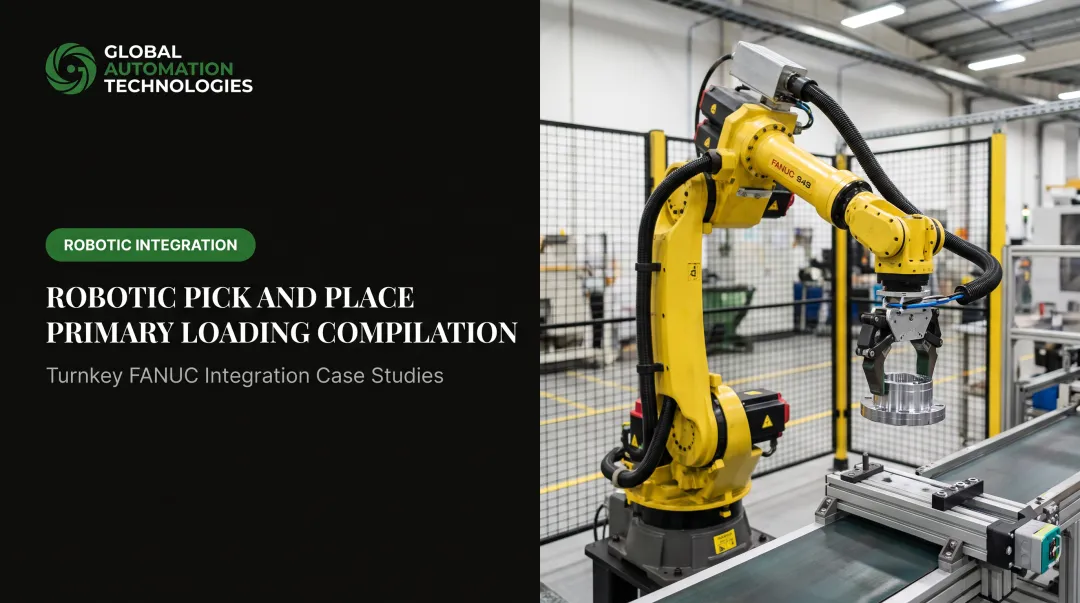
Robotic Machine Tending
Machine tending automates the loading and unloading of CNC machines, freeing spindles from the idle time that stacks up between manual cycles. A cobot integration documented by Production Machining allowed a shop to run 64 nighttime machining hours during each four-day workweek with no operator present.
That kind of unattended overnight production is the point. More parts per shift, fewer direct labor hours tied to babysitting a machine cycle. These cells typically pay for themselves in 12 to 18 months — a straightforward equation once spindle utilization climbs.
Robotic Painting and Coating Systems
Paint booths are hazardous by nature. Isocyanates, VOCs, and overspray particulates create real exposure risks for operators standing in the spray zone. Custom robotic paint systems remove people from that environment entirely.
The precision gain is just as significant. Repeatable spray patterns, driven by FANUC paint robots with hollow-wrist routing, hold film build within specification shift after shift across automotive topcoat, powder coating, and gelcoat applications instead of drifting with operator technique.
Audi's robot-controlled painting process demonstrated this at scale, applying paint without spray mist and eliminating masking material in series production. Less overspray means less wasted material and lower per-part coating cost.
Robotic Dispensing and Bead Quality Validation
Dispensing adhesives and sealants sounds simple until you consider what a bad bead does downstream. A gap in a structural adhesive bead or an under-filled seam sealer joint can compromise an entire assembly.
Automated dispensing systems solve this with real-time vision inspection layered directly into the process. These systems typically validate:
- Bead width against dimensional spec on every pass
- Bead placement along the programmed 3D path
- Bead continuity, catching gaps or skips before the part advances
Inline 3D laser-triangulation inspection can catch defects that simple width or height checks miss entirely, according to Quality Magazine's review of automotive bead dispensing processes. Catching the flaw at the dispensing station, rather than three stations downstream, is what actually saves money.
Welding, Assembly, and Material Handling Automation
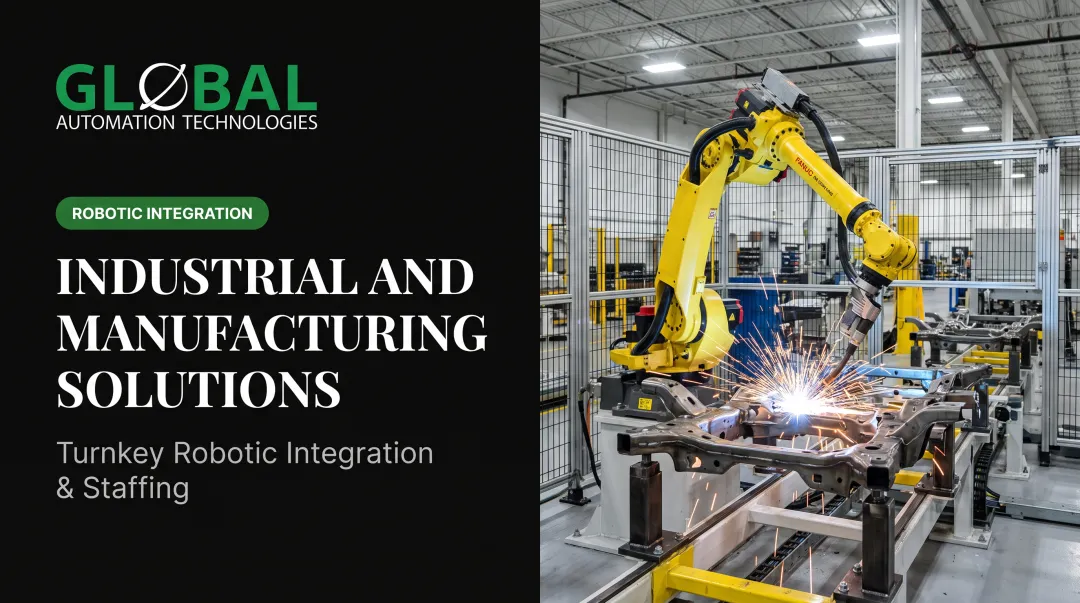
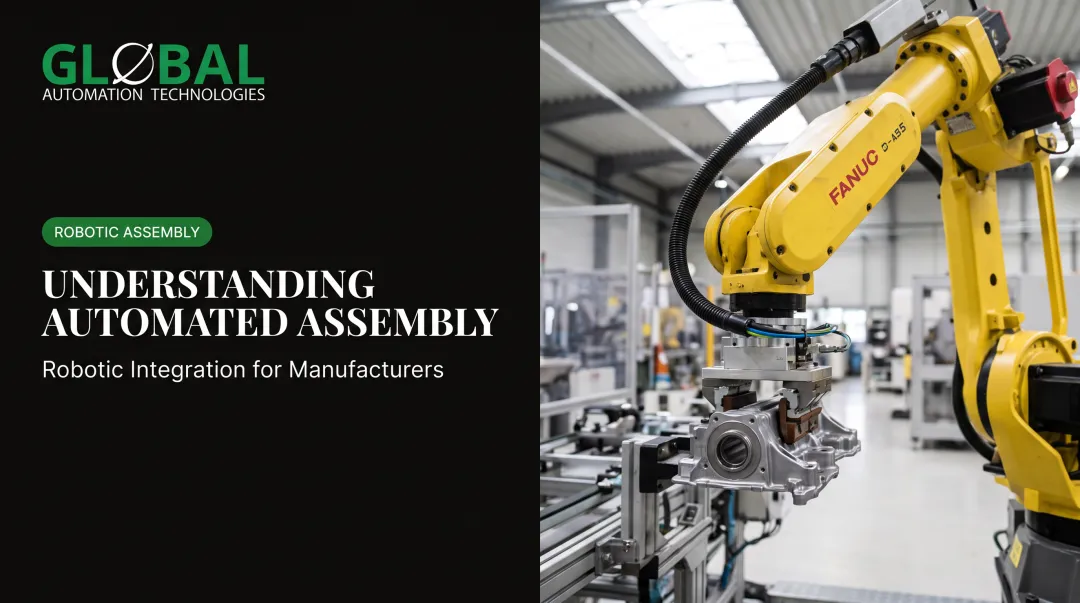
Robotic welding cells, palletizing systems, and assembly automation round out the most common custom applications. A minting operation supported through the NIST Manufacturing Extension Partnership network shows the upside.
A custom robotic workcell combining a cobot with a precision scale delivered:
- $150,000 in annual cost savings
- 50% throughput increase
- 90% reduction in quality-inspection failures
Those results come from NIST's documented case.
That's the pattern worth remembering. Custom cells built around a specific process, not a generic template, produce measurable, compounding gains.

Key Benefits of Custom Automated Manufacturing Solutions
Custom automation earns its investment across five areas that matter to any plant manager.
Efficiency and throughput. Tailored systems run continuously at faster, more consistent cycle times. The World Economic Forum's 2024 cohort of 22 Global Lighthouse manufacturing sites reported an average 50% increase in labor productivity after combining robotics, AI, and machine vision into their operations.
Cost savings and ROI. Plants cut labor dependency and material waste, and typically see faster payback than with generic systems that need constant workarounds. Machine tending cells reaching payback in 12-18 months are a good benchmark for what's achievable.
Quality and consistency. Real-time inspection paired with precision engineering catches defects before they compound. The 90% reduction in quality-inspection failures documented in a NIST minting facility case study shows what's possible when inspection is built into the process rather than bolted on afterward.
Workplace safety. Custom automation removes workers from:
- Spray painting environments with isocyanate and VOC exposure
- Welding fume zones
- Repetitive heavy lifting and material handling tasks
Scalability and flexibility. Systems can be reconfigured as product lines evolve. Honda's retooling of its Marysville Auto, East Liberty Auto, and Anna Engine plants shows the scale of what's possible. The company invested over $1 billion so internal-combustion, hybrid, and battery-electric vehicles can run on the same production lines, with EV output scheduled to begin by late 2025.
Industries and Applications Best Suited for Custom Automation
Not every manufacturer needs a custom system. But several sectors depend on one.
- Automotive OEMs and EV manufacturers — high-volume lines modernized for battery-pack assembly, new welding sequences, and shifting EV component specs
- Tier 1 suppliers and heavy equipment/commercial vehicle manufacturers — welding, assembly, and dispensing cells built for tight specs and high-mix, lower-volume runs
- Data center infrastructure manufacturers — robotic precision assembly of server racks, enclosures, and power distribution as infrastructure demand accelerates
What these environments share is specificity. Parts, tolerances, and processes are unique enough that a generic system will not hold up.
Choosing the Right Custom Automation Partner
Picking a partner matters as much as picking the technology. Prioritize these capabilities:
- Turnkey capability. Look for a partner who handles layout, design, build, programming, validation, installation, commissioning, and training under one roof. Fewer handoffs mean fewer gaps in accountability.
- Track record at scale. Favor partners with multi-year depth and a real deployment base—not a single showcase cell. GLOBAL Automation Technologies, for example, brings 17-plus years as a Level 5 FANUC Authorized System Integrator with a proven global base of robotic deployments.
- Automation solutions paired with staffing. The strongest partners can deliver the robotic system and, separately, the engineers to run it. GLOBAL builds and integrates the cell through its automation solutions and engineering services work, and its technical staffing recruits and places controls and mechanical engineers to keep it running—closing gaps pure-play integrators often leave open.
- Modern engineering tools. Ask whether they use AI-assisted simulation to shorten robot programming and predictive maintenance to flag issues before downtime. Offline simulation should model and optimize programs before code hits the floor, cutting timelines from weeks to days.

The right partner treats your line as a specific engineering problem, not a template to reuse.
Frequently Asked Questions
What is custom automated manufacturing?
Custom automated manufacturing is engineered robotic and control systems designed around a specific product or process, rather than a generic, off-the-shelf template. It's built to match exact part geometries, tolerances, and cycle times.
What are some examples of custom automated manufacturing?
Common examples include robotic machine tending, painting and coating systems, dispensing with bead quality validation, welding cells, and material handling or palletizing automation.
How much does a custom automation system typically cost?
Costs vary widely based on complexity, scale, and required engineering. Machine tending cells often deliver payback within 12 to 18 months through labor savings and increased spindle utilization.
Is custom automation only worthwhile for high-volume production?
No. Custom automation also benefits low-volume, high-mix environments through reconfigurable, adaptable systems. Tier 1 suppliers and heavy equipment manufacturers often use custom cells for exactly this reason.
What's the difference between fully automated and semi-automated systems?
Fully automated systems require no manual loading or unloading, running the complete cycle independently. Semi-automated systems pair manual part loading with automated processing, a common starting point before scaling further.
How long does it take to implement a custom automation solution?
Timelines vary by project scope, but the process moves from design and offline simulation through build, installation, and commissioning. AI-assisted simulation can compress programming time from weeks to days, shortening the overall timeline.