
An industrial automation company specializes in designing, integrating, and supporting automated manufacturing systems using robotics, control platforms, and software. These firms handle everything from initial feasibility studies and simulation through installation, commissioning, training, and ongoing support. With U.S. manufacturing potentially needing 3.8 million workers between 2024 and 2033, but 1.9 million of those roles likely remaining unfilled, automation has shifted from competitive advantage to operational necessity.
This article covers what industrial automation companies do, the types of providers in the market, core services they offer, industries they serve, and how to evaluate the right partner for your manufacturing operation.
Key Takeaways
- Industrial automation companies design, integrate, and support robotic manufacturing systems using robotics, control platforms, and machine vision
- Provider types include systems integrators, equipment manufacturers, control specialists, staffing firms, and hybrid models that combine integration with engineering talent
- Core services span robotic welding, painting, dispensing, material handling, machine tending, and assembly automation, plus ongoing optimization and support
- Top automation sectors include automotive OEMs, Tier 1 suppliers, heavy equipment, food and consumer goods, and life sciences, with non-automotive representing 56% of Q3 2024 North American robot orders
- Choosing a partner requires evaluating technical expertise, industry experience, simulation capabilities, global reach, and post-installation support models
What Industrial Automation Companies Do
Industrial automation companies transform manual manufacturing processes into automated systems that improve efficiency, quality, consistency, and safety. Rather than selling standalone robots or equipment, they design and integrate full production solutions around your process, parts, throughput, and facility constraints.
Core functions include:
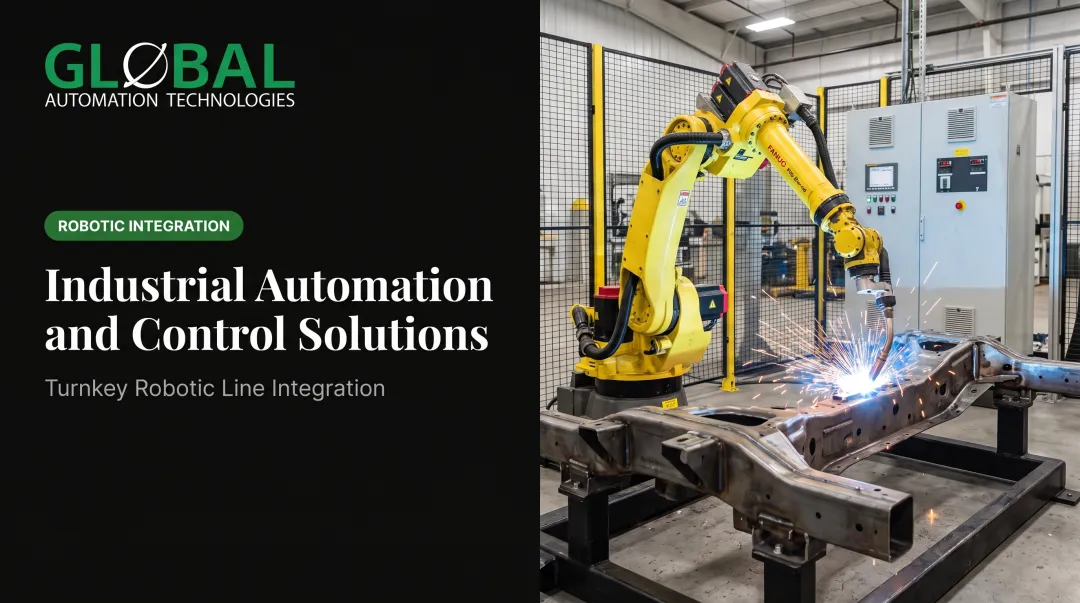
- Robotic system design and integration: Turnkey cells for welding, painting, assembly, machine tending, material handling, and dispensing, typically built on FANUC, ABB, KUKA, Yaskawa, or similar platforms
- Programming and commissioning: Robot programs, PLC and HMI setup, safety integration, and process validation before production launch
- Simulation and virtual commissioning: Digital testing before install to cut startup risk. A Wipro PARI / Siemens case study reported 40–50% less rework, 5–10% shorter delivery, and 70% less onsite commissioning time
- Ongoing support and optimization: Maintenance, troubleshooting, upgrades, retrofits, and performance tuning after go-live
- Training and documentation: Train operators and maintenance staff, and hand off technical docs the plant can use long term

In practice, they map your workflow, flag bottlenecks, design around floor space and cycle time, and deliver a production-ready cell—not a pile of unintegrated hardware.
Types of Industrial Automation Companies
The automation industry includes several distinct business models, each with different strengths, technology partnerships, and service scopes.
Systems Integrators
Pure-play systems integrators design and implement turnkey robotic automation projects from concept through commissioning. These firms typically work with multiple robot brands and control platforms, selecting the best technology for each application.
A3's Certified Robotic Integrator program validates technical proficiency, robot safety, business excellence, and organizational infrastructure through onsite audits and practical assessments.
Integrators bring technology neutrality, allowing them to recommend the robot brand, gripper, vision system, and control platform that best fits your process rather than being tied to a single vendor.
Equipment Manufacturers (OEMs)
Robot manufacturers like FANUC, ABB, KUKA, and Yaskawa produce the core hardware: robots, controllers, and teaching pendants. FANUC supplies robots through an Authorized System Integrator network, while KUKA explicitly performs direct integration from cells through complete turnkey systems.
Some OEMs offer direct integration for standardized applications. Others rely exclusively on partner networks.
Control System Specialists
Companies focused on control systems, PLCs, HMIs, and SCADA platforms—such as Siemens, Rockwell Automation, and Schneider Electric—build the logic layer that runs automated equipment. Siemens SIMATIC spans scalable PLCs, safety, motion, I/O, and engineering tools. Rockwell's Integrated Architecture unifies control, information, connectivity, visualization, and devices across machines and facilities.
These specialists manage sequences, data collection, and production logic behind robotic systems.
Technical Staffing and Engineering Services
Some companies provide contract automation engineers, programmers, and technicians to support manufacturers' internal automation teams. These firms supply skilled resources on a contract, contract-to-hire, or direct-hire basis, filling temporary gaps during launches, retrofits, or capacity expansions.
Integrated Automation Partners
A hybrid model combines automation solutions, services and technical staffing under one roof. You get both the automation system and the engineering talent to run it from a single partner.
GLOBAL Automation Technologies exemplifies this model. Founded in 2009, GLOBAL has offices in 4 countries, project work across 22 countries, and 700+ FANUC robots installed.
The dual offering covers:
- Turnkey automation solutions across welding, painting, dispensing, material handling, machine tending, and assembly
- Technical staffing for contract controls engineers, PLC programmers, robotics technicians, mechanical designers, and project managers
As a Level 5 FANUC Authorized System Integrator and #1 purchaser of FANUC robots among North American integrators in 2025, GLOBAL serves automotive OEMs, EV manufacturers, Tier 1 suppliers, and heavy-industry manufacturers with both the system and the people to run it.
Key Services and Solutions Offered by Automation Companies
Automation providers cover the full lifecycle—from initial design through long-term support—tailored to specific manufacturing applications.
Robotic Welding Systems
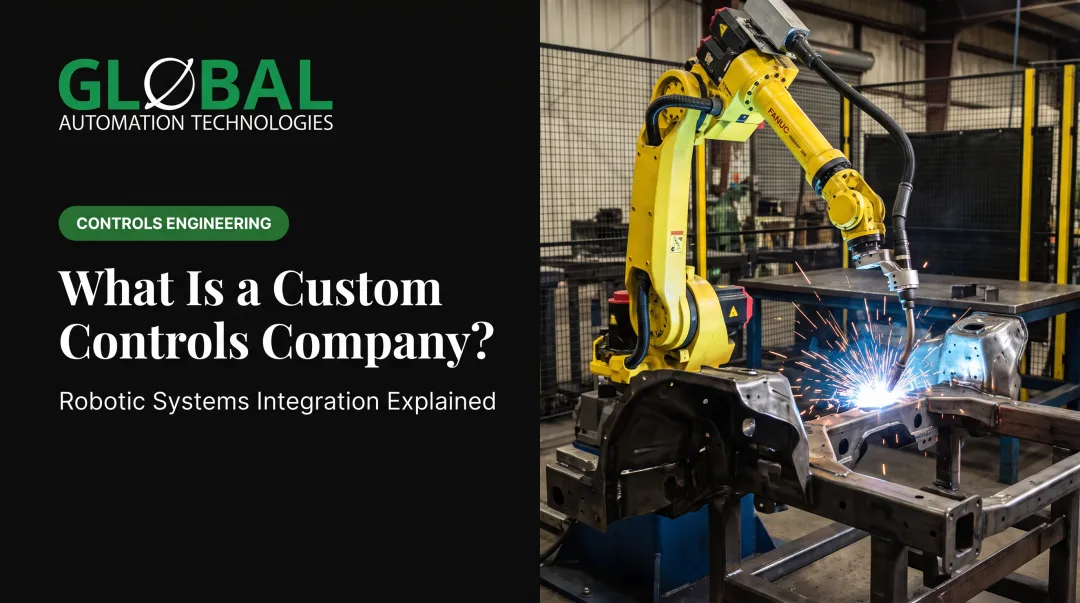
Automated arc and spot welding systems improve weld quality, speed, and operator safety in automotive, heavy equipment, and metal fabrication.
Typical applications include:
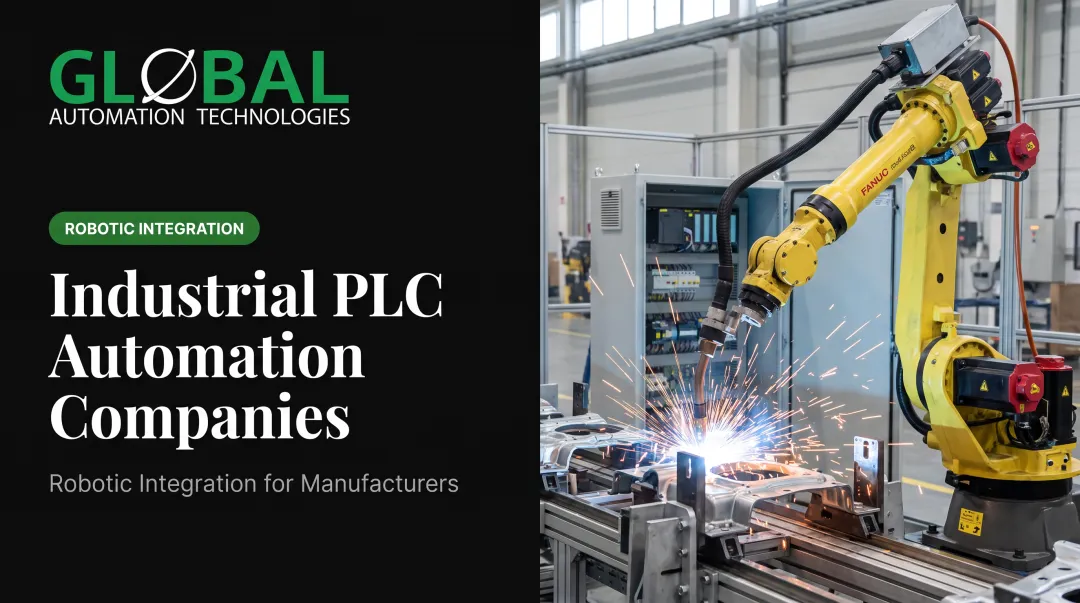
- Robotic MIG/TIG welding cells
- Resistance spot welding systems
- Laser welding automation
Consistent heat input, travel speed, and wire feed cut defects and rework while moving operators off repetitive, hazardous tasks.
Robotic Painting and Coating
Automated paint systems deliver consistent film build, cut overspray waste, keep operators clear of hazardous chemicals, and support production well beyond a single shift, between scheduled maintenance windows. ABB's 2024 RB 1000i-S atomizer improved transfer efficiency by more than 10% and reduced paint waste by at least 30% versus its predecessor.
That same consistency holds across automotive topcoat, powder coating, gelcoat, and industrial finishing—without exposing workers to isocyanates, VOCs, or overspray particulates.
Dispensing and Sealing Automation
Robotic adhesive, sealant, and material application systems use real-time bead quality validation and flow monitoring for consistent delivery. Vision and sensors check bead width, placement, and continuity so defects are caught before parts move downstream.
Common applications include:
- Seam sealers and structural adhesives
- PurFoam and cavity wax
- Hem flange sealing and protective coatings
Machine Tending and Material Handling
Robotic machine tending for CNC machines, injection molding, stamping presses, and similar equipment maximizes spindle utilization and enables lights-out manufacturing. A Universal Robots case reported 1,200+ added production hours per machine annually, 95% efficiency, and 12-18 month ROI, though results vary by application.
Material handling systems automate pick-and-place, palletizing, bin picking, part transfer, and conveyor integration. That cuts repetitive manual lifting and raises throughput.

Assembly and Inspection Automation
Automated assembly systems pair vision-guided robotics with in-line quality inspection to raise throughput and cut defects. Work typically covers component insertion, fastening, dispensing, testing, inspection, and traceability—with data collection that supports documented quality and regulatory compliance.
Technical Staffing and Contract Engineering
Some automation companies also supply skilled engineers on a contract, contract-to-hire, or direct-hire basis to fill gaps or back internal automation teams. Roles often include controls engineers, PLC programmers, robotics technicians, commissioning engineers, and project managers.
Industries Served by Automation Companies
Industrial automation spans nearly every manufacturing sector, though some industries adopt it more aggressively than others.
Automotive and electric vehicle manufacturing remains the largest automation market. U.S. automotive robot installations reached 13,700 in 2024, up 10.7%, driven by high-volume production, tight tolerances, and worker safety requirements.
Body shop welding, paint systems, powertrain assembly, and final assembly automation are standard across OEM plants.
Tier 1 automotive suppliers produce components, assemblies, and systems that need robotic welding, assembly, painting, and inspection. Component orders rose 61% in Q3 2024, reflecting renewed supplier investment despite EV production headwinds.
Heavy equipment, construction, agricultural, and commercial vehicle manufacturers automate large-part welding, painting, and assembly. Metal and machinery installations rose 8% in 2023 as shops pushed for consistent quality and more capacity.
Growing automation sectors include:
- Food and consumer goods – Orders up 13% year-over-year in Q3 2024 and 60% year-to-date, led by packaging, palletizing, and material handling
- Life sciences, pharma, and biomedical – Orders up 35% in Q3 and 43% year-to-date for precision assembly, inspection, and traceability
- Electronics – 3,900 U.S. installations in 2023 for assembly, dispensing, testing, and inspection
- Aerospace – Welding, machining, assembly, and inspection in tight-tolerance applications
Non-automotive customers represented 56% of North American robot orders in Q3 2024, signaling broader adoption beyond traditional high-volume sectors.

How to Choose the Right Industrial Automation Partner
Selecting an automation partner with the right technical capabilities, industry experience, and long-term support model is critical to project success.
Evaluate technical expertise by reviewing past projects in your specific application area—welding, painting, assembly, machine tending—and industries served. Ask for case studies, customer references, and evidence of A3 Certified Robotic Integrator status. That certification validates technical proficiency, safety training, and organizational infrastructure through onsite audits.
Assess global capabilities if your company operates multiple plants or international locations. Look for partners with cross-border project experience, multi-site support capabilities, and the ability to standardize systems across facilities. GLOBAL Automation Technologies, for example, operates across 22 countries with offices in 4 countries, supporting manufacturers with international footprints and multi-plant rollouts.
Ask about simulation and virtual commissioning capabilities to reduce project risk, accelerate startups, and minimize production disruption during installation. Digital twins and offline programming let integrators test systems before hardware arrives, catching issues early and shortening commissioning timelines.
Verify post-installation support including maintenance contracts, spare parts availability, emergency response, ongoing optimization, and access to engineering talent for troubleshooting and upgrades. FANUC offers 24/7 technical help, parts, field service, and lifetime product support, while KUKA states parts availability within 24 hours and 24/7/365 parts service.
Integrated partners that combine automation solutions, services and technical staffing can also supply contract engineers for long-term embedded support. That model creates continuity from installation through optimization.

Frequently Asked Questions
What does an industrial automation company do?
Industrial automation companies design, build, program, and install robotic systems and automated manufacturing equipment, then provide ongoing support to keep systems running efficiently. Services span process studies, simulation, controls engineering, installation, commissioning, training, and maintenance.
What are the main types of industrial automation companies?
Main types include systems integrators who design turnkey solutions, equipment manufacturers (OEMs) like FANUC and ABB, control system specialists such as Siemens and Rockwell, technical staffing firms, and integrated partners who combine several of these capabilities.
What industries use industrial automation the most?
Automotive manufacturing, Tier 1 suppliers, heavy equipment, food and consumer goods, and life sciences are the largest automation markets. Electronics, aerospace, and general industrial manufacturing also show strong adoption, with non-automotive sectors now representing the majority of North American robot orders.
How much does industrial automation cost?
Costs vary widely based on application complexity, system size, and integration requirements. A3's ROI calculator compares manual labor with robot total ownership over a 20-year system life. Machine tending cells often pay back in 12–18 months, depending on part mix, cycle time, and facility constraints.
What is the difference between a systems integrator and a robot manufacturer?
Robot manufacturers like FANUC, ABB, and KUKA produce the hardware: robots, controllers, and teaching pendants. Systems integrators design complete solutions with robots from various makers, then program, install, and commission them. Some OEMs integrate directly; others work only through authorized partners.
How do I know if my company is ready for industrial automation?
Readiness indicators include repetitive manual tasks, quality issues, safety concerns, labor shortages, high-volume production, or capacity expansion plans. NIST MEP recommends a structured assessment: evaluate operations, prioritize opportunities, build a business case, connect with integrators, and measure results.