
As manufacturers push more of their assembly, machine tending, and material handling work onto robots, the parts feeding system behind that robot has become just as important as the robot itself. Pick the wrong feeder and you've built a bottleneck into your automation, not a solution.
This article breaks down the four most common alternatives for parts feeding systems, what separates them, and how to match one to your actual production needs.
Key Takeaways
- Automated feeders sort, orient, and deliver parts so robots stay fed without manual handling
- Four primary alternatives: vibratory bowl, centrifugal, linear, and flex (vision-guided) feeders
- Choose by part size/shape, throughput targets, budget, and how often parts change
- Pair feeder selection with robotic integration expertise to cut engineering risk and downtime
What Is a Parts Feeding System and Why Does It Matter?
A parts feeding system is an automated mechanism that takes bulk or randomly arranged components and presents them one at a time, in a known orientation, to a robot or machine. Instead of a person sorting parts by hand, the feeder does the sorting, orienting, and delivering.
You'll find these systems wherever robots need a steady diet of consistent parts:
- Assembly lines building electronics, automotive components, or industrial hardware
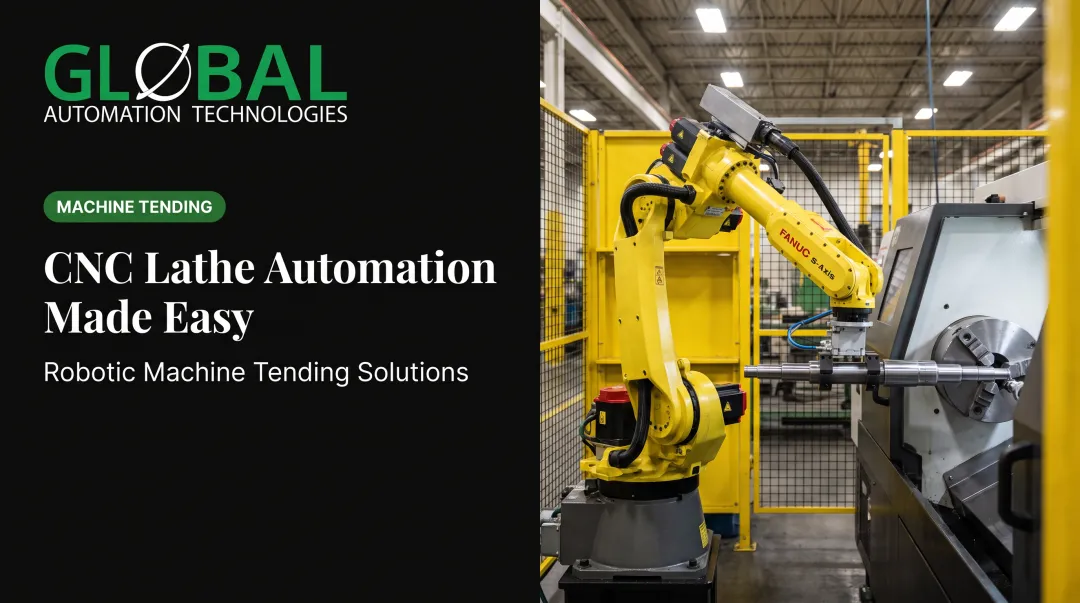
- Machine tending cells feeding CNC machines, presses, and injection molders
- Packaging lines that need parts singulated before boxing or labeling
- Robotic pick-and-place operations across automotive, electronics, and industrial manufacturing
Without a reliable feeding system, problems compound fast. An incorrectly presented part can jam equipment, damage components, and derail a production schedule, according to ASSEMBLY Magazine's reporting on parts feeding fundamentals.
In one documented medical-device case, manual pin installation ran with scrap rates exceeding 10%. After automating with a dedicated feeder and inserter, efficiency more than tripled and installation scrap dropped to near zero.
That's one application, not a universal benchmark — but it illustrates the real cost of manual or poorly matched feeding: idle robots, inconsistent orientation, and scrap that eats into margins.

4 Alternatives for Parts Feeding Systems
No single feeder works for every part. The right alternative depends on part geometry, production volume, and how often you switch between part types. Here's how the four main options stack up.
Vibratory Bowl Feeders
A vibratory bowl feeder uses a vibrating bowl with spiral tracks to move parts from a bulk hopper up and around, singulating and orienting them into a linear feed as they travel. Part-specific tooling along the track rejects anything sitting in the wrong orientation, sending it back down to try again.
What sets bowl feeders apart is dedication. They're purpose-built around one part's geometry, which makes them extremely good at that one job but inflexible for anything else.
Best suited for:
- High-speed, high-volume production of a single, stable part design
- Applications where strict orientation control matters more than flexibility
Bowl feeders carry a higher upfront investment for tooling and design, but at scale they're often the most cost-effective option per part fed.
Trade-offs include:
- Larger footprint and higher noise levels
- Limited flexibility when parts change frequently
- Retooling for a new part geometry isn't quick or cheap
Centrifugal Feeders
Centrifugal feeders use a spinning disc instead of a vibrating track. Parts get flung outward by centrifugal force, where they're caught, singulated, and oriented at the perimeter.
Speed and quieter operation are the main differentiators. According to RNA Automation's comparison of bowl and centrifugal feeders, centrifugal systems generally deliver higher throughput and quieter running than vibratory bowls, though the actual speed gain depends heavily on the part.
Best suited for:
- High-speed feeding of small, round, or cylindrical components
- Fasteners, caps, stoppers, and similar symmetrical parts
The catch: centrifugal feeders favor consistent, simple geometries. They're less adaptable to oddly shaped parts, and the mechanical force involved can be rougher on delicate components than a gentler vibratory approach.
Linear Feeders
Linear feeders move parts along a straight vibrating track rather than a spiral bowl. Often, they work downstream of a bowl feeder, accepting already-oriented parts and buffering or accumulating them before delivery. They can also run as standalone systems for longer, elongated parts.
The design is simpler than a bowl, and that simplicity translates to gentler part handling. RNA Automation's linear feeder documentation notes these systems buffer, accumulate, and, in configured setups, sort and recirculate rejected parts.
Best suited for:
- Straight, elongated, or delicate parts that don't need complex orientation
- Lines with limited floor space where a compact, embeddable unit fits better
The main trade-off is output. Linear feeders generally move less volume than bowl or centrifugal systems, and their orientation capability depends heavily on the specific configuration — some are little more than a conveyor with structure, while others include specialized tooling.
Flex Feeders (Vision-Guided Robotic Feeders)
Flex feeders take a different approach entirely. A robot equipped with vision tracking picks parts directly off a moving conveyor or tray, and unpicked parts recirculate for another pass. ABB's FlexFeeder, for example, dispenses parts onto a flat pick surface and supports components ranging from 3-30mm without changing the feeder hardware.
Flexibility is the point. They're built for frequent changeovers and part variety, not dedicated single-part throughput.
Best suited for:
- Manufacturers running mixed part types or facing frequent product changeovers
- Lines where robotic integration is already central to the operation
This is also where feeding decisions and robotic system design overlap most directly. GLOBAL Automation Technologies, a Level 5 FANUC Authorized System Integrator, engineers flex feeding as part of broader automation cells, primarily on FANUC robots for vision-guided picking and machine tending.
With FANUC iRVision and 3D area sensors, robots locate and orient parts in real time without precise upstream fixturing.
The trade-off is higher upfront cost for the feeder, robot, vision hardware, and integration work. Cycle times can also lag a dedicated bowl feeder on very simple, high-volume parts.

How to Choose the Right Parts Feeding Alternative
The right feeder matches your part and your production goals, not the newest or most advanced option. Five factors drive that decision.
1. Part geometry and size Round parts favor centrifugal feeders. Complex or irregular shapes need a bowl's mechanical orientation flexibility. Delicate or elongated parts often do best on a linear system.
2. Production volume and speed requirements Dedicated, high-volume runs of a single part favor bowl or centrifugal feeders. Mixed runs with varying part numbers favor flex feeders.
3. Changeover frequency Every traditional bowl feeder is built for one part. According to ASSEMBLY Magazine's analysis of flexible feeding for assembly automation, flexible feeders handle multiple parts with little or no mechanical retooling. That advantage matters if your line switches SKUs often. If bowl retooling would rarely happen, the flex feeder's higher cost may not pay off.
4. Budget and total cost of ownership Look past the sticker price. Factor in:
- Tooling and retooling costs over the product's lifecycle
- Integration, programming, and commissioning labor
- Maintenance, spare tooling, and downtime during changeovers
- Expected growth in part variety down the road
5. Integration with robotic automation If the feeder needs to work alongside a robot for picking, tending, or assembly, plan both as one system. An experienced integrator can combine feeder and robot into a single turnkey cell. That means weighing cycle time, part geometry, existing equipment, floor space, and vision requirements together so the feeder is never an afterthought.
What to Check Before Finalizing Your Parts Feeding System
A few final checks before you commit can save serious rework later.
- Don't over-specify. A flex feeder sounds impressive, but if your line runs one part at high volume with no change plans, a simpler bowl or linear feeder meets the need at a fraction of the cost.
- Test the actual part. Verify jam clearing, part durability under repeated handling, and vision compatibility with your real components before you lock a configuration—not from a spec sheet alone.
- Factor in the full footprint. Maintenance access, noise levels, and floor space matter as much as purchase price, especially in tight production environments.
Conclusion
Parts feeding systems keep robots and machines continuously supplied with correctly oriented parts. Without one matched to the application, even the best robot on the line sits idle waiting for work.
Vibratory bowl, centrifugal, linear, and flex feeders each serve different part types and production goals. Match the system to your actual application, ideally with an automation partner who understands both the feeding hardware and the robotic cell it feeds. That pairing delivers smoother startups and fewer surprises once production is live.
Frequently Asked Questions
What are parts feeding devices?
Parts feeding devices are automated mechanisms that store, singulate, orient, and deliver individual components to a robot, machine, or assembly station for further processing. They remove the need for manual part handling on the line.
What are the four types of feeders?
The four main types are vibratory bowl feeders, centrifugal feeders, linear feeders, and flex (vision-guided) feeders. Each suits different part shapes, production volumes, and changeover needs, from high-volume single-part runs to mixed-part flexibility.
How do I choose the right parts feeding system for my application?
The choice depends on part geometry, production volume, changeover frequency, and budget. High-volume single-part runs favor bowl or centrifugal feeders, while frequent changeovers favor flex feeders.
Can parts feeding systems be integrated with robotic automation?
Yes. Most feeders, especially flex feeders, are commonly paired with robotic pick-and-place or machine tending systems. Integrators such as GLOBAL can engineer the feeder and robot together into a single automated cell.
What is the difference between a vibratory bowl feeder and a flex feeder?
Bowl feeders are optimized for high-volume, single-part dedication with strict orientation control. Flex feeders use vision-guided robots to handle varied part types and frequent changeovers without retooling.
How much do parts feeding systems typically cost?
Costs vary widely based on part complexity, feed rate, tooling, and whether vision or robotics are involved. Get application-specific quotes tied to your parts, rate, and cell design rather than generic list pricing.