
Manufacturing facilities struggle to monitor distributed equipment, prevent unplanned downtime, and ensure optimal performance across multiple locations without requiring constant on-site presence. Remote monitoring and control systems address these challenges by enabling real-time visibility, predictive maintenance, and centralized oversight from any location.
This guide explores how remote monitoring and control systems work, their core components, proven benefits, industry applications, and implementation strategies to help manufacturers make informed decisions about adopting this technology.
Key Takeaways
- Remote systems deliver 24/7 visibility and management of industrial equipment from any location
- Predictive maintenance reduces machine downtime 30-50% and extends equipment life 20-40%
- Sensors, edge computing, connectivity, and analytics platforms enable real-time control decisions
- Automotive, energy, water treatment, and logistics teams use them to cut downtime and remote-manage assets
- Security, integration planning, and phased deployment determine whether rollout succeeds
What is a Remote Monitoring and Control System?
A remote monitoring and control system is an integrated network of sensors, communication devices, software platforms, and control interfaces. It enables operators to monitor equipment status, environmental conditions, and operational parameters from remote locations in real time.
These systems serve two core functions that change how manufacturers oversee operations.
Monitoring collects and analyzes data from sensors to track equipment health, performance metrics, and environmental conditions continuously. Unlike periodic manual checks, monitoring provides uninterrupted data streams that reveal subtle changes in equipment behavior before failures occur.
Control sends commands to actuators, systems, or equipment to adjust operations remotely. Operators can modify setpoints, start or stop processes, and respond to alarms without being physically present at the equipment location.
Remote monitoring goes beyond basic alarm systems by providing continuous data streams, advanced analytics, predictive capabilities, and bidirectional control. A simple alarm notifies you when a threshold is breached. A remote monitoring system tracks trends that predict when that threshold will be breached, analyzes root causes, and enables you to intervene remotely before the alarm ever triggers.
Traditional on-site monitoring requires physical presence, periodic inspections, and manual data recording. Remote systems enable:
- 24/7 oversight across multiple facilities with centralized visibility
- Faster response times when issues arise
- Automated data collection that eliminates human error and provides auditable records
Types of Remote Monitoring and Control Systems
Remote monitoring and control systems generally fall into three categories. The right fit depends on how distributed your assets are, how much legacy equipment you still run, and how tightly you need plant data tied to enterprise systems.
SCADA Systems
SCADA (Supervisory Control and Data Acquisition) systems are traditional industrial control platforms used in utilities, manufacturing, and infrastructure. ISA defines SCADA as a hardware-software combination designed to send commands and acquire data across large geographic areas. SCADA excels in environments requiring centralized control of distributed assets like pipelines, electrical grids, and multi-site manufacturing operations.
IoT-Based Monitoring Platforms
Modern cloud-connected systems use Industrial Internet of Things (IIoT) sensors and edge devices. The Industrial Internet Reference Architecture divides IIoT systems into control, operations, information, application, and business domains.
A common three-tier setup looks like this:
- Edge devices collect data at the machine or line
- Platform layers process data and manage assets
- Enterprise layers host applications and decision support
IoT platforms scale more easily than legacy SCADA and connect more tightly to enterprise systems.
Hybrid Systems
Many manufacturing environments combine legacy SCADA infrastructure with modern IoT capabilities Hybrid systems use protocol converters, edge gateways, and middleware to connect older equipment to cloud platforms. Facilities can modernize monitoring without replacing equipment that still works.

How Remote Monitoring and Control Systems Work
Sensors and Data Collection
Industrial sensors continuously measure physical parameters and convert them into electrical signals. Common sensor types include:
- Temperature sensors: RTDs (Rosemount 214C, -196 to 600°C) and Type K thermocouples (-270 to 1,372°C) track process, bearing, and ambient temperatures
- Vibration sensors: Accelerometers detect changes in equipment vibration patterns that signal bearing wear, misalignment, or imbalance
- Pressure transmitters: Devices like the Rosemount 3051 provide 0.04% reference accuracy with process alerts and diagnostics
- Flow meters: Coriolis meters measure mass flow and density for precise material tracking
- Position, humidity, and current sensors: Track actuator positions, environmental conditions, and electrical loads
Edge devices or RTUs (Remote Terminal Units) aggregate and pre-process data locally before transmission, reducing bandwidth requirements and enabling local control decisions even during network interruptions.

Communication and Connectivity
Once edge devices collect sensor data, that data needs a path to operators and central platforms. Network options include:
- Wired connections: Ethernet and fiber optic cables deliver high-bandwidth, low-latency communication for plant floor networks
- Wireless technologies: Wi-Fi, cellular 4G/5G, and LoRaWAN connect remote or mobile assets where wiring is impractical
- Satellite communications: Provide coverage for extremely remote locations like offshore platforms or wilderness pipeline segments
NIST recommends redundant communication paths and local data buffering to ensure continuous monitoring during network interruptions. Systems store data locally when connectivity drops and synchronize when the link restores.
Common industrial protocols include:
- EtherNet/IP — Ethernet plus CIP for control, safety, and information exchange
- OPC UA — platform-independent communication with built-in security
- MQTT — publish-subscribe messaging with three QoS levels that balance reliability and bandwidth
Data Platforms and Processing
Central software platforms receive sensor data and store it in time-series databases optimized for high-frequency industrial data. Cloud-based platforms offer scalability and accessibility, while on-premises systems provide complete data control and eliminate internet dependencies.
Processing capabilities include:
- Real-time monitoring that compares incoming data against configurable thresholds
- Trend analysis that identifies gradual deterioration in equipment performance
- Machine learning algorithms that detect anomalies and predict failures days or weeks in advance
- Historical analysis that reveals patterns invisible in real-time data
Analytics and Visualization
Customizable dashboards display real-time metrics, equipment status, alarms, and performance trends. Operators see only the information relevant to their role and location.
Alert mechanisms trigger notifications via email, SMS, mobile apps, or integrated systems when parameters exceed thresholds or anomalies are detected. Modern systems use intelligent alerting that reduces false positives and prioritizes critical events to prevent alarm fatigue.
Key Benefits for Industrial Operations
Dramatic Reduction in Unplanned Downtime
McKinsey research shows predictive maintenance reduces machine downtime 30-50% and extends equipment life 20-40%. Continuous monitoring of vibration, temperature, and performance trends forecasts failures days or weeks ahead.
That lead time lets teams schedule maintenance in planned windows instead of running emergency repairs mid-production.
In automotive manufacturing, GM and FANUC's Zero Down Time system avoided over 100 significant unscheduled downtime events of 6-8 hours each. In robotic systems integration, GLOBAL Automation Technologies builds AI-driven health assessments into turnkey cells so equipment issues get flagged before they stop the line.
Significant Cost Savings Across Operations
Remote monitoring cuts cost in several places at once:
- Prevents failures that drive overtime labor, expedited parts, and lost production
- Replaces time-based maintenance with condition-based work, trimming unnecessary labor and spare-parts inventory
- Lowers site energy use 5-15% through performance optimization, per Emerson
- Removes routine travel to distributed assets through remote oversight
Enhanced Worker Safety
Remote monitoring removes the need for personnel to enter dangerous environments for routine inspections. Workers no longer need to access high-voltage areas, confined spaces, extreme temperatures, or toxic atmospheres for manual readings.
Early warning systems detect gas leaks, temperature excursions, or equipment malfunctions and trigger evacuations or automated shutdowns before dangerous conditions develop. Transpetro Amazonas reduced field trips requiring helicopters and boats through remote asset monitoring, improving safety and reducing travel costs.
Improved Efficiency, Quality, and Compliance
Continuous visibility into process parameters supports higher throughput, less waste, and steadier product quality. Historical data also surfaces utilization patterns and optimization opportunities that periodic manual checks miss.
On robotic painting lines, programmed, repeatable spray paths hold film build within specification. Dispensing cells use vision to verify bead width, placement, and continuity before parts move downstream.
The same systems log auditable records for environmental rules, safety standards, and quality certifications—cutting manual reporting and reducing the risk of incomplete paper trails.
Industry Applications and Use Cases
Manufacturing and Robotic Systems
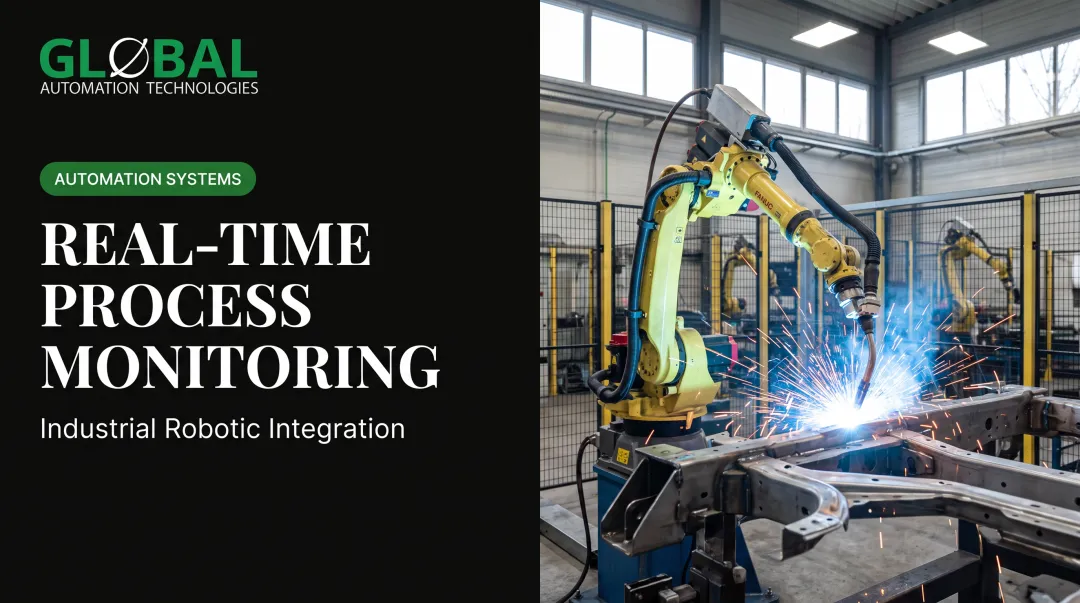
Production lines use remote monitoring to track machine utilization, cycle times, throughput, and quality metrics. Robotic work cells also watch temperature, vibration, and performance indicators so teams can predict maintenance needs before a fault stops the cell.
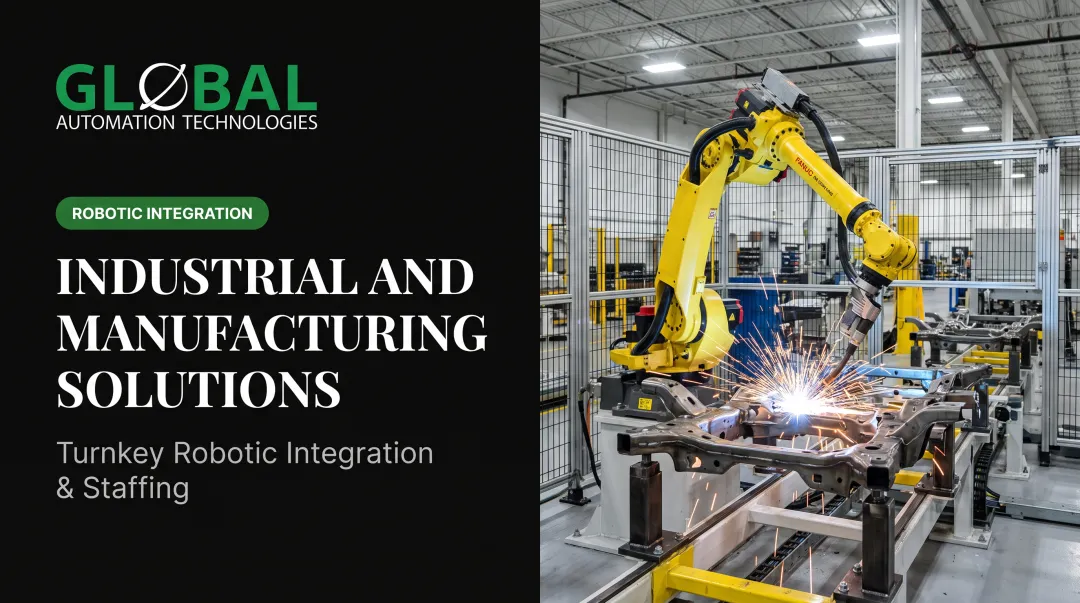
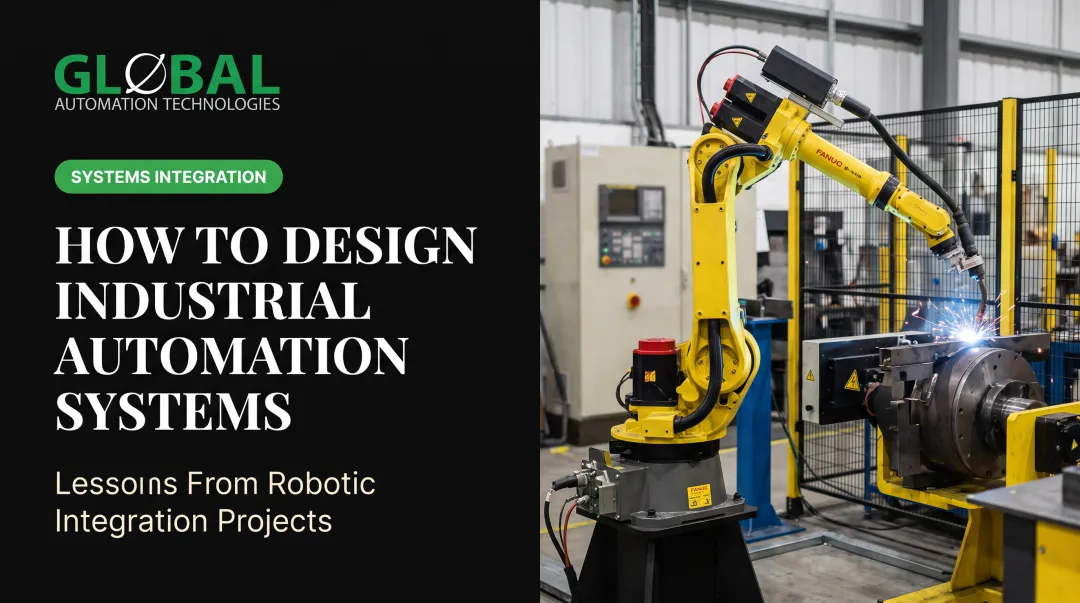
Modern robotic cells often ship with monitoring built in. GLOBAL Automation Technologies, which holds Level 5 status in FANUC’s Authorized System Integrator program, for example, folds SCADA and IoT connectivity into turnkey robotic solutions for automotive and heavy industry manufacturers. That stack supports real-time data collection, machine vision checks, and predictive maintenance health assessments on the plant floor.
Quality teams rely on the same live feeds to catch drift as it happens:
- Welding temperature and heat-input trends
- Paint booth conditions and coating quality
- Assembly torque values and part positioning
- Dispense bead integrity during sealing and adhesive work
Vision systems run these checks while production continues, so defects get flagged before parts move downstream.
Energy Sector Applications
In oil and gas, assets sit across wide—and often offshore—footprints. Operators watch wellheads, pipelines, compressor stations, and refineries for pressure, flow, temperature, and leaks without sending crews on daily site visits.
Utilities apply the same model to the grid:
- Substations and transformers
- Transmission lines
- Renewable generation sites
Live data shortens response time when disturbances hit and helps balance renewable output with demand.
Water and Wastewater Management
One operator can oversee many lift stations and treatment sites when pump performance, flow, levels, energy use, and equipment health stream to a central view. Sites that once needed individual visits stay under continuous watch from a single desk.
Continuous water-quality feeds cover pH, turbidity, chlorine, and dissolved oxygen for compliance and contamination detection. Automated alerts fire as soon as a parameter drifts out of spec.
Logistics and Transportation
Fleet telematics gives dispatch and maintenance teams a live picture of each vehicle:
- Location and route adherence
- Engine diagnostics and fuel use
- Cargo temperature and humidity on refrigerated loads
- Driver behavior patterns
According to McKinsey, about 15% of vehicles include telematics as standard, with an estimated 100 million units in use globally.
Rail operators extend monitoring to track condition, signals, and rolling stock health. Airports do the same for baggage handling, HVAC, and ground support gear so delays get caught before they cascade.
Essential Components and Technologies
Remote monitoring stacks four layers: sensors at the machine, edge devices on the plant floor, secure communications, and software that turns data into decisions. A weak link in any layer undercuts the rest.
Industrial sensors supply the raw measurements. Match type to the job by range, accuracy, response time, and environmental rating:
- RTDs and thermocouples for temperature
- Accelerometers for vibration and machine health
- Pressure transducers and flow meters for process variables
Edge computing devices handle local processing, protocol conversion, and data buffering. Filtering and aggregating data before transmission cuts bandwidth use. Edge gateways also bridge legacy protocols to modern cloud platforms, so hybrid architectures can keep existing equipment in service.
Communication infrastructure needs reliable industrial networking, VPN and encryption, and redundancy. NIST SP 800-82 calls for alternate communications paths and local or manual operation wherever safety or reliability require it.
Software platforms should scale with the operation and expose open APIs for integration. Prioritize:
- Mobile access and customizable dashboards
- Advanced analytics suited to plant data
- Industrial historians that capture high-fidelity process data from multiple sources for trending, reporting, and deeper analysis
Implementation Best Practices
Conduct a thorough assessment before selecting solutions. Focus first on assets and goals that justify remote monitoring:
- Critical assets that deliver the highest value when monitored remotely
- Specific monitoring objectives and required parameters
- Existing infrastructure—network capacity, power availability, and environmental conditions
- Success metrics tied to business objectives
Those findings shape what you secure and how you roll it out.
Prioritize security from the start. Build multi-layered protection into the design, not as a retrofit:
- Encrypted communications using VPN, TLS/SSL, or protocol-specific security like Modbus Security with X.509v3 certificates
- Multi-factor authentication for remote access
- Network segmentation separating operational technology from IT networks
- Regular security updates and patch management
- Access controls limiting user permissions to necessary functions
- Intrusion detection systems monitoring for abnormal behavior
Align these controls with ISA/IEC 62443 industrial cybersecurity standards, which define assessment frameworks for industrial environments.

Plan for integration and scalability. Once security baselines are set, confirm the platform can grow with the operation:
- Integrates with existing SCADA, MES, or ERP systems through standard protocols and APIs
- Scales from pilot projects to enterprise-wide deployments
- Supports future expansion—additional sites, equipment types, and advanced analytics
Start with high-value pilots that prove ROI and build organizational support before a full rollout.
Frequently Asked Questions
What is a remote monitoring and control system?
A remote monitoring and control system uses sensors, networks, and software to collect real-time data from industrial equipment at distant sites. Operators can view conditions and control that equipment from a central location or a mobile device.
What are the different types of remote monitoring systems?
The main types are SCADA systems used in utilities and large plants, IoT platforms built on cloud connectivity and smart sensors, and hybrid setups that pair legacy SCADA with newer IoT tools. Hybrids let plants modernize monitoring without a full rip-and-replace.
What is the difference between remote monitoring and remote access?
Remote monitoring focuses on observing and reporting equipment status through sensors and data collection, while remote access adds the capability to intervene and control systems remotely. Remote access requires more sophisticated security measures as it enables direct manipulation of industrial equipment.
Can remote monitoring systems work with older legacy equipment?
Yes, legacy equipment can be integrated into modern remote monitoring systems through retrofit sensors, protocol converters, and edge gateways that bridge older communication standards with contemporary platforms. Hybrid approaches allow facilities to modernize monitoring capabilities without replacing functioning equipment.
What security risks do remote monitoring systems introduce and how are they mitigated?
Remote connectivity opens paths for cyberattacks and unauthorized access. Teams reduce risk with encrypted communications, multi-factor authentication, OT/IT network segmentation, regular updates, intrusion detection, and frameworks such as IEC 62443.