
That longevity is a double-edged sword. Rising energy costs, tighter safety and environmental regulations, and competition from newer, fully automated facilities are forcing plant leaders into the same question: retrofit or replace?
This article breaks down what an industrial retrofit actually involves, the main project types, the warning signs that you need one, and how to plan a retrofit that meets compliance requirements. We'll also cover where robotic and automation upgrades fit into the picture, since they're increasingly the centerpiece of modern retrofit projects.
Key Takeaways
- Modernize existing machinery with new technology instead of buying a full replacement line
- Scope work across technological, electrical, mechanical, software, and robotic/automation upgrades
- Spend less and finish faster than a full rebuild while extending the life of capital assets
- Recoup automation retrofits such as robotic machine tending in about 12 to 18 months
What Is an Industrial Retrofit?
The word "retrofit" combines "retro" (backward) and "fit" (to adapt). In practice, it means integrating modern technology into existing machinery, systems, or facilities to improve performance, safety, and durability, without tearing everything down and starting over.
In an industrial setting, it means modernizing production equipment, control systems, robotics, or plant infrastructure while keeping the structural base intact. You're not replacing the plant; you're upgrading what's inside it.
Scope varies widely. A retrofit could mean:
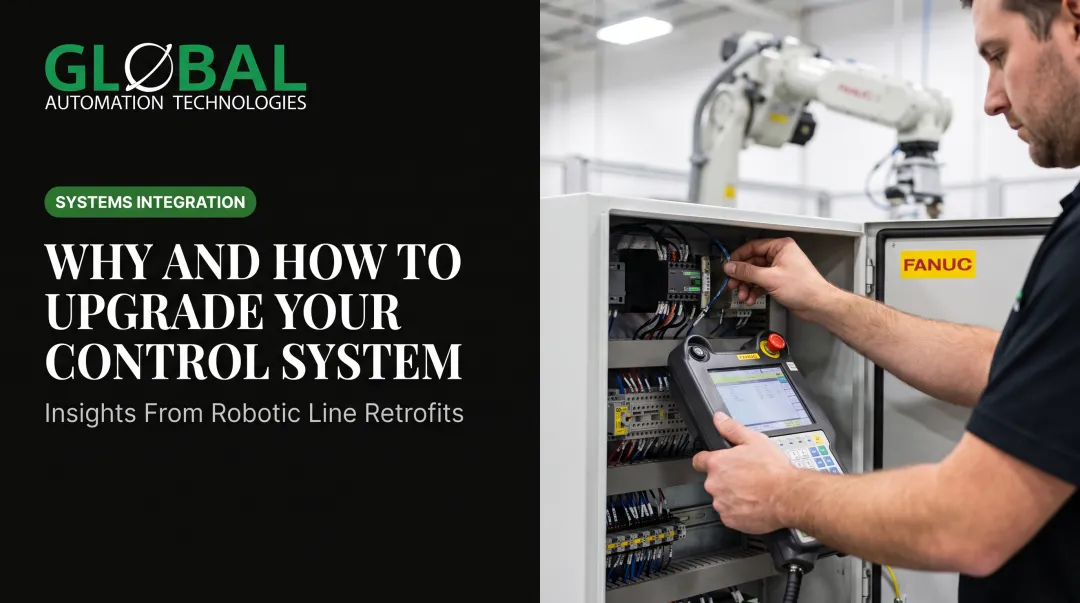
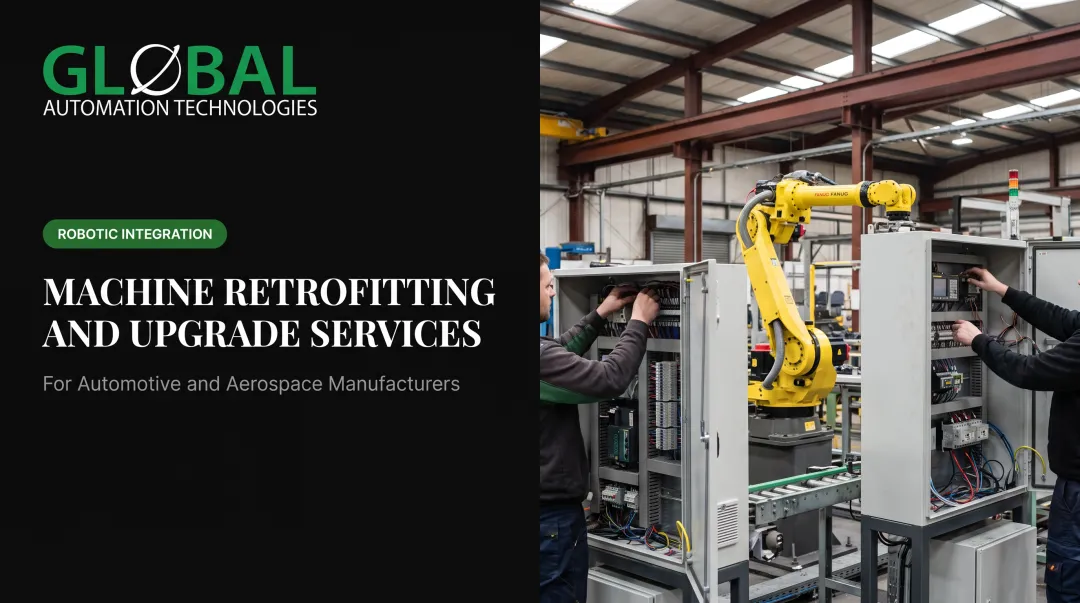
- Swapping a single obsolete component, like a control panel
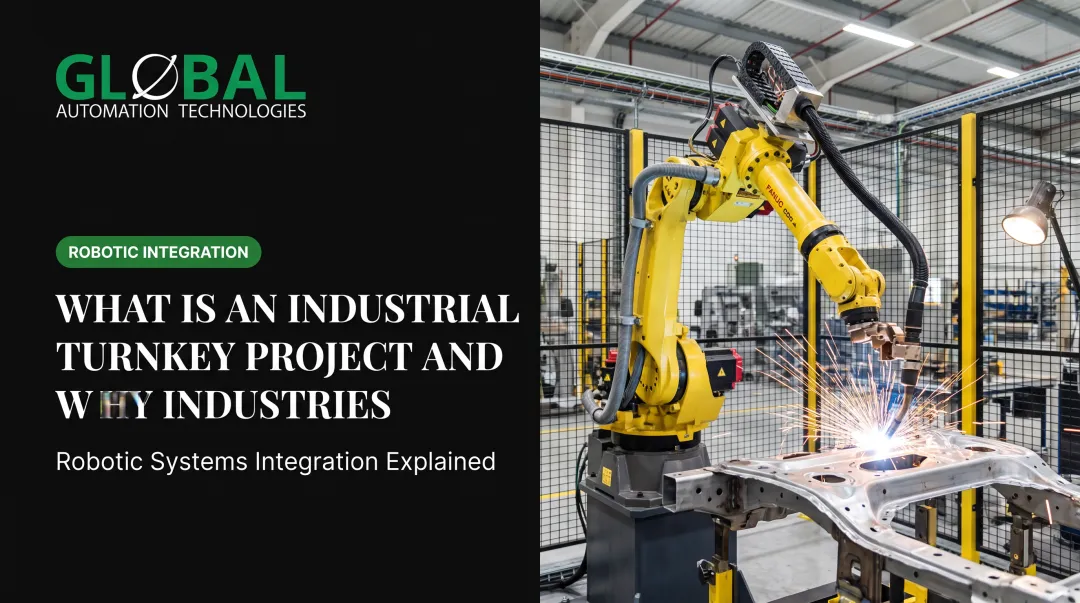
- Adding a robotic cell to an existing manual line
- Overhauling an entire production line's controls and automation platform
The right scope depends on how obsolete the equipment has become and what operational goals are driving the project, whether that's capacity, quality, energy use, or compliance.
Retrofit vs. Revamp vs. Rebuild
These terms get used loosely, but they describe distinct approaches with different cost and downtime profiles.
Revamping is the conservative option. It restores equipment to its original functional condition without necessarily upgrading the underlying technology. Think of it as a repair, not an upgrade.
A full rebuild or new construction replaces the asset entirely. This offers the cleanest compliance path since everything is new, but it demands higher upfront capital and longer downtime.
Retrofit sits between the two: you keep the structural base and core equipment, but you modernize the technology running it, according to the Rego-Fix breakdown of retrofit, rebuild, and replace options.
A simple decision rule:
- Retrofit when the structural base and core equipment are sound and only the technology needs updating
- Rebuild or replace when structural limits or economic obsolescence—insufficient ceiling height, unsafe electrical infrastructure—make upgrading impractical
Types of Industrial Retrofit Projects
Retrofits generally fall into five categories, and most real-world projects blend two or more of them:
- Technological retrofit: Upgrades control systems, automation platforms, and human-machine interfaces to current industrial standards. Often the entry point for broader modernization.
- Electrical retrofit: Replaces motors, control panels, and inverters to cut energy use and improve reliability. Fixed-speed motors waste far more energy than variable-speed alternatives.
- Mechanical retrofit: Reinforces structural and mechanical components to improve load capacity, precision, and wear resistance, extending equipment service life.
- Software retrofit: Updates monitoring, control, and maintenance software for stronger data integration and predictive insights, moving teams from reactive to predictive maintenance.
- Robotic and automation retrofit: Integrates new robotic cells, AI-assisted simulation, and predictive maintenance tools into an existing line to raise throughput without a full line replacement.

For manufacturers under pressure to modernize quickly, robotic and automation retrofits carry the most weight. Scope usually goes well beyond a new robot arm and typically includes:
- Retrofitting or replacing existing robots within a line
- Integrating new equipment into a legacy cell
- Converting manual operations to automated processes
- Optimizing existing cells for throughput and reliability
That broader scope is why a partner who covers both the system and the people matters. GLOBAL Automation Technologies, which holds Level 5 status in FANUC’s Authorized System Integrator program, treats robotic retrofits as both an engineering problem and a workforce problem. Its automation solutions and engineering services handle robot retrofits, controls integration, and manual-to-automated conversions, while its technical staffing supplies the people who run the system: controls engineers, PLC and robot programmers, commissioning engineers, and project managers.
Most automation firms do integration or staffing, not both. A retrofit that delivers the system without the technicians to operate it often stalls at commissioning.
Signs Your Facility Needs a Retrofit
Some warning signs are obvious. Others creep up gradually until a single bad week forces the decision.
Common triggers include:
- Rising unplanned downtime — Aging equipment fails more often and less predictably. Industrial businesses lose a median of $124,669 per hour of unplanned downtime, per ABB's 2023 Value of Reliability survey of 3,200+ plant-maintenance leaders.
- Code and compliance gaps — Wiring, guarding, or controls that passed a decade ago may miss today's safety, environmental, or energy standards, creating liability before anything fails.
- Production that can't keep pace — Outdated automation and controls that miss volume targets, quality tolerances, or new product requirements point to an equipment problem, not a labor one.

One sign alone may not justify a retrofit. Two or three usually do.
Key Benefits of an Industrial Retrofit
A well-scoped retrofit delivers returns across cost, uptime, energy use, safety, and output.
Lower cost relative to new construction. Retrofit maximizes the value of existing capital investment rather than writing it off. You improve ROI on an asset you already own instead of starting depreciation from zero.
Reduced downtime. Many retrofit projects can be phased, keeping parts of a facility operational during the upgrade. A full rebuild typically demands a complete shutdown, which most plants can't absorb.
Improved energy efficiency. Variable-speed drives can save 15% to 40% of motor-system energy in applications with variable loads, particularly fans and pumps, according to the Energy Institute's guidance on variable speed drives. Similar gains apply to LED lighting and modern HVAC upgrades, though savings depend on your existing baseline.
Enhanced safety and compliance. Modern sensors, guarding, and control systems reduce accident risk and align equipment with current standards—closing gaps that create liability exposure.
Productivity and quality gains. Automation-focused retrofits earn their keep here. Robotic machine tending keeps spindles cutting through breaks, shift changes, and overnight instead of sitting idle between manual load cycles.
Payback on these projects typically lands in 12 to 18 months, driven by:
- Higher spindle utilization from production that runs well past a single shift, with lights-out operation between scheduled maintenance windows
- Labor moved from repetitive loading to inspection and process improvement
- More consistent part quality with less scrap and rework
Planning an Industrial Retrofit: Process & Compliance
A retrofit succeeds or fails based on the planning that happens before anyone touches the equipment.
Core planning steps:
- Assess condition — Evaluate the structural and mechanical state of existing equipment and facility infrastructure
- Define objectives — Get specific about what you're solving for: capacity, efficiency, safety, or compliance
- Select technology and a partner — Choose the automation platform and an integrator with relevant application experience (including line retrofit and commissioning capability)
- Budget the project — Account for equipment, engineering, downtime, and contingency
- Phase implementation — Sequence the work to keep as much of the line running as possible
- Monitor post-retrofit — Confirm the upgrade is delivering on the objectives you set at the start

That last step gets skipped more often than it should. A retrofit isn't done at commissioning; it's done once the data confirms the upgrade is performing as expected.
Regulations & Compliance Considerations
Retrofits involving machinery, electrical systems, or robotics aren't just engineering decisions. They're regulatory ones.
- OSHA requirements cover hazardous energy control (1910.147), machine guarding (1910.212), and electrical equipment acceptance (1910.303) — all directly relevant to retrofit work
- ISO 12100 provides the machinery-safety risk assessment methodology manufacturers use when a modification changes hazards or protective measures
- ANSI/A3 R15.06-2025 applies when a retrofit changes a robot, end effector, or safeguarding on a robotic cell
Modified equipment must remain acceptable under its original listing or approval. Depending on what changed, that could mean a new field evaluation, updated labeling, or a full risk reassessment.
Practical advice:
- Document every upgrade and certification as you go, not after the fact
- Work with qualified engineers or integrators who know the applicable standards and can own compliance documentation
- Treat compliance documentation as a deliverable, not an afterthought
Frequently Asked Questions
What does retrofit mean?
Retrofit means adding new technology or components to an existing system, building, or vehicle to improve performance without fully replacing it. The original structure stays; the technology inside it gets modernized.
What is commercial retrofitting?
Commercial retrofitting applies the same modernization principle to office buildings and warehouses. It typically involves HVAC, lighting, and building envelope upgrades that boost efficiency and asset value.
What does retrofit mean in HVAC?
An HVAC retrofit means upgrading heating, ventilation, and cooling components, such as adding demand-control ventilation or economizers, to improve efficiency without replacing the entire system.
What is the difference between retrofit and revamping?
Revamping restores equipment to its original working condition. Retrofit upgrades it with modern technology, often exceeding the original design specifications rather than just matching them.
How long does an industrial retrofit typically take?
Timelines vary by scope, but phased retrofits generally run from a few weeks to several months. That's typically faster than new construction or a full rebuild.
Is retrofitting cheaper than replacing equipment entirely?
Retrofitting is usually cheaper upfront, depending on the age and condition of existing equipment. When too many components need replacement, costs can approach a new system—so run a cost-benefit assessment first.