
Three pressures are driving that shift. Labor shortages have made it hard to staff repetitive, physically demanding roles. Throughput demands keep climbing as e-commerce grocery and SKU variety grow. And food safety expectations under FSMA and HACCP push manufacturers toward systems that limit hands-on product contact.
This article breaks down the trends reshaping robotic packaging lines, the forces accelerating adoption, the measurable impact on operations and workforce planning, and what to watch over the next few years.
TL;DR
- Robots now handle primary packaging, pick-and-place, and in-line quality inspection, not only end-of-line palletizing
- AI simulation and predictive maintenance cut deployment time and unplanned downtime
- Labor shortages and SKU proliferation, plus tighter food safety rules, drive most adoption decisions
- Early adopters report measurable gains in throughput, plant safety, and workforce stability
Key Trends Transforming Food Packaging With Robotic Automation
Robotic automation used to mean one thing: palletizing at the end of the line. That's no longer true. Robots and vision systems now touch nearly every stage of food packaging.
Robotic Palletizing and End-of-Line Automation
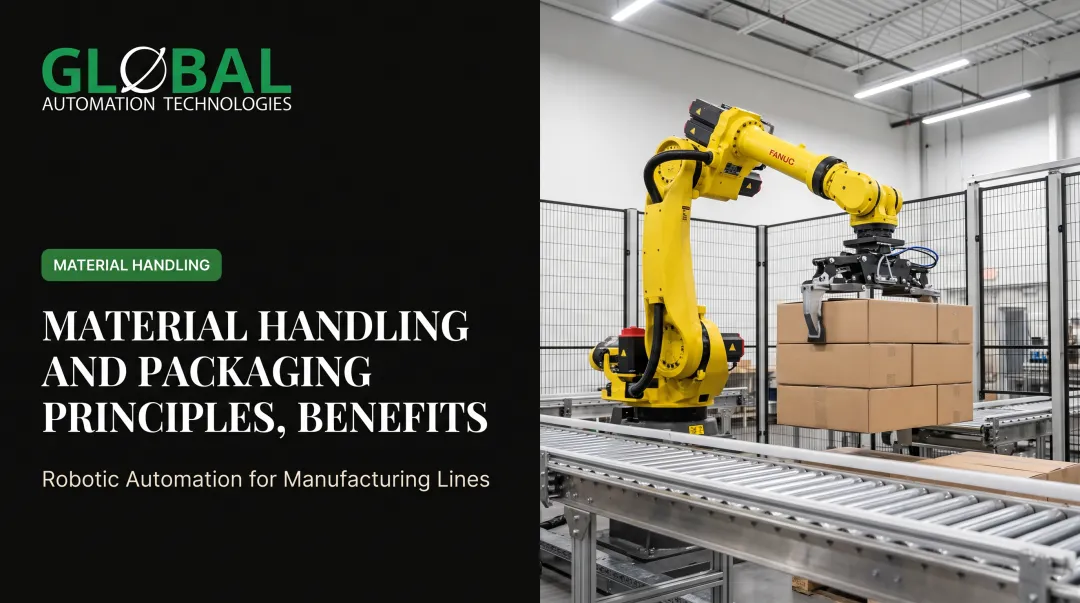
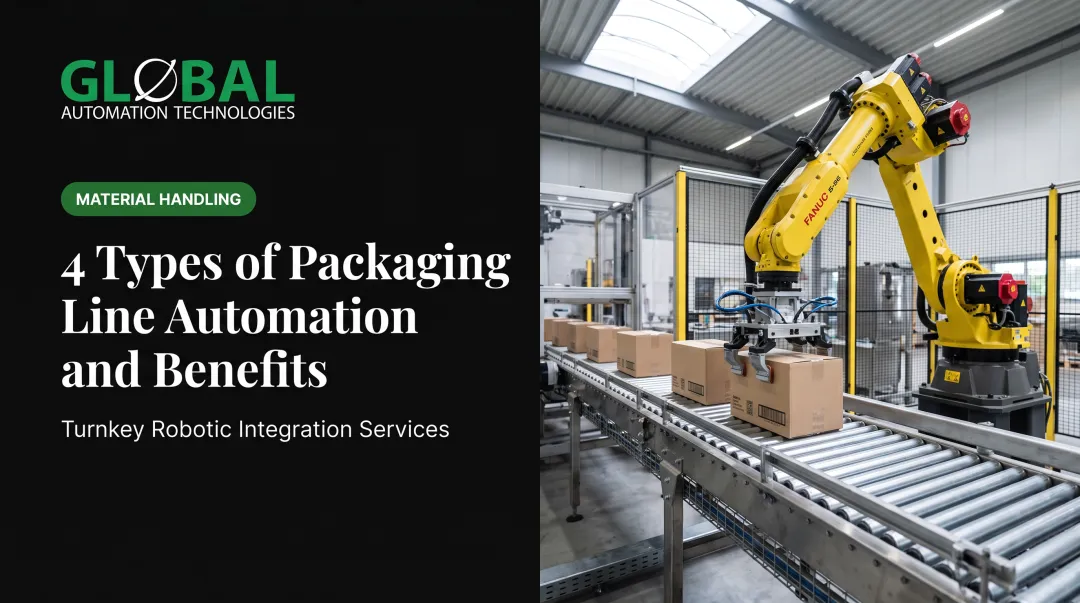
Case packing, stacking, and palletizing were among the first packaging tasks robots took over, and they remain the backbone of most automation projects. A robotic palletizing cell builds a consistent pallet pattern every cycle, at a pace that doesn't slow down during a double shift or a holiday production push.
High-volume snack, beverage, and bakery producers have led this shift. Lines that once needed two or three workers stacking cases by hand now run with a single operator supervising a robotic cell, freeing staff for quality checks or changeovers elsewhere on the line.
The injury math behind this trend is hard to ignore. U.S. warehousing and storage operations logged 4.8 recordable injury and illness cases per 100 full-time workers in 2024, with heavy lifting, repetitive motion, and awkward postures cited as leading causes, according to Bureau of Labor Statistics data.
OSHA recommends keeping manually handled cases under 35 pounds, a limit robotic end-effectors don't need to worry about.
Vision-Guided Pick-and-Place for Primary Packaging
Primary packaging used to be the hardest place to automate. Bread loaves, pastries, bacon drafts, and fresh produce arrive in slightly different shapes and sizes every time, which made rigid automation unreliable. Vision-guided delta and SCARA robots handle that variability directly.
These systems use cameras to identify a product's exact position and orientation, then adjust the pick in real time. Bakeries and confectioners now use vision-guided delta robots to place delicate baked goods onto trays at high speed without crushing or misaligning product. Fixed-path automation struggled to do that consistently.
SKU counts keep climbing, and shoppers expect natural, non-uniform products handled without visible damage. A robot that identifies a muffin's position and gently places it, rather than forcing it into a fixed slot, solves a problem manufacturers have wrestled with for decades.
Collaborative Robots (Cobots) for Flexible, Mixed-SKU Lines
Fixed automation is fast, but it's built for one job. Cobots solve a different problem: how to automate a line that changes over multiple times a day.
Because cobots work safely near people without heavy guarding, mid-size producers can install them without rebuilding an entire line. A private-label snack producer running six SKUs on one packaging line, for example, can reprogram a cobot cell in minutes rather than reconfiguring guarding and fixtures for each changeover.
This flexibility matters because SKU proliferation isn't slowing down. Private-label growth and variety packs mean fewer long, uninterrupted production runs and more frequent changeovers. Cobots let a mid-size producer add automation incrementally, cell by cell, instead of committing to one large capital project sized for a single product line.

AI-Assisted Robot Programming and Simulation
Commissioning a robotic cell used to mean weeks of on-site programming, testing, and adjustment, time a food plant can't always spare during a changeover window. AI-assisted simulation and digital twins are compressing that timeline.
Engineers build a virtual model of the robotic cell, then program and test the entire sequence in simulation before installing a single component. Errors get caught on a screen instead of on the production floor.
GLOBAL Automation Technologies, which holds Level 5 status in FANUC’s Authorized System Integrator program, uses this approach to compress robot programming timelines across its integration projects. The capability was built for automotive and heavy equipment lines, and it now matters just as much to food and beverage manufacturers under the same pressure to shorten changeover windows.
Shorter product life cycles leave less room for slow commissioning. Simulation-first programming gives manufacturers a faster path from concept to production.
Predictive Maintenance and IIoT-Connected Robotic Systems
A robotic packaging line running well beyond a single shift has zero tolerance for surprise breakdowns. Sensors embedded in robots and connected equipment track motor performance, cycle timing, and mechanical wear continuously, feeding that data into AI models that flag developing problems before they cause a stoppage.
The cost of getting this wrong is steep. Plant-maintenance leaders across industries, including food and beverage, reported unplanned outages costing close to $125,000 per hour, based on an ABB survey of more than 3,200 maintenance decision-makers. More than two-thirds said they experience outages at least monthly.
That is why AI-driven health assessments get built into robotic systems. Catching a bearing wearing out or a servo drifting out of spec before it stops the line protects both production schedules and maintenance budgets.
What's Driving These Robotic Automation Trends in Food Packaging
Cost alone doesn't explain why robotic packaging adoption is accelerating. Several forces are converging at once.
- Technology has matured. Machine vision, AI-based simulation, and IIoT sensors are far more capable and easier to deploy than a decade ago, which lowers the technical risk of automating primary packaging and inspection.
- Labor remains hard to find. Food manufacturing employs 168,370 packaging and filling machine operators as of 2025, and producers still struggle to fill these physically demanding, repetitive roles.
- Consumer and retailer expectations keep rising. Online grocery sales reached 8.9% of total grocery sales in 2025, and the average supermarket now stocks over 33,000 items. Producers must run more SKUs on the same lines without losing speed.
- Costs and margins are tightening. Rising packaging material, ingredient, and labor costs push manufacturers toward automation wherever it can deliver efficiency gains.
- Food safety rules favor less hand contact. FSMA's Part 117 requires hygienic practices for anyone in direct contact with food or packaging. Automated systems that limit hands-on contact support that compliance goal.

How Robotic Automation Is Impacting the Food Packaging Industry
These trends aren't just changing equipment on the floor. They're reshaping operational metrics, capital planning, and workforce strategy across food and beverage manufacturing.
Operational Impact
Robotic packaging cells tend to run more predictably than manual lines, which shows up directly in overall equipment effectiveness. In one documented case, ABB reported robots improving OEE by 30% compared to manual pick-and-place in a compostable food-service packaging application. The same shift also cut ergonomic strain on workers.
Connected robotic systems add a second benefit: traceability. Every pick, place, and pallet build gets logged automatically, giving quality teams real-time visibility into production data. That log trail matters when a recall or audit requires tracing a batch back to its exact production window.
Business Impact
Capital planning now favors flexibility over one large, fixed automation bet:
- Modular robotic cells that can be reconfigured or expanded as SKUs and volumes change
- Robotics-as-a-Service options that lower the upfront barrier, weighed against long-term ownership cost
- Automation upgrades on existing lines instead of funding a new facility to add capacity
Workforce Impact
Robotic adoption changes what floor jobs look like more than it removes them. Workers who once handled repetitive manual case packing are being reskilled into robot operation, oversight, and basic maintenance roles.
At the same time, demand is growing for automation engineers and technicians who can program, maintain, and troubleshoot robotic packaging lines, a skill set harder to find than general labor.
That gap is why a combined systems-and-staffing model helps: deploy the robotic cell and supply the controls engineers or robotics technicians to run it, instead of leaving the manufacturer to hire that expertise alone.

Future Signals for Robotic Automation in Food Packaging
Robotic packaging isn't finished evolving. Here's what's worth watching over the next one to three years.
- AI vision inspection converging with robotics. Real-time defect detection and full batch traceability are moving from pilot projects to standard equipment, so one cell can handle product and verify quality before casing.
- Robotics-as-a-Service lowering the entry barrier. RaaS models are growing at double-digit rates, making subscription automation more accessible to small and mid-size food producers. Some buyers still prefer ownership for long-term cost control.
- Robots adapting to sustainable packaging formats. As brands shift toward paper-based, flexible, and recyclable materials, gripper design and handling logic must keep pace with materials that behave nothing like rigid plastic containers.
Conclusion
Robotic automation has moved from the end of the line to nearly every stage of food packaging: palletizing, primary packaging, quality inspection, and predictive maintenance that keeps lines running. For manufacturers facing labor shortages, SKU proliferation, and tighter food safety expectations, these capabilities are becoming standard rather than optional.
Manufacturers who adopt early are already seeing real advantages:
- Higher throughput
- Fewer workplace injuries
- More stable staffing in roles that have been hard to fill
Choosing the right automation partner matters as much as choosing the right robot. GLOBAL Automation Technologies combines automation solutions, services and technical staffing, building the automated cell and supplying the controls engineers, technicians, and programmers who keep it running. For food and beverage manufacturers scaling robotic adoption, that combination of systems and staffing is a practical place to start.
Frequently Asked Questions
What is robotic automation in food packaging?
Robotic automation in food packaging uses robots, sensors, and control software to handle filling, sealing, picking, packing, and palletizing with minimal manual intervention. Vision systems and AI let these robots adapt to variable product shapes and positions in real time.
Is robotic automation food-safe and hygienic?
Yes. Robotic systems reduce direct human contact with product and are typically built with sanitary, washdown-ready materials designed to meet food safety standards. They can support FSMA and HACCP compliance, but they do not automatically guarantee it.
How much does it cost to implement robotic packaging automation?
Costs vary widely based on application, payload, and line complexity, ranging from modular cobot cells to full turnkey palletizing systems. Payback periods commonly fall in the one-to-two-year range, depending on labor savings and throughput gains.
Can small and mid-size food manufacturers afford robots?
Yes. Modular cobots and Robotics-as-a-Service models have lowered upfront investment, making automation accessible beyond large producers with heavy capital budgets.
What's the difference between cobots and traditional industrial robots in food packaging lines?
Cobots work safely near people without heavy guarding and excel at flexible, mixed-SKU changeovers. Traditional industrial robots require guarding but offer higher speed and payload capacity for high-volume, fixed-format lines.
How long does it take to deploy a robotic packaging system?
AI-assisted simulation and offline programming have shortened deployment timelines, compressing programming time on many integration projects. Actual installation time still depends on line complexity and facility readiness.