
Without automation, shops hit a ceiling fast:
- Capacity caps out at whatever a single shift can produce
- Part quality varies operator to operator
- Deadlines slip when a machinist calls in sick
- Workers get stuck on repetitive, physically taxing tasks
This guide breaks down what robotic automation actually looks like on a machine shop floor, where it delivers the biggest returns, and how to implement it without betting the business on it.
Key Takeaways
- Robots extend capacity beyond a single shift, enabling lights-out running between scheduled maintenance windows without adding headcount
- Machine tending, material handling, welding, dispensing, and inspection deliver the most value for most shops
- A phased rollout, starting with a baseline assessment, cuts risk and speeds payback
- Well-matched machine tending cells often pay for themselves in 12 to 18 months
What Is Robotic Automation in a Machine Shop?
Robotic automation uses programmable robotic arms, most commonly six-axis industrial robots, to handle repetitive physical tasks with little or no human intervention. Typical jobs include loading, unloading, transferring, and finishing parts.
Under the ISO 8373 standard, a true industrial robot is automatically controlled, reprogrammable, and capable of moving in three or more axes.
That's a different animal from what most people mean by "machine tool automation."
Robots vs. machine tool automation:
- Bar feeders and pallet changers automate a single machine's internal process
- Robots work across varied part geometries and multiple machines from one cell
- A robotic cell can be reprogrammed for a new job in hours; hardwired machine automation often can't
Most shops standardize on robot brands built for tough plant environments. FANUC is the most common name in machine tending cells. GLOBAL Automation Technologies has worked on that platform since 2009 as a Level 5 FANUC Authorized System Integrator, the highest tier of FANUC partnership. The company was the #1 purchaser of FANUC robots among North American integrators in 2025, and FANUC recognized it with sales awards for growth and gross robot sales in both 2024 and 2025.
Key Benefits of Robotic Automation for Machine Shops
The case for automation isn't theoretical. It shows up in throughput numbers, scrap rates, and how competitively a shop can bid work.
Higher Throughput and Spindle Utilization
Robots don't need breaks, shift changes, or eight hours of sleep. A FANUC case study involving Swivellink found that two robot-tended ROBODRILLs ran 20 to 24 hours per day, lifting eight-hour shift output from 100 parts to more than 150—a 33% jump in production efficiency.
That's an OEM benchmark, not a universal guarantee. It still shows the ceiling shops can push past.
Consistent Part Quality
Manual loading introduces variability: slightly different part seating, inconsistent clamping pressure, human fatigue late in a shift. Programmed robotic motion repeats the same path every cycle. Shops that automate tending and finishing report fewer part errors and tighter dimensional consistency across shifts.
Workforce Safety and Redeployment
Robots take over the repetitive, hazardous, or ergonomically brutal tasks: hot part handling, chip and coolant exposure, repetitive lifting. Those roles move rather than disappear. Machinists shift toward:
- Robot and machine programming
- Inspection and quality control
- Process improvement work
Faster ROI and a Stronger Bid Position
Machine tending is often the highest-ROI automation investment a shop can make. Well-matched machine tending cells often pay for themselves in 12 to 18 months, one of the fastest payback windows in industrial automation, driven by more parts per shift and fewer direct labor hours.
Lower per-part costs and reliable on-time delivery also let shops bid more aggressively—critical when OEMs and Tier 1 buyers stack every quote against three or four competitors.
Data-Driven Decision-Making
Automated cells produce cycle data most manual operations never capture. 57% of manufacturers are already using data analytics at the facility or network level, and 46% use industrial IoT, according to Deloitte's 2025 Smart Manufacturing Survey. Multi-machine cells surface uptime and cycle-timing data as part of the sequencing that keeps every spindle near full utilization.
Where Robots Deliver the Most Value: Core Machine Shop Applications
The right cell configuration depends on part volume, mix, and process, not a one-size-fits-all robot arm. A high-mix job shop needs a different setup than a high-volume Tier 1 supplier running the same part number for a year.
Machine Tending
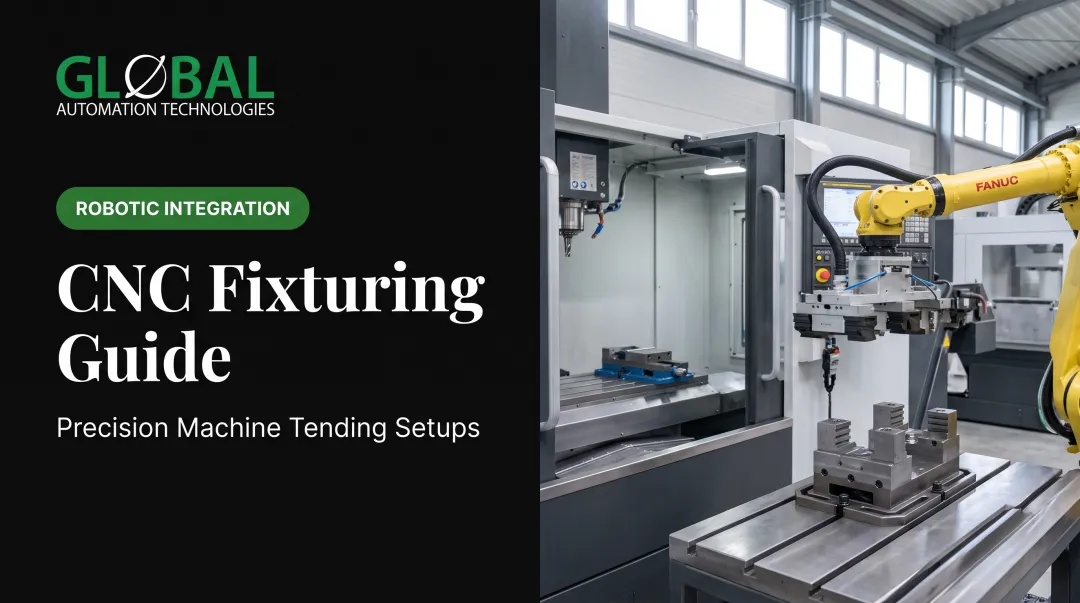
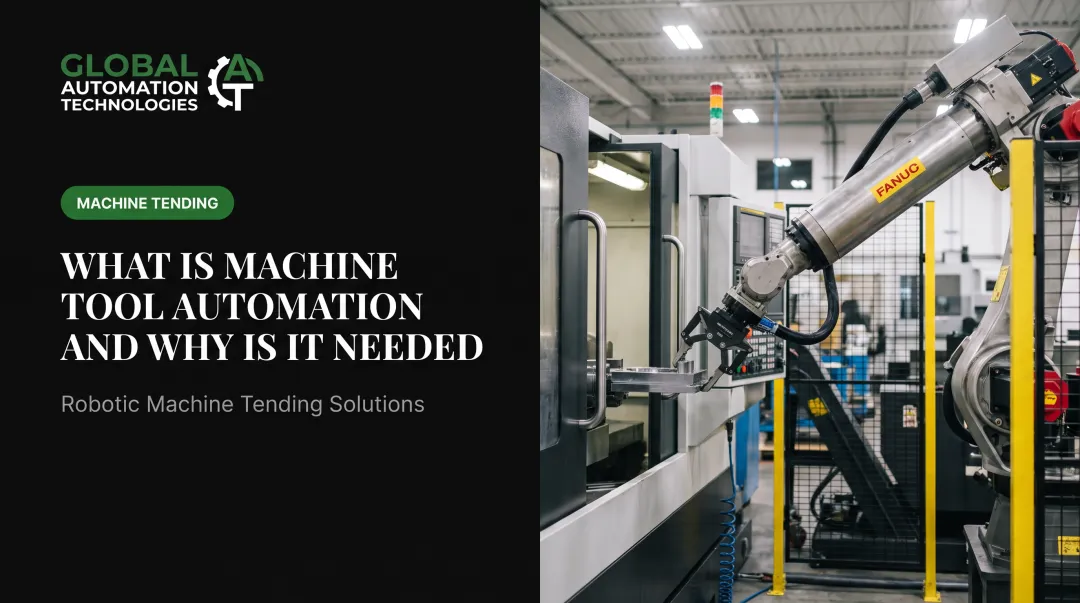
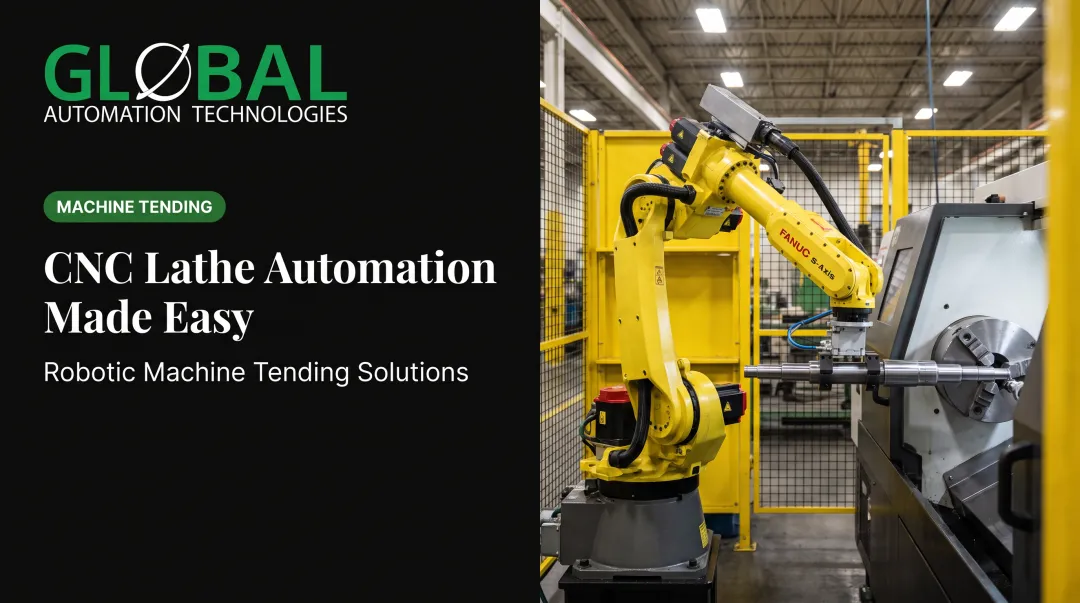
Robots load and unload CNC lathes and machining centers, enabling extended lights-out runs between scheduled maintenance windows while operators handle higher-value work. This remains the most common entry point for shop-floor automation, from a single-machine cell to a robot managing multiple machines with buffer stations and intelligent scheduling.
Material Handling & Part Transfer
Robots move parts between machines, conveyors, and containers. With vision-guided picking, they can re-fixture workpieces without precise upstream positioning, which cuts setup complexity on variable production runs.
Welding, Dispensing & Robotic Painting
Robotic welding delivers consistent bead quality and repeatability that's hard to sustain manually across a full shift. Robotic dispensing applies sealers and adhesives on the same programmed path every cycle, with fewer missed spots than manual application. In painting and coating, robotic systems follow the same programmed path every cycle, holding film build within specification shift after shift while cutting overspray and material waste compared to manual guns. Class A automotive finishing is one area where that repeatability matters most.
Automated Inspection & Quality Validation
Vision systems and in-line sensors mounted on robots catch defects before parts move downstream. On dispense cells, flow monitoring and real-time vision can validate bead width, placement, and continuity—so a thin bead or missed spot gets flagged before it reaches the next station.
Deburring & Finishing
Deburring and edge finishing are repetitive and physically taxing. A robot with force sensing maintains controlled contact pressure on castings and holds a consistent edge finish that's difficult to match by hand, shift after shift. The same cell can often handle chip and coolant blow-off or part marking when those steps sit in the same workflow.

How to Implement Robotic Automation: A Step-by-Step Roadmap
Jumping straight to hardware selection is the fastest way to overspend on the wrong cell. A phased approach reduces that risk and keeps every decision tied to shop-floor data.
- Establish your operational baseline. Measure current spindle utilization, cycle times, scrap rates, and labor costs. You can't quantify automation's impact without a clear starting point.
- Define clear goals and KPIs. Set specific targets, such as extending lights-out hours between maintenance windows or cutting scrap by a set percentage, to guide which process gets automated first.
- Identify the best-fit application and involve your team. Pick the highest-impact, most repeatable process. Bring operators and programmers into planning early; they'll surface constraints an outside consultant would miss.
- Select the right robot and integration partner. Choose an integrator that provides both systems integration and skilled engineering talent. GLOBAL Automation Technologies pairs its turnkey automation systems and engineering services with technical staffing, reducing the risk of buying equipment without the people to run it.
- Simulate and program before deployment. AI-assisted simulation lets engineers model, test, and optimize robot programs before they run on the floor. That compresses programming time from weeks to days and cuts costly startup surprises.
- Install, validate, and monitor. Proper commissioning and operator training matter as much as the hardware. Pair go-live with AI-driven health assessments so predictive maintenance flags issues early, before they become unplanned downtime.
Common Challenges in Automating a Machine Shop
Most machine shop automation projects fail from planning gaps, not unreliable robots.
Upfront investment and ROI uncertainty. Capital costs are real, but a phased, application-specific approach reduces risk and speeds payback compared to a full-line overhaul all at once.
Workforce skills gap and change management. Operators need training to manage automated cells effectively. Shops that involve staff early in planning see better adoption and lower turnover.
Integration complexity and unplanned downtime. Robots don't account for real-world variability the way an experienced machinist does. Secondary operations, where parts get dropped, mixed up, or skipped under manual handling, are a common failure point if not engineered carefully.
Working with an integrator that combines engineering depth with staffing capability, rather than one that only sells equipment, cuts this risk substantially.

Frequently Asked Questions
How much does it cost to automate a machine shop with robots?
Costs vary widely by application and scale. A simple single-machine tending cell is typically the most affordable entry point compared to a multi-robot production line, and every system is custom-engineered around your part geometry and cycle time.
Can robotic automation work for low-volume, high-mix machine shops?
Yes. Quick-change workholding, pallet systems, and flexible cells, including cobot tending, make automation increasingly viable for high-mix, low-volume production, not just long production runs.
How long does it take to implement a robotic machine tending cell?
Timelines vary by complexity, but AI-assisted simulation and standardized cell designs can compress integration timelines significantly, turning what used to take months of programming into a matter of weeks.
Do robots replace machinists' jobs?
Robots take over repetitive or hazardous tasks, not the machinist. Most operators move into programming, quality control, and process improvement roles that require judgment robots don't have.
What is the difference between CNC automation and robotic automation?
CNC automation covers the machining process itself, meaning controls, bar feeders, and pallet changers. Robotic automation adds an external robotic arm that handles loading, transfer, and finishing across one or more machines.
How do I choose the right automation partner for my machine shop?
Look for a partner like GLOBAL that delivers both the robotic system and the engineering talent to run and maintain it—not equipment alone. Reaching out for a consultation before you buy hardware tends to save money down the line.