
That shift isn't cosmetic. It's a direct response to a labor problem manufacturers can't hire their way out of. Up to 3.8 million manufacturing jobs may need filling in the US between 2024 and 2033, and as many as 1.9 million could go unfilled if the skills gap persists, according to Deloitte and the Manufacturing Institute. This article breaks down what human-robot collaboration (HRC) actually means, how cobots differ from traditional industrial robots, where the technology delivers real value, and whether the investment pays off.
Key Takeaways
- HRC pairs robot strength and precision with human judgment to address labor shortages and tighten quality
- Cobots aren't the only form of collaboration — safety-rated traditional robots can work near people too
- Machine tending, painting, welding, assembly, and inspection gain the most from HRC in automotive and heavy industry
- HRC success hinges more on your integration partner than on your robot brand
What Is Human-Robot Collaboration?
Human-robot collaboration (HRC) means humans and robots sharing a workspace or task toward one manufacturing goal. It sits between full automation (no human involvement) and manual-only work (no robot involvement).
It's a spectrum, not a single setup:
- Fenced traditional robots — no direct human interaction, maximum speed and payload
- Monitored standstill — robot halts completely before a person can access the space
- Speed-and-separation monitoring (SSM) — robot slows or stops as a person approaches, no contact intended
- Full hand-guided cobots — power-and-force limiting allows intentional contact within safe limits
HRC isn't only about cobots. A traditional industrial robot behind laser scanners, safety mats, or locking gates can still count as collaborative under the International Federation of Robotics (IFR) framework, provided the interaction is validated and controlled. The 2025 ISO 10218 update even shifted the language to "collaborative application" — because it's the actual use case that gets tested and confirmed, not the robot label itself.
Cobots are growing fast, but they're still a minority. IFR's 2025 data shows more than 64,500 cobot installations out of 542,000 industrial robots installed globally in 2024 — nearly 12%, up from 10.5% the year before.

Cobots vs. Traditional Industrial Robots: Choosing the Right Fit
Picking between a cobot and a guarded traditional robot comes down to what your line actually needs.
Cobots win when:
- Payloads are light and speeds are moderate
- Production mix changes often
- You don't have a dedicated automation engineering team on staff
Traditional robots win when:
- The line needs high speed and high payload simultaneously
- Volume is stable and high
- Throughput matters more than flexibility
The International Federation of Robotics (IFR) is blunt about this trade-off: cobots generally aren't built for processes demanding both high speed and high payload at once. That's still traditional robot territory.

Why Programming Ease Matters Without In-House Engineers
Cobots typically use lead-through teach: an operator physically guides the arm through a motion, and it remembers the path. No code, no dedicated programmer required. That's a real advantage for manufacturers without in-house controls engineers.
When to Choose a Guarded Traditional Robot Instead
For automotive body shops, heavy equipment fabrication, or any high-cycle welding line, a guarded traditional robot usually beats a cobot. You get the speed and payload headroom, and safety comes from perimeter guarding, scanners, or safety mats rather than built-in force limiting.
GLOBAL, a Level 5 FANUC Authorized System Integrator, works primarily with FANUC robots across this entire spectrum, from cobot-based collaborative tending for flexible, low-volume work to heavy-duty paint and material-handling robots built for hazardous or high-payload environments. The right platform depends on the application, not on a single robot type for every job.
Where Human-Robot Collaboration Delivers Value in Manufacturing
Human-robot collaboration pays off where repetition, hazard, or consistency limits what people can do alone. These are the cells where that split of work shows up most clearly on the floor.
Machine Tending
Robots load and unload CNC machines while operators handle changeovers, gauging, and quality checks. The goal: keep every spindle cutting.
GLOBAL's machine-tending cells support lights-out or unattended running between scheduled maintenance windows. One robot often services two or three machines through intelligent scheduling and buffer stations, running through breaks, shift changes, and overnight without an operator present.
Painting and Dispensing
Spray painting exposes workers to isocyanates and VOCs. OSHA links isocyanate exposure to occupational asthma, lung irritation, and airway effects.
Robotic painting removes people from direct overspray exposure while holding process consistency. GLOBAL's paint systems hold film build within specification, cutting overspray and material waste.

On dispensing lines, robots apply seam sealer, structural adhesives, and coatings with repeatable bead quality. Operators still own changeovers, inspection, and exception handling.
Robots don't eliminate the need for ventilation or spray booths. OSHA still requires proper booth design and exhaust systems regardless of who is spraying.
Welding and Assembly
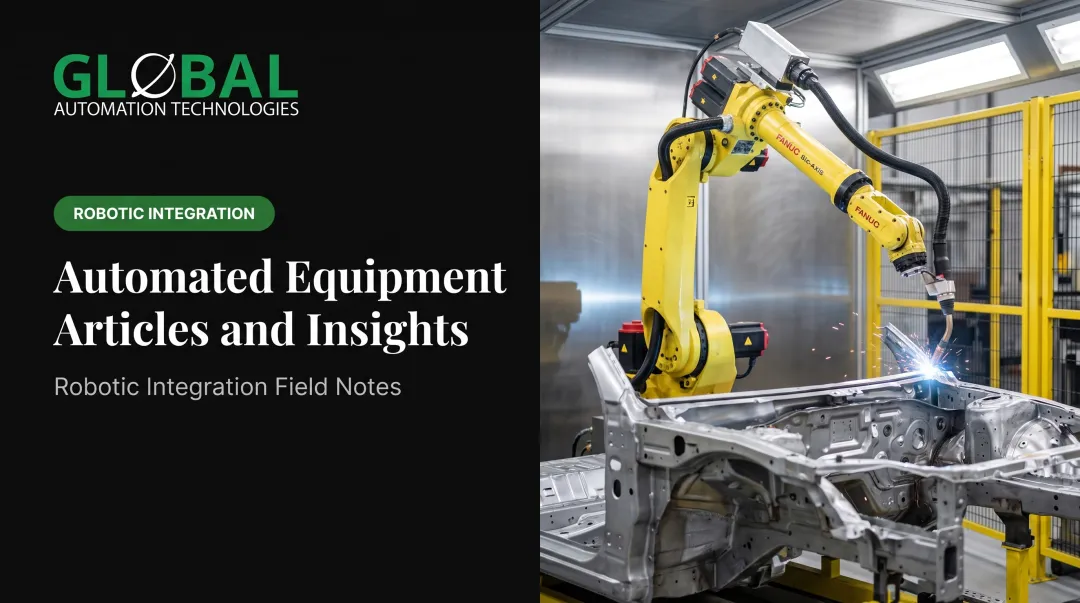
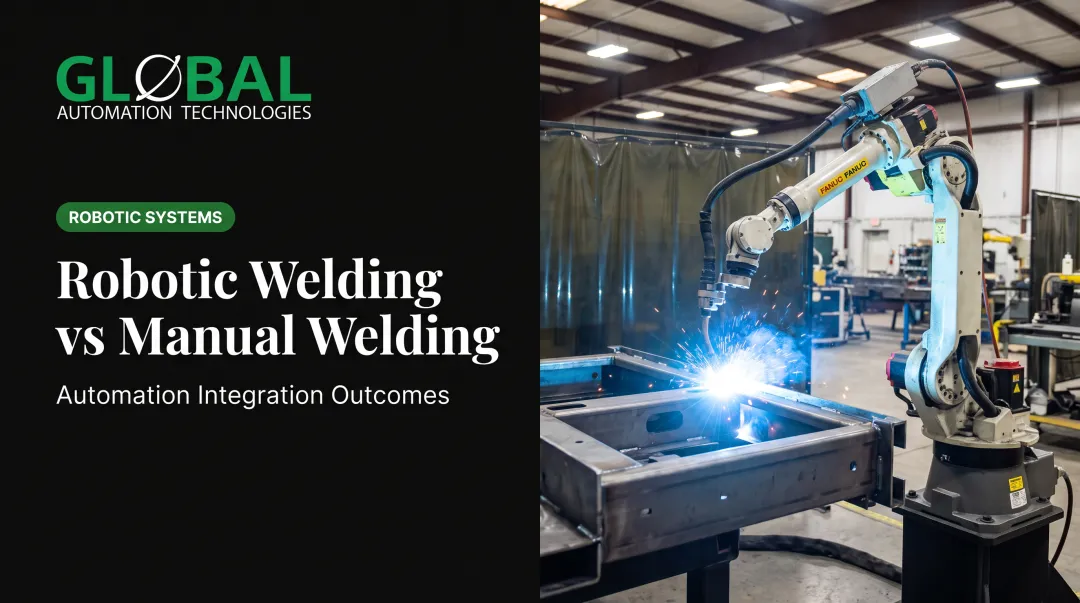
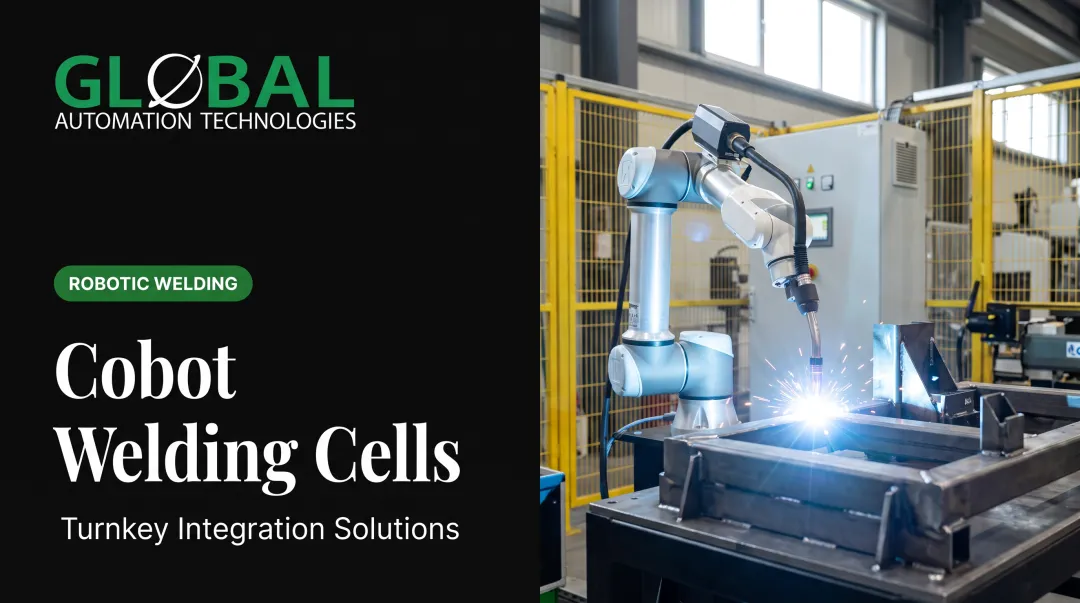
Cobots and monitored robots handle repetitive joining while workers manage fixturing and inspection. GLOBAL's welding cells use vision-guided seam location and adaptive path correction. Assembly systems take on fastening, torque recording, and traceability under human oversight.
Emerging Applications
- Bin picking — 3D vision systems locate randomly oriented parts, cutting the need for precise upstream fixturing
- End-of-line palletizing — flexible pattern-building for mixed SKUs without retooling
These fit low-volume, high-mix runs where rigid automation doesn't make sense.
Safety and Technology Enabling Collaboration
Four safety approaches make HRC possible, per ISO/TS 15066:
| Method | How It Works |
|---|---|
| Monitored standstill | Robot fully stops before human access |
| Hand guiding | Operator physically directs the robot |
| Speed-and-separation monitoring | Robot slows as a person nears, no contact intended |
| Power-and-force limiting | Contact allowed, but force stays within safe limits |

Vision systems layer on top of these. GLOBAL integrates FANUC iRVision and 3D area sensors for part location, quality inspection, and bead verification during dispensing, feeding real-time data back to the robot controller.
Off the floor, AI-assisted simulation shortens the programming timeline. GLOBAL models, tests, and optimizes robot programs virtually before anything runs on the floor, cutting programming time from weeks to days and reducing surprises at startup.
After go-live, predictive maintenance keeps collaborative cells available. AI-driven health assessments flag equipment issues before they cause unplanned downtime, protecting both uptime and maintenance budgets.
Is Human-Robot Collaboration Worth the Investment?
Well-designed machine-tending cells often pay for themselves in 12 to 18 months, driven by more parts per shift and fewer direct labor hours. But that's a general guideline, not a guarantee for every project.
Upfront costs vary based on:
- Payload and reach requirements
- Safety guarding needs (or none, for true cobot applications)
- Tooling, fixturing, and controls complexity
- Vision or inspection systems required
Generic pricing doesn't tell you much. A cobot tending cell with no guarding requirements looks nothing like a guarded high-payload palletizing system on a cost sheet. Getting a tailored quote based on your actual application matters more than any published benchmark.
Value isn't just the hardware, either. A robot sitting idle because nobody on staff can troubleshoot it isn't delivering ROI.
This is where GLOBAL comes in — one division designs, programs, and integrates the robotic system, while the other places controls engineers, technicians, and project managers to keep it running long after commissioning. One call gets you both the system and the people who run it.
Frequently Asked Questions
How much does a collaborative robot cost?
Cost depends on payload, reach, and application complexity. Total system cost, including tooling, safety features, and integration, matters far more than the robot's price tag alone. Request a custom quote for your specific application.
What does a collaborative robot do?
A cobot is designed to work safely alongside humans on tasks like machine tending, assembly, and packaging, typically without extensive fencing. Built-in force limiting lets it share space with operators directly.
Is human-robot collaboration safe?
Yes, when properly deployed. HRC relies on force limiting, vision systems, or speed-and-separation monitoring, plus a documented risk assessment specific to the application and cell layout.
What industries use human-robot collaboration the most?
Automotive, electronics, aerospace, and logistics are early adopters, according to IFR industry data. Automotive remains the largest US installation sector overall.
Can small manufacturers afford human-robot collaboration?
Yes. Cobots typically cost less than traditional guarded robots and use lead-through programming, making them accessible to smaller shops without dedicated automation engineers.
Will robots replace human workers on the factory floor?
No. HRC is built to complement human labor, not replace it. Robots take on repetitive or hazardous tasks while people handle judgment calls, quality checks, and changeovers.