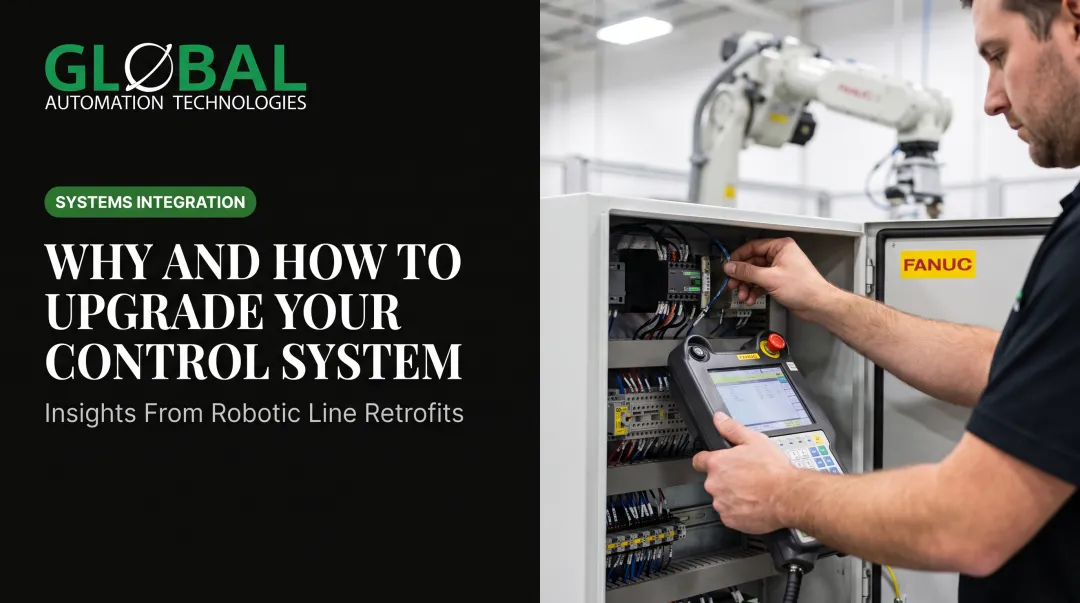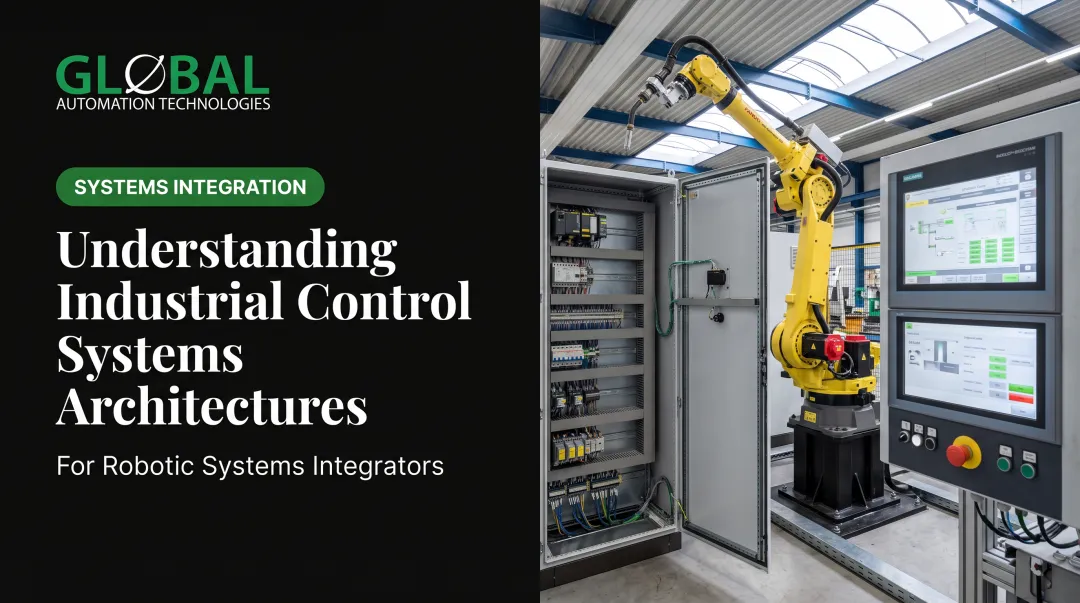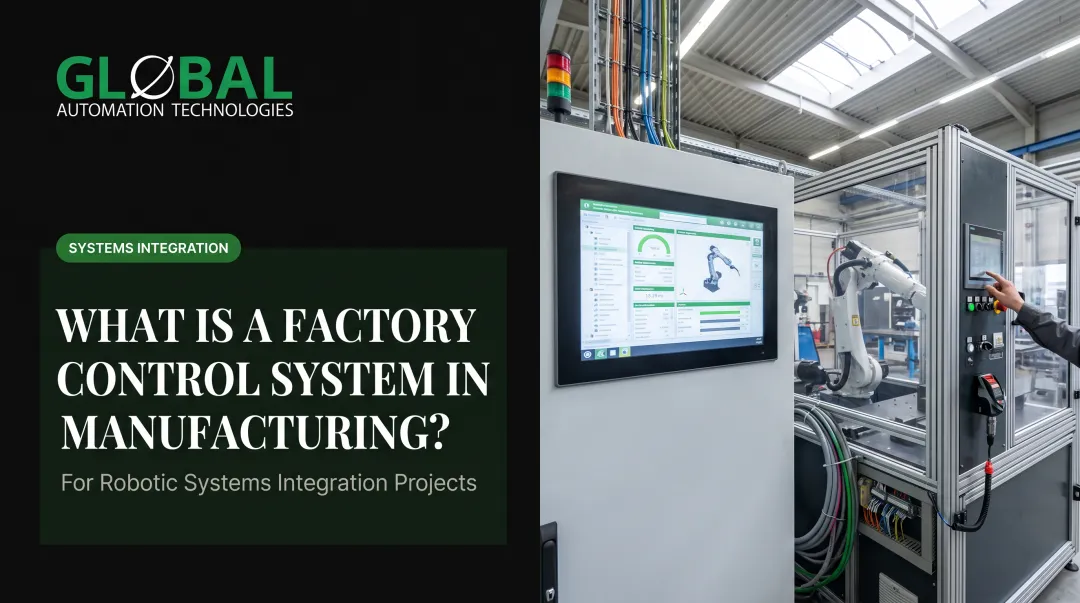

Legacy PLCs and DCS platforms don't send a warning before they fail. They just work, until a controller card burns out, a network switch drops, or a cyberattack targets a system nobody's patched in a decade. By then, the decision has already been made for you.
Many manufacturers wait for a critical failure before touching their control architecture, turning what could've been a planned upgrade into an emergency scramble. This article breaks down what's actually at stake: the risks of waiting, the risks of modernizing carelessly, and the rewards available to plants that approach it strategically.
Key Takeaways
- Legacy control systems compound obsolescence, cyber gaps, and lost tuning knowledge until one failure stops production
- Modernization raises reliability, cybersecurity readiness, and AI-tool compatibility—not hardware alone
- Rip-and-replace approaches risk extended downtime and cascading costs across the line
- Phased, risk-based roadmaps deliver quick wins while building a fully connected architecture
- The right partner brings both engineering expertise and the people to sustain the upgrade
What Is Control System Modernization?
Control system modernization means upgrading or replacing the PLCs, DCS platforms, HMI/SCADA software, and network architecture that run a plant floor. The goal is to bring performance, safety, and cybersecurity up to current standards, without starting from a blank slate.
Most industrial operations rely on one or more of four control types:
| Control Type | How It Works |
|---|---|
| Open-loop | An operator sets an actuator, like a valve, manually; it stays put until someone changes it again |
| Closed-loop / feedback | The system automatically adjusts a variable to hold a setpoint, correcting itself as conditions shift |
| Feedforward | A process model predicts and compensates for a disturbance before it ever affects the output |
| Distributed / networked | Intelligence spreads across multiple controllers instead of sitting in one central unit |

Why This Is Urgent Now
Three forces are converging at once:
- Aging automation infrastructure is hitting wear-out failure rates across nearly every industrial sector
- IT and OT networks are converging, exposing once-isolated control systems to enterprise-level threats
- AI tools are changing how plants program, monitor, and maintain equipment — but only on modern architecture
Rockwell Automation's 2025 survey of manufacturers found that 95% had already invested or planned to invest in AI/ML within five years. Another 81% said internal and external pressure was accelerating their digital transformation timelines. Control systems designed in the 1990s and early 2000s simply weren't built to support that shift.
The Hidden Risks of Delaying Modernization
Aging control systems rarely announce their decline. They run quietly for years, then fail all at once.
Technical and Operational Risks
Obsolescence and end-of-life exposure. Controllers and I/O modules keep running right up until they don't. Once a vendor discontinues a product line, replacement parts get scarce, support costs climb, and repairs turn reactive instead of planned.
Single point of failure. One aging card or switch can halt an entire line while the plant sources parts. In automotive manufacturing, Siemens' 2024 True Cost of Downtime report puts the price of one unproductive hour at $2.3 million — more than double the 2019 figure.
Cybersecurity vulnerabilities. Legacy PLCs and HMIs often lack basic access control, patch management, or network segmentation. Fortinet's 2025 OT Security Report found that 50% of organizations experienced at least one cybersecurity incident in the past year. Many ICS assets still in service are over a decade old and can't receive direct patches.
Organizational and Compliance Risks
Knowledge erosion. Engineers who tuned these systems decades ago are retiring, taking undocumented logic and troubleshooting shortcuts with them. A minor issue that a veteran once diagnosed in minutes can now take days.
Compliance and safety exposure. Outdated safety interlocks and incomplete documentation create real audit risk, especially in regulated manufacturing environments where functional safety standards demand documented evidence across the full system lifecycle.
Status-quo lock-in. Fear of disrupting something that "still works" keeps plants patching indefinitely. Each patch buys a little time, but it also stretches the exposure window on every risk above.
The Rewards: What Modernization Delivers
Modernization isn't just a hardware refresh. Done right, it changes how a plant sees itself.
Stronger Reliability, Visibility, and Security
Modern PLC and DCS platforms deliver better diagnostics, event recording, and integrated alarm management, giving operators a clearer picture of what's actually happening on the line rather than a rundown of what already went wrong.
Modernization is also the natural point to fix network architecture. Applying frameworks like the Purdue Model and IEC 62443 during an upgrade segments IT and OT networks properly, closing gaps that legacy flat networks leave wide open.
AI-Driven Speed, Maintenance, and Workforce Gains
Robot and machine programming used to eat weeks of floor time through trial and error. At GLOBAL Automation Technologies, AI-assisted simulation lets engineers model, test, and optimize programs in a virtual environment before any code touches the floor. That compresses the timeline from weeks to days and cuts startup surprises.
Predictive maintenance follows the same logic. AI-driven equipment health assessments flag developing issues before they cause unplanned stops. For automated cells, payback often lands in 12 to 18 months, driven by:
- Higher throughput per shift with fewer manual intervention points
- Reduced direct labor hours as operators move into inspection, programming, and process improvement
- Fewer unplanned stops once health assessments catch issues early

Modern control architecture also lifts asset utilization and trims material and energy waste. Those gains stack across a full production year.
Modernization also solves a workforce problem most plants underestimate. Newer HMI interfaces and simulation-based training make it easier to onboard operators who never ran the legacy system. They also help capture institutional knowledge before it walks out the door with a retiring veteran.
Weighing the Risks of the Modernization Process Itself
Modernization done poorly creates new problems instead of solving old ones. Three risks deserve real planning upfront.
Rip-and-replace risk. Full system overhauls often demand extended shutdowns for logic redevelopment, hardware installation, and commissioning. Many plants can't absorb weeks of downtime just to gain a cleaner architecture. The cure ends up costing more than the disease.
Lost tuning knowledge. Decades of embedded process tuning don't show up in a P&ID. If legacy logic isn't studied and documented before a system gets replaced, that knowledge disappears the moment the old controller goes offline.
Cascading costs. Engineering hours, operator retraining, and regulatory revalidation often balloon budgets scoped around hardware alone. Projects that don't plan for these line items upfront tend to blow past both budget and ROI timelines.
None of this argues against modernizing. It argues for doing it deliberately.
A Practical Framework to Balance Risk and Reward
The plants that modernize successfully treat modernization as a planned sequence.
Start With a Risk-Based Assessment
Before any hardware gets touched, run a front-end engineering design (FEED) study. A solid FEED study clarifies:
- Which assets are truly critical versus which can wait
- How much downtime the operation can tolerate
- What stakeholders need from the finished system
Validate With Parallel Systems and Shadow Testing
Run new control or visualization layers alongside the legacy system under real production conditions before cutting over. This validates behavior without betting the line on an untested system.
Sequence the Migration
Follow a phased order instead of attempting everything at once:
- Visualization first: upgrade HMI/SCADA so operators gain better visibility right away
- Network infrastructure next: put the segmented backbone in place for later phases
- Controller and I/O migration: replace aging hardware once that foundation is stable
- Advanced analytics last: add predictive maintenance and AI tools only after the base architecture can support them

Build In Training and Documentation From Day One
Hands-on operator training, updated as-built drawings, and change logs aren't paperwork for later. They reduce transition risk in the moment and cut future maintenance costs for years afterward.
Choose a Partner Who Brings Both Systems and People
A modernization plan is only as good as the team executing and sustaining it. GLOBAL Automation Technologies, which holds Level 5 status in FANUC’s Authorized System Integrator program, pairs its automation systems and engineering services work with technical staffing. Automotive, Tier 1, and heavy industry manufacturers get the modernized system plus the controls engineers, PLC programmers, and project managers to run it. The engagement does not end at commissioning with an empty seat on the floor.
If you're weighing where to start, GLOBAL's team can walk through a scoped assessment tailored to your production environment.
Frequently Asked Questions
What is control system modernization?
It means upgrading legacy PLCs, DCS platforms, HMI/SCADA software, and network architecture to current performance, safety, and cybersecurity standards. Done well, it also readies the plant for AI-driven tools and analytics.
What are the four main types of control systems?
Four architectures show up most often in plants:
- Open-loop — holds a manual setting until an operator changes it
- Closed-loop — self-corrects to a setpoint using feedback
- Feedforward — predicts and offsets disturbances before they hit the output
- Distributed control — spreads intelligence across networked controllers
Can AI replace control system engineers?
No. AI accelerates simulation, programming, and predictive maintenance, but engineers still provide the judgment, integration work, and troubleshooting that keep a modernized system running correctly.
What is the future of control systems?
Expect deeper IT/OT convergence, AI-driven analytics, digital twins for testing and training, and cloud-enabled remote monitoring layered on top of real-time edge control.
How much does control system modernization typically cost?
Cost depends heavily on scope. A full turnkey overhaul costs more than a phased upgrade, which spreads spend over time and still delivers early ROI from each completed stage.
How long does a modernization project take without stopping production?
Phased migrations paired with parallel and shadow testing let most work happen during planned outages, often hours to a day per phase, rather than one extended shutdown.