
Introduction
Picture a Tier 1 automotive supplier running three different bracket assemblies through the same welding cell in a single shift. By Thursday, a new part number gets added to the mix. The equipment either adapts, or the line stops.
That scenario plays out daily across automotive, heavy equipment, and electronics plants. Many buyers confuse fixed, programmable, and flexible automation—and choose the wrong one.
Pick wrong, and you either overspend on flexibility you will never use or create a bottleneck when the product mix changes.
This guide breaks down what programmable automation is, the technologies behind it, and how it compares to fixed and flexible automation. You will also get plant-floor examples and a clear framework for deciding whether it fits your line.
Key Takeaways
- Programmable automation runs different products or batches on reprogrammable, computer-controlled equipment—no full line redesign
- Sits between fixed automation (max volume, zero flexibility) and flexible automation (multi-product, minimal changeover)
- Core technologies include PLCs, CNC machine tools, industrial robots, and HMI/SCADA layers
- Best fit for low-to-medium batch production—dozens to thousands of units per run
- AI-assisted simulation cuts traditional changeover and programming time
What Is Programmable Automation?
Programmable automation is production equipment controlled by coded instructions that engineers can rewrite to change the sequence of operations for a new product or batch. Instead of hard-wiring a machine to do one job forever, you give it a new program and, often, a new physical setup.
How the Batch Model Works
This equipment runs on batches, not continuous single-part flow. A batch might be 50 units or 5,000, depending on the product and the industry. CNC machining, for example, commonly runs batch production where the part program changes along with the physical job setup.
Changeover between batches typically requires two things happening together:
- Reprogramming the controller, CNC, or robot with new motion paths and parameters
- Physical retooling — swapping fixtures, tooling, or end-of-arm equipment to match the new part
Skip either step, and the run fails before it starts.
From Manual Judgment to Programmed Control
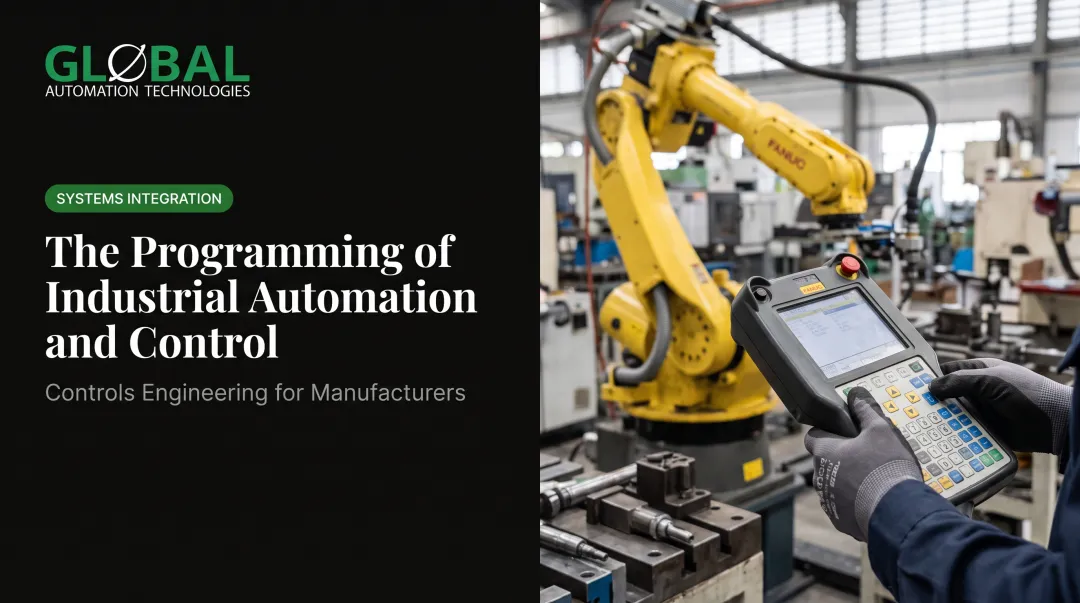
Older manual lines relied on operators to judge tolerances, adjust speeds, and catch defects as they happened. Programmable systems now handle much of that real-time control and monitoring themselves, using sensors and logic instead of operator judgment calls. The operator's role shifts from doing the work to overseeing it and stepping in when something drifts out of spec.
Why the Upfront Cost Stays High
You'd expect reprogrammable equipment to cost less than dedicated tooling. It usually doesn't, at least not initially.
General-purpose robots, PLCs, and CNC platforms need to handle multiple configurations. That means more sophisticated controls, more sensors, and more upfront engineering time. The payoff shows up later, spread across every future product change that doesn't require rebuilding the line.
That long-term flexibility shows up in four traits on any plant floor:
- Flexibility through reprogramming instead of physical rebuilds
- Reliability and consistency that outperforms manual, judgment-based methods
- Built-in data collection at the machine and cell level
- Integration with upstream and downstream plant systems
How Programmable Automation Works: Core Technologies
Four technology layers make up most programmable automation systems: controllers, machine tools, robots, and the interface tying them together.
Programmable Logic Controllers (PLCs)
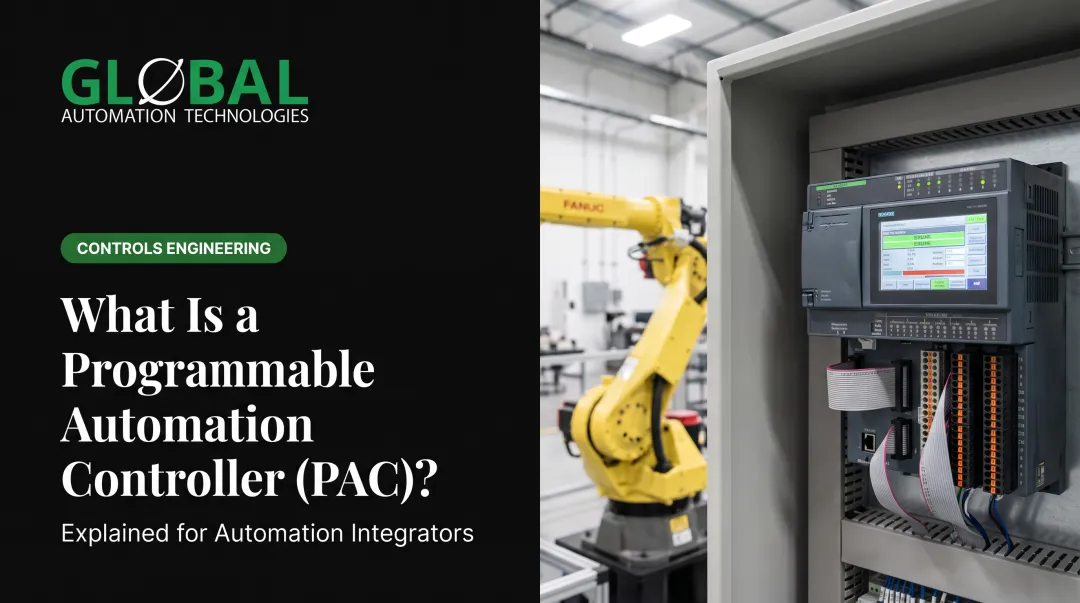
A PLC is an industrial computer that stores the instructions running motors, sensors, and sequences on the plant floor. When a batch changes, engineers load a new program into the same hardware rather than swapping the controller itself.
CNC and NC Machine Tools
NC laid the groundwork; CNC machines use programmed instructions to control tool paths, cutting patterns, and part geometry. Change the code, and the same machine cuts a completely different part. That's why CNC platforms show up constantly in environments where part mix shifts weekly or even daily.
Industrial Robots
Industrial robots are the clearest example of programmable automation in action. An industrial robot is an automatically controlled, reprogrammable manipulator on three or more axes. Its motions and functions change without physically altering the machine.
On the floor, that flexibility shows up across cells:
- Welding cells switching between part numbers
- Dispensing robots adjusting bead paths for different panel geometries
- Paint robots shifting finish specs between runs
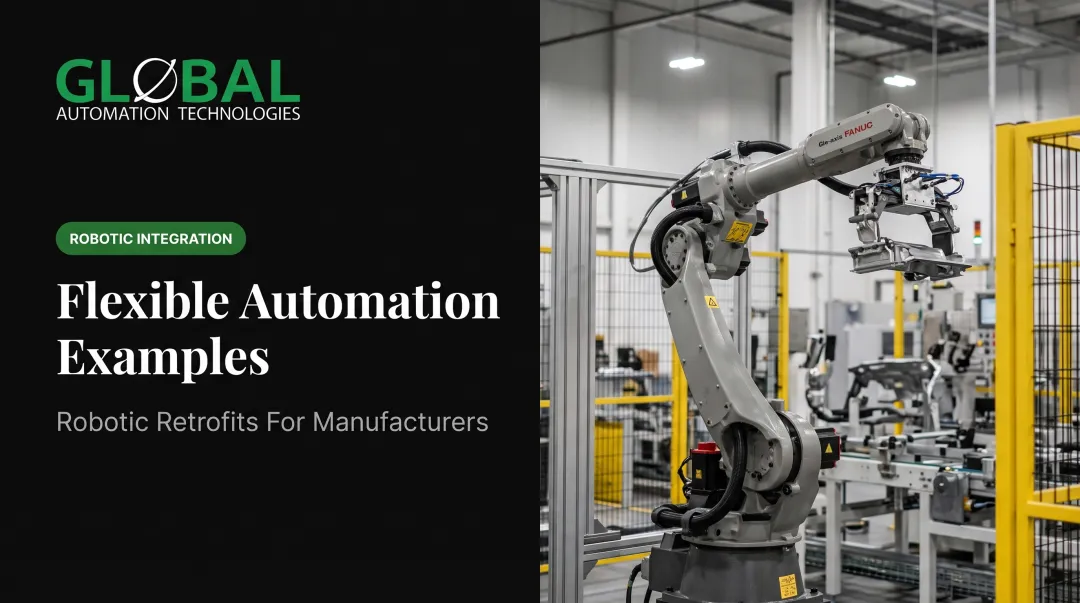
GLOBAL Automation Technologies, which holds Level 5 status in FANUC’s Authorized System Integrator program, deploys FANUC-based robotic systems that manufacturers reprogram for high-mix production runs across automotive and heavy industry lines, often adjusting motion paths and end-of-arm tooling within the same shift.
Demand for that kind of flexibility keeps climbing. IFR's World Robotics 2025 report found that 542,000 industrial robots were installed globally in 2024, more than double the number installed a decade earlier.
HMI, SCADA, and DCS Layers
Operators need a way to see what's happening and adjust it. HMI screens let them monitor status, change set points, and review historical data. SCADA layers extend that visibility across multiple lines or sites into one dashboard. DCS platforms handle centralized control within a single facility.
These systems don't just display information. They capture it. Production counts, cycle times, and quality checks feed into historians and analytics tools, which is where continuous improvement actually starts. Without that data layer, programmable equipment is flying blind between batches.

Programmable Automation vs. Fixed vs. Flexible Automation
Every automation decision comes down to a tradeoff between volume, variety, and capital.
Fixed Automation: Built for One Job
Fixed automation uses dedicated tooling engineered for a single product. There's nothing to reprogram: the sequence is built into the mechanics.
It delivers the highest production rates and the highest upfront investment. That cost only pencils out when volume spreads it across millions of identical parts.
Flexible Automation: Built for Variety
Flexible automation sits at the opposite end. Centrally controlled systems run multiple product types simultaneously with little to no downtime for changeovers. Tool loading and unloading often happen automatically, driven by software rather than a technician swapping fixtures by hand.
Side-by-Side Comparison
| Factor | Fixed Automation | Programmable Automation | Flexible Automation |
|---|---|---|---|
| Production volume | Very high | Low to medium (batch) | Low to medium |
| Product variety | One product | Multiple, changed in batches | Multiple, run simultaneously |
| Changeover time | None needed | Reprogramming plus retooling | Minimal to none |
| Capital investment | High, justified by volume | High, general-purpose equipment | High, custom-engineered systems |
Where Programmable Automation Fits
Programmable automation lands in the middle of that spectrum. It's more adaptable than fixed automation, since you can reprogram it for a new product entirely.
But it's slower to switch than flexible automation. Most changeovers still involve physical retooling and fixture swaps alongside the new program.
A quick way to sort it out:
- High volume, one product: fixed automation wins on cost per unit
- Frequent batch changes, moderate volume: programmable automation fits best
- Multiple products running at once: flexible automation justifies the investment
Some body shops run all three side by side: fixed transfer lines for high-volume stamping, programmable robotic cells for subassemblies, and flexible cells for final trim variations that shift by trim level.
Real-World Examples & Industry Applications
Automotive assembly is the clearest place to see programmable automation at work. Robots and PLC-controlled equipment get reprogrammed to weld or paint different car models running down the same line, sometimes switching part numbers multiple times per shift.
Other industries lean on the same principle:
- Electronics manufacturing: Siemens' Amberg plant runs roughly 1,200 products with 350 changeovers per day across thousands of connected components
- Textiles: Computerized knitting and weaving systems swap patterns electronically instead of manually rethreading looms
- Food and pharmaceutical production: Batch recipe systems let operators modify procedures and controller code between runs without new hardware
- Heavy equipment: Welding cells switch between frame sizes and configurations within a single production run
GLOBAL's client base reflects this same pattern. Tier 1 automotive suppliers use programmable robotic cells for machine tending and dispensing across multiple part numbers in a single run. They reprogram bead paths and load sequences as parts change instead of rebuilding the cell.
Advantages, Limitations & Choosing the Right Fit
Where Programmable Automation Delivers Value
- Production flexibility without redesigning the entire line for every new product
- Lower cost than a fully custom flexible system, while still beating manual changeover speed
- Real-time data for decision-making, pulled straight from PLC and SCADA layers
- Improved workplace safety, removing operators from hazardous tasks like spray painting and welding (isocyanates, VOCs, fumes)
Where It Falls Short
- Slower throughput than fixed automation, since it still runs general-purpose motions rather than dedicated tooling
- Moderate-to-high investment, because general-purpose equipment costs more to engineer than single-purpose tooling
- Skilled programming and maintenance talent required to reprogram and troubleshoot as products change
- Non-productive downtime during changeovers, unlike flexible systems built for near-zero changeover time
AI Is Compressing the Changeover Gap
The biggest limitation of programmable automation has always been the time it takes to reprogram and requalify a cell between batches. That's shifting fast.
ABB reports that its RobotStudio simulation software can cut commissioning time by up to 90% and cycle time by up to 50% by modeling and validating robot programs before they ever touch the floor.
GLOBAL uses AI-assisted simulation the same way — modeling, testing, and optimizing robot programs before a single line of code runs on the production floor. That approach has compressed programming timelines from weeks to days on client projects.
Machine tending cells built this way typically pay for themselves in 12 to 18 months through added parts per shift and reduced direct labor hours.
A Quick Decision Checklist
Before committing capital, walk through these four questions:
- Production volume — Are you running dozens to thousands of units per batch, or millions of one part?
- Number of product variants — Do you switch products a few times a shift, or run several simultaneously?
- Capital budget — Can you absorb higher upfront investment in general-purpose equipment?
- In-house programming expertise — Do you have controls engineers who can reprogram and maintain the system, or will you need outside support?

If that last question is a hard no, bring in an integrator that can supply both the built system and the staffing to run it. Otherwise, capable equipment sits idle for lack of a programmer.
Frequently Asked Questions
What is an example of programmable automation?
CNC machines, PLC-controlled equipment, and reprogrammable industrial robots. A welding robot that loads a new motion program for a different car model on the same line is a clear example.
What is the difference between programmable automation and flexible automation?
Programmable automation requires downtime to reprogram and retool between batches. Flexible automation runs multiple products with minimal to no downtime, using centralized software control instead of manual changeover steps.
What industries use programmable automation the most?
Automotive, electronics, textiles, food processing, and pharmaceuticals. These industries face frequent batch or model changes that rarely justify a fully custom flexible line.
Is programmable automation the same as robotic automation?
No. Industrial robots are one tool used within programmable automation, but the category also includes PLCs and CNC machine tools. Robots just happen to be the most visible example on most plant floors.
How much does it cost to implement programmable automation?
Expect a moderate-to-high upfront investment—general-purpose equipment costs more to engineer than fixed tooling. Robotic machine tending cells typically pay for themselves in 12 to 18 months.
Can programmable automation be upgraded to flexible automation later?
Yes. Centralized computer control and stronger scheduling software can move a programmable system toward flexible automation. That usually requires a new controls architecture, not just a software patch.