
Introduction
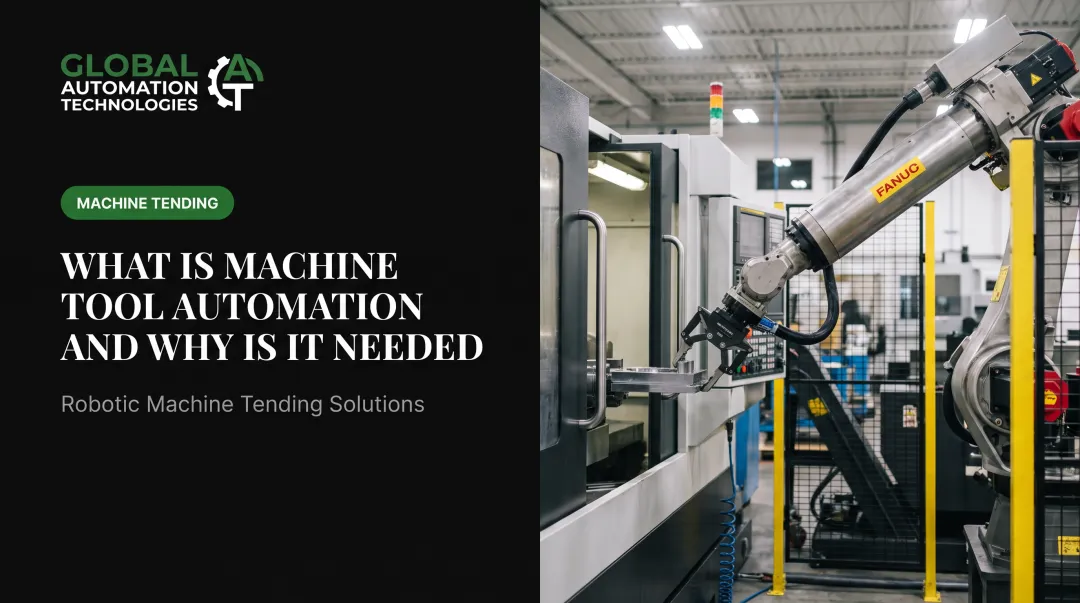
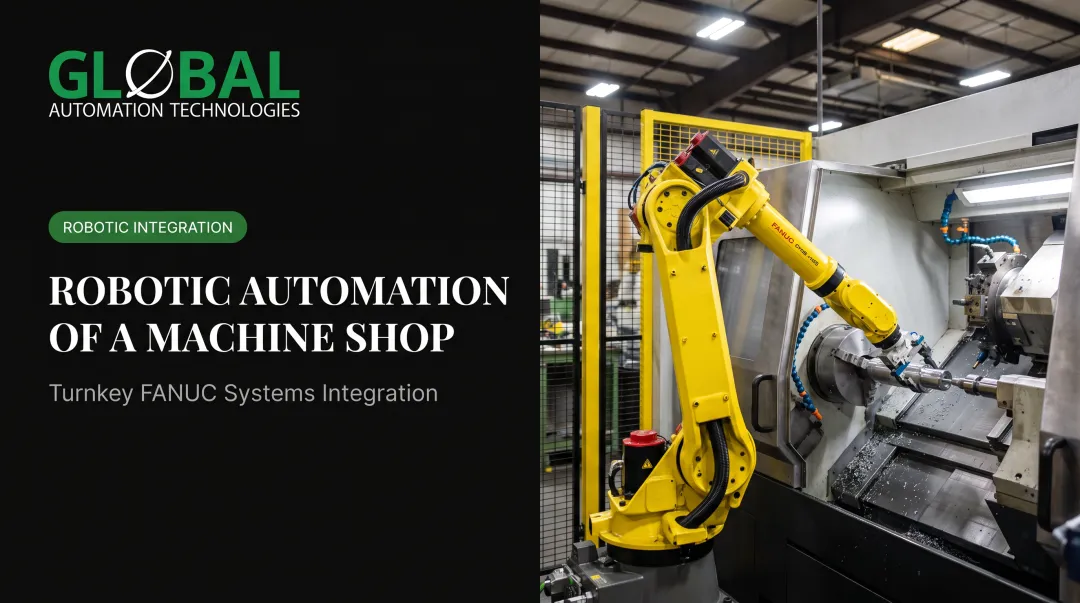
CNC lathe automation uses robotic loaders or machine tending systems to load stock, unload finished parts, and run turning cycles with little or no operator involvement. Instead of someone standing at the chuck for every cycle, a robot or loader handles the repetitive motion.
That matters if your shop struggles with idle spindles, labor shortages, or inconsistent turned parts. Manual tending limits how many hours the lathe actually cuts metal—and how steady throughput stays from shift to shift.
Here's the catch: "CNC lathe automation" gets used loosely. It can mean anything from a simple bar feeder to a full robotic cell tending three machines at once. This article breaks down how it actually works, what affects success, and when it makes sense for your shop.
TL;DR
- Robots or automated loaders free spindle time and enable lights-out CNC lathe production.
- Manual tending leaves idle time, inconsistent quality, and reliance on scarce skilled labor.
- A typical cell cycles through stage, pick/load, machine, unload/inspect, then repeat.
- Fit depends on part geometry, batch size, process stability, and integration compatibility.
- Full automation isn’t always right—some jobs run better semi-automated or manual.
What Is CNC Lathe Automation?
CNC lathe automation uses robotic arms, gantry loaders, or bar feeders to load raw material, unload finished parts, and start cycles on CNC lathes. An operator no longer needs to stand at the machine for every part.
The goals are higher spindle utilization, consistent cycle times, and lower labor cost per part produced.
Why Lathes Automate Differently Than Mills
Turning operations mostly load and unload rotationally symmetric parts along a single axis into a chuck. That's a simpler handling problem than multi-axis milling, where fixtures have to account for irregular geometries and multiple work-holding orientations. Simpler handling generally means simpler gripper and tooling design.
Basic Automation vs. Full Robotic Tending
Not all lathe automation looks the same:
| Type | How it works | Best fit |
|---|---|---|
| Bar feeder | Automatically replenishes bar stock (up to ~4.75 in diameter) | Shaft-type parts from long bar |
| Gantry loader | Transfers discrete parts along a fixed overhead axis | Repeatable shaft or chuck-work transfers |
| Robot loader | Flexible pick-and-place tending, often vision-guided | High-mix work, multi-machine cells |
Bar feeders and gantries suit stable, high-volume work. Robots earn their keep when part mix, batch size, or downstream steps like inspection add complexity.

Why Manufacturers Automate CNC Lathes
Manual tending forces a machine to sit idle every time an operator walks away, swaps a part, or takes a break. Multiply that across a shift, and idle spindle time adds up fast.
Turning operations specifically demand:
- Repeatable cycle times across every part, every run
- Minimal chip and coolant exposure for operators near the chuck
- Long unattended runtimes, the backbone of lights-out production
Without automation, predictable problems creep in:
- Part quality drifts as operators fatigue through a shift
- Labor cost per part climbs, especially across multiple shifts
- Machines run below capacity during breaks, shift changes, and overnight gaps
One retrofitted lathe loader case documented 30% to 50% faster loading than manual loading, letting the machine run unattended for extended stretches, according to Production Machining.
That's a load-time improvement, not a universal utilization guarantee. But it shows the mechanism: less dead time between cuts means more parts per shift.
The Labor Reality
Automated tending is mostly an operational choice, not a regulatory one. It's become a competitive necessity, though.
The U.S. Bureau of Labor Statistics projects about 34,200 annual job openings for machinists and tool-and-die makers through 2034, even as overall employment in the trade declines, per the BLS Occupational Outlook Handbook. That's a lot of seats to fill, and not every shop wins that hiring race.
The ROI Case
That hiring pressure sharpens the financial case. Robotic machine tending cells typically pay for themselves in 12 to 18 months through higher spindle uptime and less manual loading labor. Exact timelines shift with shift structure, volume, and local labor costs, but the math holds: more parts per shift, fewer direct labor hours per part.
How CNC Lathe Automation Works (Conceptual Flow)
Raw stock is staged, a robot or loader picks a blank and seats it in the chuck, the lathe runs its programmed cycle, and the finished part is removed. From there it moves to outbound staging or the next downstream process.
A working cell needs three core inputs:
- Raw material or blanks staged in a magazine, pallet, or conveyor
- Gripper or chuck-specific end-of-arm tooling matched to part geometry and weight
- Handshake signals between the PLC and the lathe controller
During the core action, the robot synchronizes with the lathe's door, chuck, and cycle-start signals, often using the same switches and buttons a human operator would. That's what makes retrofits possible on existing machines.
Control happens through PLC signal exchange and pre-programmed robot paths. Engineers increasingly use AI-assisted simulation to model robot motion before deployment, cutting integration time and reducing surprises at commissioning.

The payoff: less idle spindle time, longer unattended run windows, and part-to-part consistency a tired operator can't match by hour eight.
Step 1: Material Staging and Robot Pickup
Raw stock loads into a magazine, pallet, or conveyor. The robot's end-of-arm tooling picks a blank based on programmed coordinates or vision guidance, positioning it for transfer.
Step 2: Loading and the Machining Cycle
The robot places the part into the chuck, the lathe door closes, and a PLC signal triggers the CNC control to begin the programmed turning cycle. The robot typically steps back and waits.
Step 3: Unloading, Inspection, and Cycle Repeat
Once machining finishes, the lathe signals the robot to retrieve the part. Depending on cell design, it may pass through a deburring or inspection station before outbound staging. The same sequence then repeats for the next blank—cycle after cycle without manual reload.
Where CNC Lathe Automation Is Applied
CNC lathe automation shows up across several equipment configurations:
- Single-spindle lathes: one robot, one machine, straightforward loading
- Twin-spindle/twin-turret lathes: parts move through two chucking operations in a single cycle
- Multi-machine tending cells: one robot serves two or more lathes using buffer stations and scheduling
It's most common at these points in the production lifecycle:
- High-volume runs where consistent cycle times matter most
- Lights-out or unattended shifts extending output beyond staffed hours
- Repetitive job-shop work with stable part families and predictable changeover
Once deployed, automation runs as a continuous process built around a given part family.
GLOBAL Automation Technologies, a Level 5 FANUC Authorized System Integrator, designs turnkey cells for extended, lights-out running between scheduled maintenance windows across long production runs. Buffer stations and part tracking keep spindles close to full utilization.
Key Factors, Common Misconceptions, and When Automation May Not Fit
Success with CNC lathe automation depends on a few practical constraints—not just the robot. Use the factors below to pressure-test fit before you invest.
Key Factors That Affect Success
- Part geometry and weight determine gripper design and required robot payload capacity.
- Batch size and changeover frequency drive fixed vs. flexible tending. Direct robot loading fits lot sizes of 50+ pieces; pallet storage can support single-piece runs, per Modern Machine Shop.
- Process stability is a prerequisite, not a nice-to-have. An unstable process just produces inconsistent automated results.
Common Misconceptions
- "Automation removes the need for skilled operators." It shifts their role toward programming, oversight, and troubleshooting.
- "Automated means unattended." Many systems still need periodic supervision, especially in the early weeks after deployment.
- "Any robot can tend any lathe out of the box." Tooling and integration must match the specific machine and part. There's no universal gripper.
When It May Not Be the Right Fit
- Very low-volume, highly variable job-shop work may not justify the integration cost and changeover time.
- Unstable or immature machining processes should be stabilized first. Automation won't fix an underlying process problem.
- Extremely large, irregular, or fragile parts may need custom tooling expensive enough to erase the ROI case.

Frequently Asked Questions
What is CNC automation?
CNC automation uses robots, sensors, and software to handle machining tasks—loading, unloading, and inspection—with minimal manual intervention. On a lathe, that usually means automated tending of turning work.
What is the difference between CNC lathe automation and general CNC machine automation?
Lathe automation mainly loads and unloads round or turned parts into a chuck along a single axis. Broader CNC automation covers milling, routing, and other multi-axis work that needs more complex fixturing.
How much does it cost to automate a CNC lathe?
Costs vary with robot payload, tooling, safety, and how many machines share the cell. There’s no single price tag—shift structure, part family, and integration scope set the range on a project-specific quote.
Can automation be retrofitted onto an existing CNC lathe?
Yes. Most existing lathes can be retrofitted with robotic tending using the machine's existing operator interfaces, without replacing the lathe itself.
What is the typical ROI timeline for CNC lathe automation?
Machine tending cells often pay for themselves within 12 to 18 months, driven by increased spindle utilization and reduced labor costs per part. Exact timelines depend on shift structure and volume.
Do I need a robotics integrator to automate a CNC lathe?
A simple single-machine cobot tend can be straightforward to stand up. Multi-machine cells, custom grippers, or full lights-out goals usually need an experienced integrator for layout, programming, validation, and ongoing support.