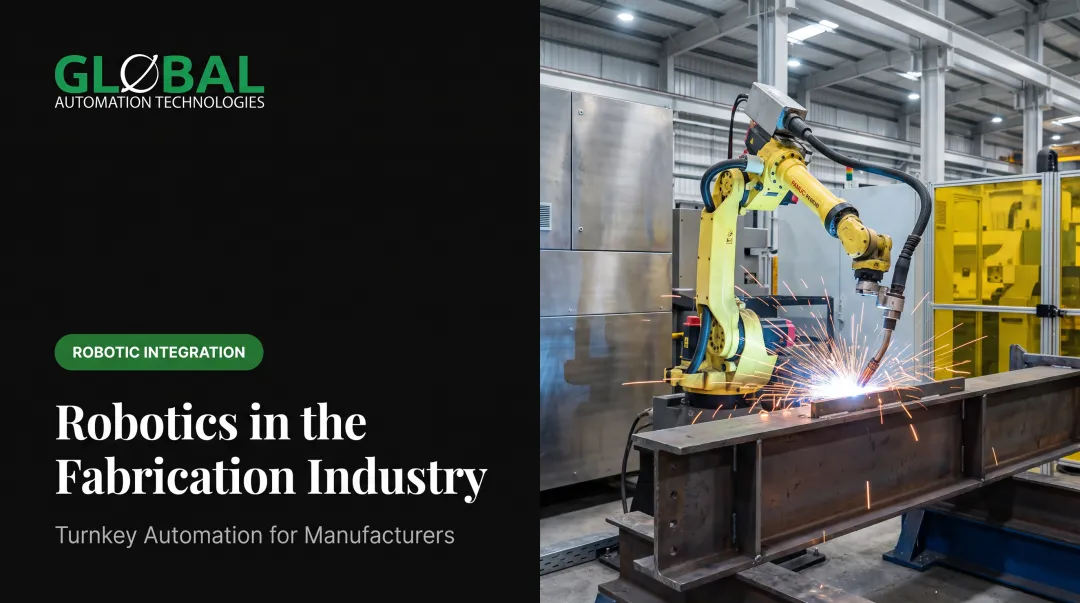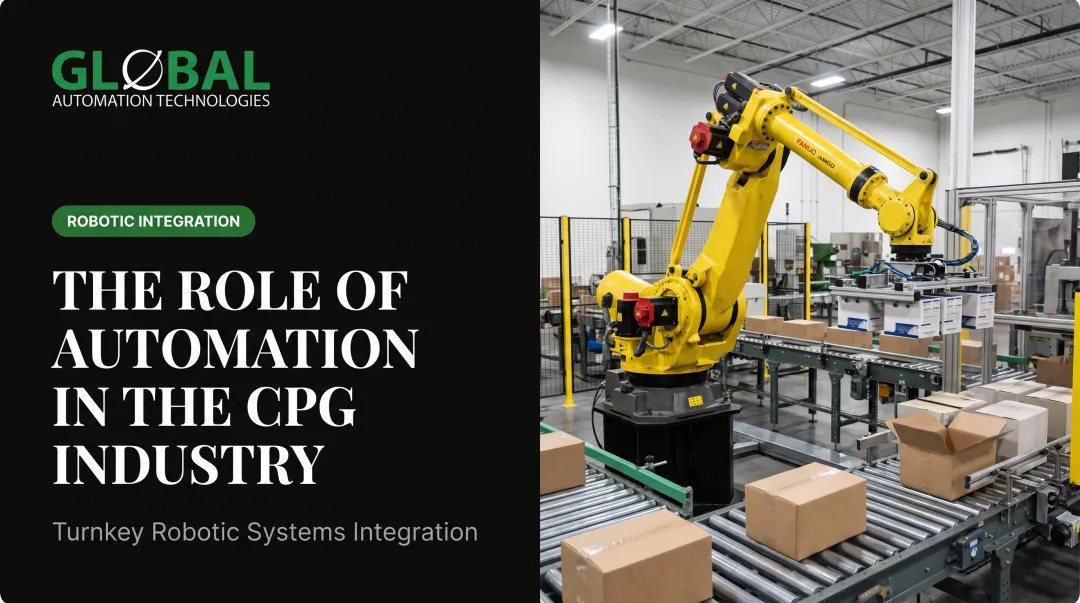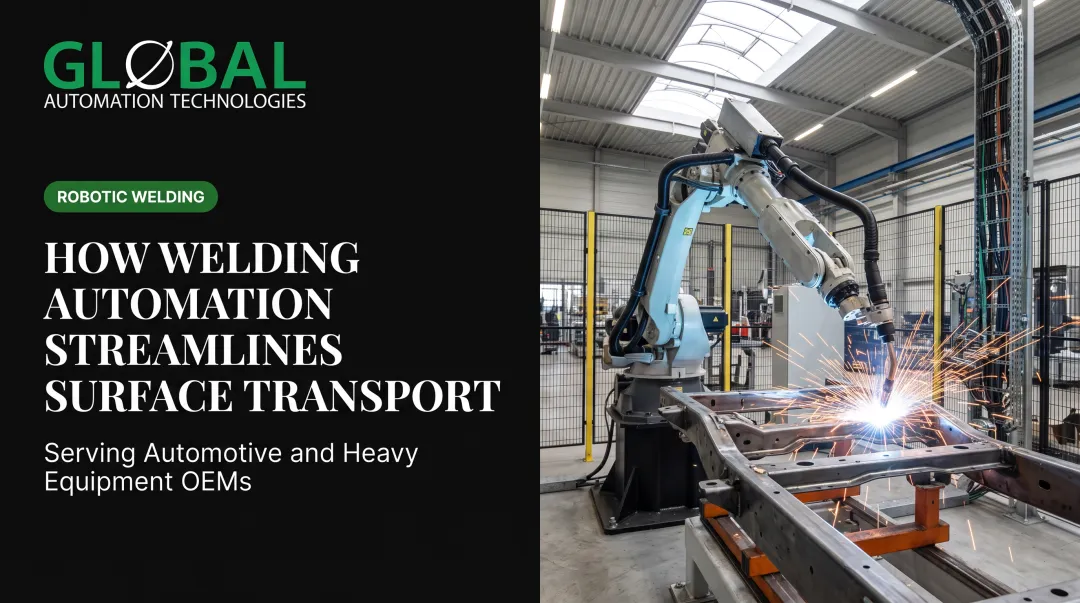

Robotics gets discussed in abstract terms: AI, Industry 4.0, smart factories. But on the plant floor, the value shows up in numbers people already track — uptime, scrap rate, throughput per shift.
This article breaks down where robotics actually moves those numbers, what it costs to fall behind, and how manufacturers get real returns from automation investments instead of underused equipment sitting on the floor.
Key Takeaways
- Robotics delivers measurable gains in throughput, quality, and safety
- Machine tending cells typically pay for themselves in 12 to 18 months
- Delaying automation compounds costs from inconsistency, downtime, and labor gaps
- Maximum ROI requires pairing robotic systems with skilled engineering talent to run and maintain them
What Is Robotics in Modern Industry?
Industrial robotics covers programmable machines built to perform repetitive, precise, or hazardous manufacturing tasks with minimal human input. That includes robotic arms, autonomous mobile robots (AMRs), and automated guided vehicles (AGVs).
Common applications include:
- Material handling — pick-and-place, palletizing, part transfer
- Machine tending — CNC loading/unloading, press tending, injection molding
- Welding — arc welding, spot welding across automotive and heavy equipment
- Painting and dispensing — topcoat, powder coating, sealants, adhesives
- Assembly and inspection — fastening, component insertion, vision-guided quality checks

Manufacturers adopt robotics to solve specific operational problems. Most deployments, including GLOBAL's FANUC-based systems, get selected for application fit: hazardous environments, high-precision tolerances, or high-volume production runs. A cell built for automotive paint finishing looks nothing like one built for CNC machine tending—each is engineered around a different production constraint.
Key Advantages of Robotics in Modern Industry
The advantages below get measured in operational terms: cost, throughput, quality, and risk. Not abstract technology benefits. Each one ties directly to metrics manufacturing leaders already track on their dashboards.
Higher Throughput and Utilization
Robots run continuously, extending production beyond what a single shift of human operators can sustain. Robotic machine tending keeps CNC spindles cutting through breaks, shift changes, and overnight hours that would otherwise sit idle.
FANUC's own application data shows smart machine tending can increase production by 40% to 60%, with systems built to keep running well beyond a single shift, between scheduled maintenance windows (FANUC America, 2025). That extended runtime adds output without adding headcount or floor space.
Why this matters for the bottom line:
- More parts produced per shift directly lowers cost per part
- Idle spindle time gets eliminated between manual load cycles
- Freed-up operators shift to inspection, programming, or process improvement instead of repetitive loading
Machine tending cells typically pay for themselves in 12 to 18 months, one of the fastest payback windows in industrial automation, driven by higher output and fewer direct labor hours per shift. Shops running longer lights-out windows between scheduled maintenance tend to land at the faster end of that range.
KPIs impacted: spindle utilization, units per hour, overtime labor cost, cost per part.
When it matters most: high-mix/high-volume environments, labor-constrained shifts, and operations hitting capacity bottlenecks without room to add a second shift.
Consistent Quality and Precision
Manual, repetitive tasks like painting, dispensing, and welding carry built-in variability. Fatigue, distraction, and shift-to-shift differences all show up in the finished part. Robots remove that variability by executing the same programmed path, speed, and parameters every cycle.
Robotic painting systems follow the same programmed path every cycle, holding film build within specification shift after shift in a way manual spraying can't match. In dispensing cells, vision-based bead monitoring catches defects (width deviations, gaps, thin spots) at the point of application, before the part moves downstream. That beats relying on end-of-line inspection after material and labor have already been spent.
Robotic painting can also cut material use significantly; A3 has reported material savings as high as 35% compared to manual painting application (Automate.org, 2008).
Catching a defect at the point of process, not three stations later, reduces rework and scrap in one move. It also keeps parts within OEM specification more reliably, which lowers warranty and field-failure exposure on high-value components.
KPIs impacted: first-pass yield, scrap rate, rework cost, warranty claims.
When it matters most: tight-tolerance automotive and EV components, regulated industries, and any part where a single defect is expensive to replace or recall.
Improved Workplace Safety
Robotics removes operators from direct exposure to hazardous conditions: chemical fumes, heavy repetitive lifting, high-voltage spray environments. Robotic spray painting, for example, keeps workers out of isocyanate and VOC exposure zones inside paint booths. OSHA links those exposures to occupational asthma and respiratory irritation (OSHA, isocyanates overview).
A peer-reviewed study using OSHA establishment data found that a meaningful increase in robot density was associated with 1.2 fewer injuries per 100 full-time workers, roughly a 16% relative reduction (ScienceDirect, 2022). Manufacturing firms saw an even larger drop: 1.75 fewer injuries per 100 workers.
Fewer injuries translate into fewer downstream costs:
- Lower workers' compensation claims
- Reduced incident-rate exposure during compliance audits
- Easier recruitment and retention in roles that were historically hard to staff because of the hazard itself
KPIs impacted: incident rate, workers' comp costs, turnover in hazardous roles, compliance audit outcomes.
When it matters most: paint shops, chemical dispensing lines, heavy material handling, and any process with regulated exposure limits.

What Happens When Robotics Adoption Is Missing or Ignored
Delaying automation doesn't freeze a plant in place. It compounds specific, predictable problems:
- Inconsistent output: Manual, repetitive tasks like gelcoat application or PurFoam dispensing are hard to execute the same way twice. Operator variability shows up as shift-to-shift performance swings.
- Higher defect and rework rates: Manual process drift creeps in over a shift. Fatigue changes spray angles, cure times, and torque application until a part fails downstream.
- Reactive maintenance: Without predictive monitoring, teams learn equipment is failing when it stops—not before. That means firefighting instead of planned repairs.
- Rising labor costs and unfilled roles: Skilled-trade shortages hit hazardous and repetitive roles hardest. Welders alone face roughly 45,600 openings per year through 2034 to replace departing workers (BLS Occupational Outlook Handbook).
- Inability to scale: Growing output without automation usually means growing headcount proportionally, which caps how fast a plant can respond to new demand.
None of these show up overnight. They accumulate: one missed shift target, one warranty claim, one open req—until the gap between automated competitors and manual operations becomes hard to close.
How to Get the Most Value from Robotics Automation
Buying a robot isn't the finish line. Full value comes from proper simulation, commissioning, and ongoing engineering support after the system goes live.
Simulation cuts startup risk before day one. AI-assisted simulation tools model, test, and optimize a robot program in a virtual environment before any code runs on the plant floor. GLOBAL's engineering team uses this approach to compress programming timelines from weeks to days, catching issues in simulation instead of during live commissioning.
Predictive maintenance shifts teams from reactive to proactive. AI-driven health assessments monitor equipment continuously and flag warning signs before downtime hits. Maintenance teams can then act during a planned window instead of an unplanned outage.
IFR identifies this kind of predictive AI, alongside digital twins, as one of the defining trends reshaping how robotic systems get supported (IFR, 2024).
The engineering gap is often the real bottleneck. Many manufacturers underuse their automation investment not because the system is wrong, but because they lack in-house bandwidth to program, optimize, and maintain it long-term. Pairing automation solutions, services and technical staffing closes that gap.
GLOBAL, which holds Level 5 status in FANUC’s Authorized System Integrator program, keeps three distinct offerings lined up against exactly this problem:
- Automation solutions designs, builds, and commissions the turnkey robotic cell
- Engineering services places GLOBAL's own engineers on customer contracts to program and optimize it
- Technical staffing recruits controls, mechanical, or project management engineers into customer roles — contract or direct hire — to run and maintain it

One relationship. The system and the engineers to run it.
Conclusion
The real value of robotics in modern industry comes down to measurable control over throughput, quality, and safety. Not theoretical automation potential sitting in a slide deck.
These advantages compound. A machine tending cell that pays back in 14 months keeps generating that margin for years afterward. A painting system that holds film build within specification shift after shift keeps preventing warranty claims long after installation. That only holds if the system is maintained and refined after install, not left to run unattended in name only.
Robotics adoption works best as an ongoing operational practice, paired with the right engineering talent, rather than a one-time equipment purchase. Manufacturers that treat automation as both a systems decision and a people decision are the ones who keep the returns.
Frequently Asked Questions
What is the latest automation and robotics technology?
Current trends center on AI-assisted simulation, predictive maintenance health monitoring, and collaborative robots (cobots). These tools shorten programming timelines and catch equipment issues before they cause downtime.
What do automation and robotics companies do?
These companies design, integrate, program, and support robotic systems for manufacturing applications. Some, like GLOBAL, also supply the engineering talent needed to operate and maintain those systems long-term.
What is the role of robotics in modern industry?
Robotics improves throughput, delivers more consistent quality, and removes workers from hazardous tasks across manufacturing sectors. Manufacturers adopt it to hit specific operational targets.
How is robotics different from automation?
Automation is the broad use of technology to reduce manual input across a process — controls, sensors, software included. Robotics is one specific mechanism, the physical programmable machine, used to achieve that automation.
How long does it take for an industrial robot investment to pay off?
Machine tending cells typically pay for themselves in 12 to 18 months. Faster payback depends on factors like labor costs, shift structure, and how much idle time the robot eliminates.
What industries benefit most from robotic automation?
Automotive OEMs and Tier 1 suppliers lead global robot installations, followed by heavy equipment, electrical/electronics, and general industrial manufacturers. Any high-volume, precision-dependent production line stands to benefit.