
North American demand for this kind of automation isn't slowing down. Companies ordered 36,766 robots worth $2.25 billion in 2025, a 6.6% jump in units over the previous year, according to Association for Advancing Automation.
Yet plenty of manufacturing teams throw around "automatic line" without understanding what actually makes one work. That gap leads to mismatched budgets, unrealistic timelines, and automation investments that don't deliver.
This guide breaks down what an automatic line really is, how it functions stage by stage, and where it earns its keep.
TL;DR
- An automatic line links machines and robots in sequence to run production with minimal human intervention
- Core components—I/O handling, workstations, control systems, and sensors—must work in sync
- Operation follows four stages: initiation, core processing, control/regulation, and output
- Common applications: automotive assembly, machine tending, welding, painting, and packaging
- Choose fixed, programmable, or flexible automation based on production volume and product variability
What Is an Automatic Line?
An automatic line is a coordinated system: machines, robots, conveyors, and control software executing a manufacturing sequence with little to no manual handling between steps. Parts move from station to station without an operator physically carrying, loading, or repositioning them at every stage.
Manual lines hit predictable walls at high volume:
- Repetition-driven fatigue leads to inconsistent quality
- Output varies operator to operator, shift to shift
- Labor availability constrains how much you can scale
An automatic line is not the same as a single automated machine. A CNC mill running on its own program is automated, but it's not a line. Neither is a manual line with the occasional automated station bolted on.
The defining feature of a true automatic line is integrated sequencing: multiple process and transfer stages working together as one system.
Even as AI and software tools reshape manufacturing, physical throughput still needs physical automation. Data analytics can optimize a schedule, but it can't weld a body panel or apply a paint coat at 2 a.m. That's still line-level automation's job.
Types of Automatic Lines
Automation architecture generally falls into three categories, according to the Association for Advancing Automation:
| Type | How it works | Best fit |
|---|---|---|
| Fixed automation | Dedicated equipment runs the same repetitive operation | High-volume, single-product runs like paint shops and transfer lines |
| Programmable automation | Electronic controls allow sequence changes, though reprogramming takes real effort | Medium-to-high volume, low variety (steel mills, paper mills) |
| Flexible automation | Computer-controlled systems shift tooling and instructions on the fly | High variety, lower volume batch production and job shops |

Process complexity climbs as you move from fixed to flexible. Fixed lines are simpler to build and maintain but rigid. Flexible lines cost more upfront but adapt as product mix changes.
How Does an Automatic Line Work?
An automatic line operates through a defined sequence of stages that transform raw material into finished, quality-checked output. Understanding each stage matters. This is where most automation investment decisions go right or wrong.
Initiation
The line starts through a material feed, a sensor trigger, or a scheduled start. In most setups, this first step is automated: a part arrives on a conveyor, a sensor confirms presence and position, and the sequence begins without operator input.
Common bottlenecks at this stage:
- Inconsistent material supply upstream
- Fixture misalignment that stops downstream stations from reading the part correctly
- Sensor drift or dirty optics causing false triggers
Get this stage wrong and every downstream station inherits the problem.
Core Operation
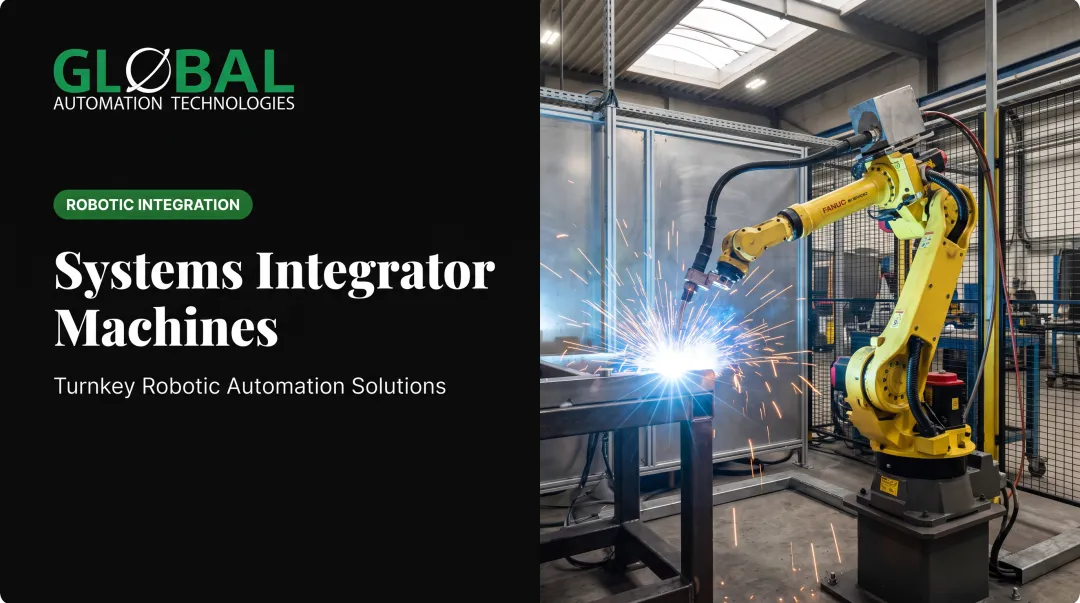
This is where the actual transformation happens. Robots and machines perform tasks (welding, dispensing, painting, machine tending) in a fixed sequence, moving parts between workstations as work progresses.
Robotic machine tending is a good example. Instead of an operator manually opening a machine door, loading a part, closing the door, and starting the cycle, a robot handles that loop continuously. It keeps the machine fed through breaks, shift changes, and overnight runs, periods when a manual cell would simply sit idle.
Performance here comes down to a few variables:
- Cycle time per station
- Spindle utilization (keeping the machine cutting, not waiting)
- Consistency from part to part
For multi-machine tending cells, engineers use cycle analysis, buffer stations, and part tracking to keep each spindle running as close to continuously as possible. Machine tending cells set up this way typically pay for themselves in 12 to 18 months, simply by producing more parts per shift with fewer direct labor hours.

Regulation / Control
Sensors, PLCs, and vision systems monitor the line in real time, catching problems before they compound. When something goes wrong, an automatic line stop mechanism halts the line immediately, preventing a bad part from moving three more stations downstream and turning into three bad parts.
Predictive maintenance now sits inside this control layer. McKinsey reports that predictive maintenance typically reduces machine downtime by 30% to 50% and extends machine life by 20% to 40%, though results vary by application and aren't guaranteed.
AI-assisted simulation helps before the line ever runs. Instead of writing robot programs by trial and error on the floor, engineers model and optimize the program first. GLOBAL Automation Technologies, for instance, uses this approach to cut robot programming time from weeks down to days, so there are fewer surprises once the line starts running.
Output / Result
The end goal is a completed, quality-validated part ready for the next process or for shipment. Consistency here is everything.
Take painting: robotic systems can hold film build within specification, cutting the variability that comes from manual spray technique. In dispensing, vision inspection and flow monitoring validate bead width, placement, and continuity in real time, catching thin beads or gaps before the part moves downstream.
That consistency translates directly into:
- Lower scrap rates
- Fewer downstream rework cycles
- Faster time-to-market, since fewer parts get flagged in final inspection

Where Automatic Lines Are Used
Automatic lines map to specific manufacturing stages:
- Machine tending — CNC loading, press tending, injection molding
- Welding — structural joints, body assembly
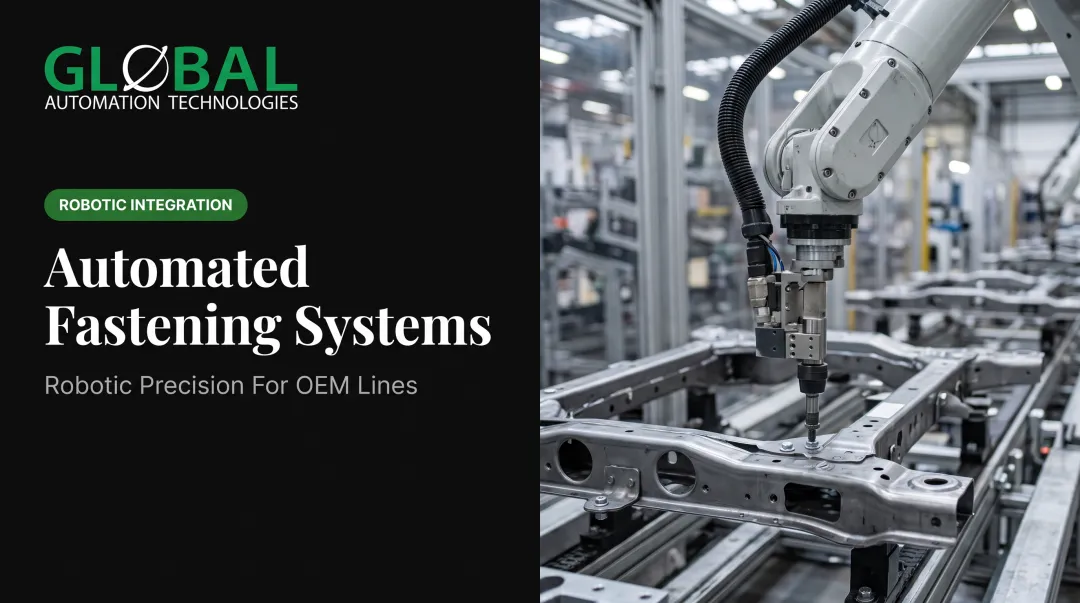
- Assembly — fastening, insertion, torque recording, traceability
- Dispensing and painting — sealants, adhesives, coatings
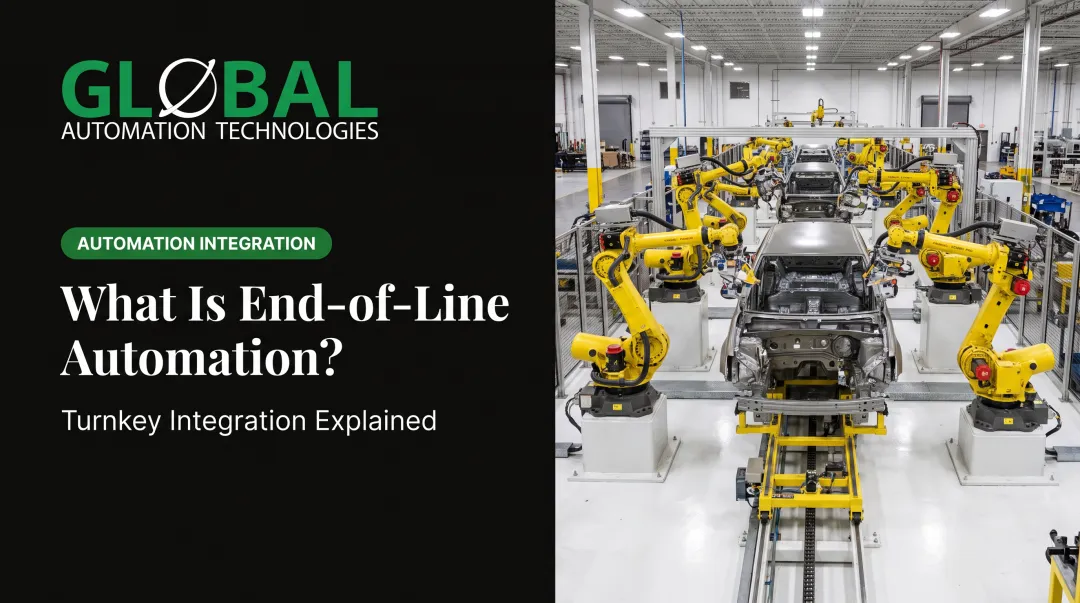
- End-of-line packaging — palletizing, boxing, staging for shipment
They perform best in high-volume, repetitive, or hazardous conditions. Paint booths are a clear case. OSHA identifies toxic and flammable spray mists and vapors as an exposure risk for painters. Robotic painting removes the operator from that environment entirely, while booth ventilation and other engineering controls remain in place.
Those same conditions drive adoption in a few core sectors:
- Automotive OEMs and Tier 1 suppliers — body shop, paint, powertrain, and final assembly
- Heavy equipment manufacturers — structural welding and assembly
- Data center infrastructure manufacturers — enclosure and rack assembly
Choosing the Right Automation Partner
Building an automatic line takes more than buying a robot. Someone has to program it, commission it, integrate the controls, and keep it running once the warranty period ends. That's the gap a lot of manufacturers underestimate. They budget for hardware and forget the engineering hours behind it.
GLOBAL Automation Technologies addresses this with an approach: automation solutions, services and technical staffing under one roof. One call gets you both the physical line and the engineers who program, commission, and support it long term, from initial layout and process study through installation, training, and ongoing maintenance.
Credentials that matter on the plant floor:
- Primary platform is FANUC robots, built for hazardous spray environments and high-precision welding, dispensing, and material handling
- Level 5 FANUC Authorized System Integrator and #1 purchaser of FANUC robots among North American integrators in 2025
- 700+ FANUC robots installed across 22 countries in 17+ years
- AI-assisted simulation in the engineering process, cutting programming timelines from weeks to days
For manufacturers deciding whether to build a line internally or bring in outside help, hardware plus embedded engineering talent closes the gap that trips up many first-time automation projects.
Conclusion
An automatic line's value comes from a coordinated sequence: initiation, execution, control, and output working as one system. No single machine on the floor delivers that alone. A robot without proper sequencing, sensing, and control integration is just an expensive standalone tool.
Understanding that distinction separates a good automation investment from a disappointing one. It also shapes how you evaluate automation partners, line types, and which processes actually justify the capital.
Frequently Asked Questions
What is an automated production line?
An automated production line is a linked system of machines and robots that executes manufacturing steps with minimal manual intervention. It combines material handling, processing stations, and control systems into one coordinated sequence.
What do you mean by production line?
A production line is any sequence of stations that moves a product toward completion. It may include manual, semi-automated, or fully automatic steps. An automatic line is a specific type of production line where automation handles nearly the entire sequence.
Can you give me an example of a production line?
An automotive body assembly line is a classic example, where robots weld, position, and transfer body panels through dozens of stations. A robotic machine tending cell that loads and unloads a CNC mill is another common example.
What's the difference between fixed and flexible automation?
Fixed automation runs one repetitive process at high volume with little variety, like a dedicated paint line. Flexible automation trades some speed for the ability to switch quickly between product variants in lower-volume batch production.
How long does it take to implement an automatic line?
There's no universal timeline. Duration depends on line scope, custom tooling, controls integration, and site readiness. AI-assisted simulation can shorten the programming phase from weeks to days, which helps compress the overall schedule.
Do automatic lines eliminate the need for human workers?
No. Workers shift toward monitoring, exception handling, and maintenance roles rather than disappearing entirely. The U.S. Bureau of Labor Statistics projects 13% growth in industrial machinery maintenance occupations through 2034, reflecting rising demand for these roles, not their elimination.