
The demand is real: quality inspection, robotic guidance, and defect detection all increasingly depend on cameras and software making split-second decisions on the line. But most plants don't have in-house engineers who can spec cameras, tune lighting, write vision software, and wire it all into a PLC or robot controller.
That gap creates a confusing buying decision. Do you pick a camera vendor first? A software platform? Or find an integrator who handles all of it? Choosing wrong means paying for hardware that never gets properly programmed, or a system that can't scale with your production needs.
This guide breaks down what machine vision integrators actually do, how to vet one, what these systems cost, and what separates a capable partner from a hardware reseller in disguise.
Key Takeaways
- Vision integrators build cameras, lighting, software, and robotics into one system around your parts and defects
- Costs hinge on 2D vs. 3D and rule-based vs. AI—always request an application-specific quote
- Choose partners who deliver turnkey design through commissioning plus long-term engineering support
What Is a Machine Vision System?
A machine vision system uses cameras and software to record images and turn them into decisions: pass/fail calls, measurements, part locations, or robot-guidance coordinates. Industry standards define it simply as a system that captures and processes digital images to extract usable information for automated action.
Core Components of a Machine Vision System
No single camera makes a vision system work. It's a chain, and every link matters:
- Camera/sensor — the foundation; smart cameras embed processing, while multi-camera setups typically rely on a separate PC
- Lens and optics — determines working distance, resolution, and field of view
- Lighting — often the difference-maker between a reliable system and a flaky one
- Processing software — the decision-making layer that interprets images
- Communication interfaces — links to PLCs and robots (GigE Vision, CoaXPress, USB3 Vision, and similar protocols)

Rule-Based vs. AI Vision
Rule-based systems run on programmed logic: measure this dimension, check for this edge. They're fast and reliable for predictable parts.
Deep learning-based systems learn from labeled reference images instead. That suits variable cosmetic defects or complex assembly checks where writing explicit rules gets impractical. Most Cognex-documented deep learning projects train on hundreds of labeled images; simpler edge-learning tools can work with far fewer.
Match the method to how much your parts vary. Rules win on consistency; deep learning handles cases that don't follow a script.
What Does a Machine Vision Systems Integrator Do?
A machine vision systems integrator designs a complete solution around your parts, your defects, and your production environment. Engineers build, program, and validate that system before handing over a working cell.
The Typical Project Lifecycle
- Application assessment — engineers study your process, cycle time, part presentation, and facility constraints
- Camera/lighting selection — component choices are made against your actual parts, not generic specs
- Software programming — writing the inspection logic or training the AI model
- Simulation — modeling and testing the robot and vision program before it hits the floor
- On-site installation — mounting, wiring, and integrating with existing controls
- Commissioning — validating the system against acceptance criteria before go-live

At GLOBAL, this process pairs vision-enabled inspection directly with FANUC robotic systems. In dispensing applications, GLOBAL's engineers integrate vision and flow monitoring into the dispense process itself.
They validate bead width, placement, and continuity in real time as a FANUC robot lays down seam sealer, structural adhesive, or foam. The goal is catching a thin bead or missed spot before the part moves downstream, not after it's already scrapped.
Vision Plus Robotics
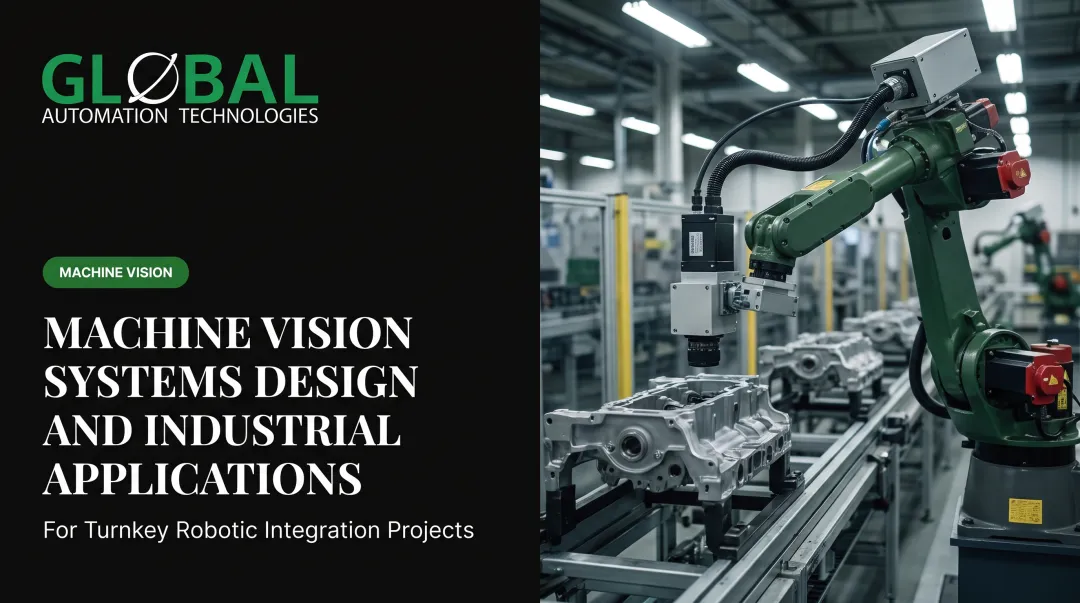
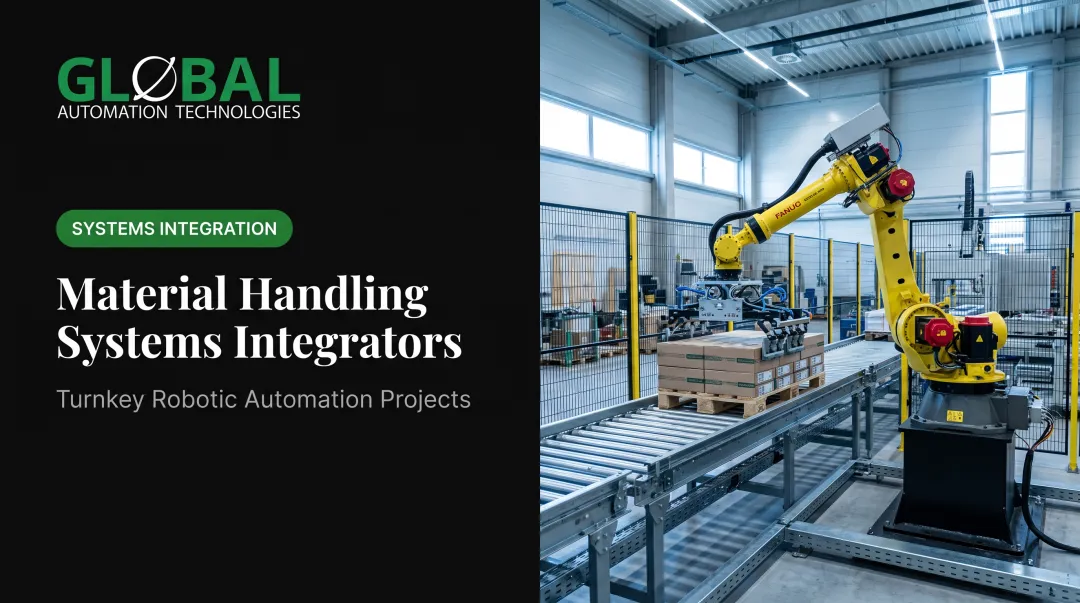
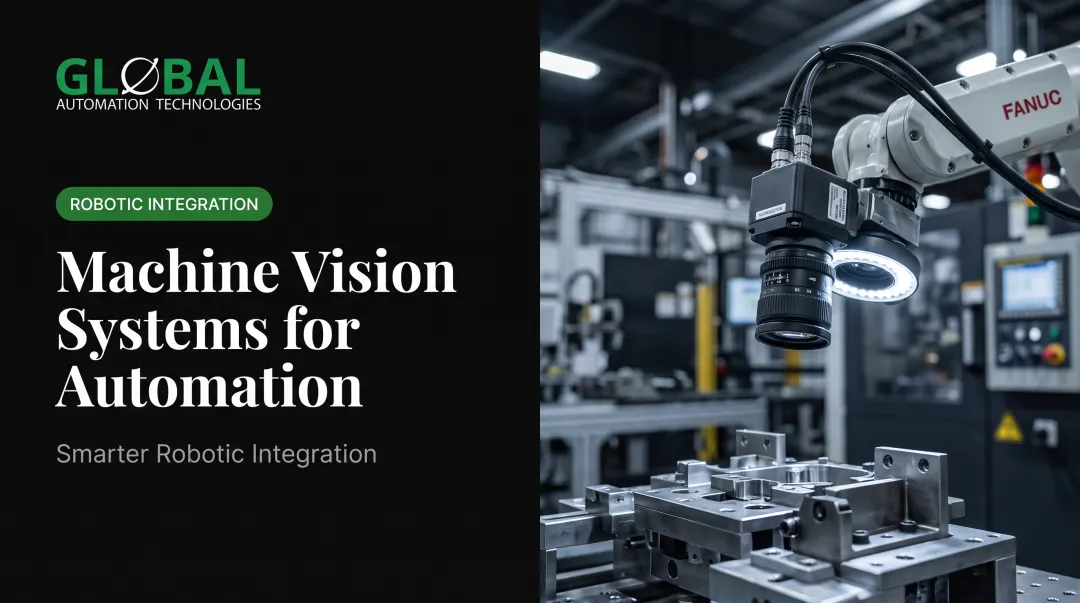
Vision rarely operates alone on a production floor. It's typically the "eyes" that tell a robot where a part is, whether it's oriented correctly, or whether the last operation passed inspection. GLOBAL's material-handling and machine-tending solutions build this in directly, using FANUC iRVision and 3D area sensors for tasks like random bin picking and orientation verification.
Ongoing Support Matters More Than Installation
A system that works on day one but fails by month six isn't a success. Ongoing support is where many installations fall apart: troubleshooting, retraining models when parts change, and keeping the system running. GLOBAL's turnkey scope extends past commissioning into training, documentation, and continued support, including AI-driven health assessments that flag equipment issues before they cause downtime.
Many integrators, GLOBAL included, pair automation solutions, services and technical staffing. Manufacturers get the equipment plus access to controls engineers, robot programmers, and commissioning engineers who can run and maintain it long after the integrator's trucks leave.
How to Choose the Right Machine Vision Integrator
Not every integrator is equipped for every job. Here's what actually separates a strong partner from a risky one.
Industry and application experience. An integrator who's spent years on automotive weld-seam inspection may not translate well to electronics PCB defect detection. Ask for examples specific to your part type and defect class.
Turnkey capability. Look for one partner who handles layout, design, build, programming, validation, training, and support, not a patchwork of vendors you have to coordinate yourself.
Hardware flexibility. Some integrators are locked into a single camera or software brand. Ask directly how they select components and whether they've worked across multiple platforms.
Track record metrics worth checking:
- Number of completed projects in your industry
- Vision systems installed or robots deployed
- Countries or plants served (a sign of scale and repeatable process)
GLOBAL, for example, cites experience across 22 countries and 700+ FANUC robots installed. That geographic reach and install volume is the scale evidence worth asking any integrator for.
Access to skilled engineering talent. Systems that underperform often fail because of staffing gaps, not hardware. If the integrator can't help you keep trained engineers on the floor after go-live, ask who will run the system in year two.
How Much Does a Machine Vision System Cost?
There's no universal price tag, and any integrator quoting one without seeing your application is guessing. Cost depends on:
- 2D vs. 3D vision: 2D is simpler and cheaper upfront; 3D needs more sensors and heavier processing
- Rule-based vs. AI software: AI needs labeled training data and often GPUs, which adds development time and cost
- Integration complexity: more PLC, robot, and reject-mechanism interfaces mean higher engineering cost

Vision-guided inspection and machine tending cells often pay for themselves in 12 to 18 months through reduced scrap, labor, and downtime. Exact payback still hinges on your production volume and current defect rates.
Before committing, request a full cost breakdown:
- Hardware and software licensing
- Engineering and programming
- Installation and commissioning
- Training and documentation
- Ongoing support and spares
A quote that only covers hardware isn't a complete picture of what you're paying for.
Why Manufacturers Partner With GLOBAL for Vision-Enabled Automation
GLOBAL Automation Technologies delivers automation solutions, engineering services, and technical staffing as three distinct offerings: automation solutions, services and technical staffing. That combination means a manufacturer gets both the vision-guided system and the engineers who can operate it, without juggling separate vendors.
Proof points that matter on vision-enabled projects:
- 17+ years in operation, with 700+ FANUC robots installed across 22 countries
- A Level 5 FANUC Authorized System Integrator, and #1 purchaser of FANUC robots among North American integrators in 2025
- AI-assisted simulation that cuts robot programming time from weeks to days, reducing surprises during commissioning
- Hands-on work with automotive OEMs, Tier 1 suppliers, and heavy industry on vision-guided machine tending and dispensing bead validation
GLOBAL's turnkey process runs from initial layout through commissioning. Its staffing division supplies controls engineers, robot programmers, and commissioning engineers well after installation. Manufacturers get one point of contact for the vision system and the people who keep it running.
Frequently Asked Questions
What does a machine vision system integrator do?
An integrator designs, builds, programs, and supports a complete vision solution tailored to your parts and production line. GLOBAL and similar integrators often pair vision with robotics for guidance and inspection on the same cell.
What is a machine vision system?
It's camera-based hardware and software, including lenses, lighting, and processing software, used to automate inspection, measurement, and guidance decisions on a production line.
What is machine vision software used for?
Typical uses are defect detection, part classification, dimensional measurement, OCR and code reading, and guiding robots or other automated equipment to the right location.
How much does a machine vision system cost?
Cost depends on 2D vs. 3D vision, rule-based vs. AI software, and integration complexity. Machine tending and inspection cells often pay back within 12 to 18 months.
How long does it take to deploy a machine vision system?
Simple single-camera inspections can deploy in a few weeks. Complex inspections take 4-6 weeks, and deep-learning-based systems typically need 3-6 months.
Can a machine vision integrator work with existing equipment?
Yes. Integrators can retrofit vision onto existing lines and robots through line-upgrade services. GLOBAL regularly does this without requiring a full rebuild.