
Live visibility into machine status, throughput, and quality changes that equation. Instead of discovering a defect batch after 500 units ship, operators get flagged the moment a bead width drifts out of spec or a machine slips into an unplanned stop. That's the difference between a five-minute fix and a five-figure recall.
The shift is measurable, too. Deloitte's 2025 Smart Manufacturing Survey found that manufacturers using IIoT and analytics at scale reported average net gains of 10% to 20% in production output and 10% to 15% in unlocked capacity. This guide breaks down the five systems worth evaluating this year.
TL;DR
- Real-time monitoring pulls live machine, sensor, and operator data so you catch issues during the shift—not after
- Line- and plant-level systems aggregate output, quality, and OEE beyond single-machine dashboards
- 2026 shortlist: MachineMetrics, Tulip, Matics, 42Q, and FreePoint—ranked on integration flexibility and scale
- Prioritize legacy equipment support, live alerts, and proven results before a plant-wide rollout
Overview of Real-Time Production Line Monitoring in Manufacturing
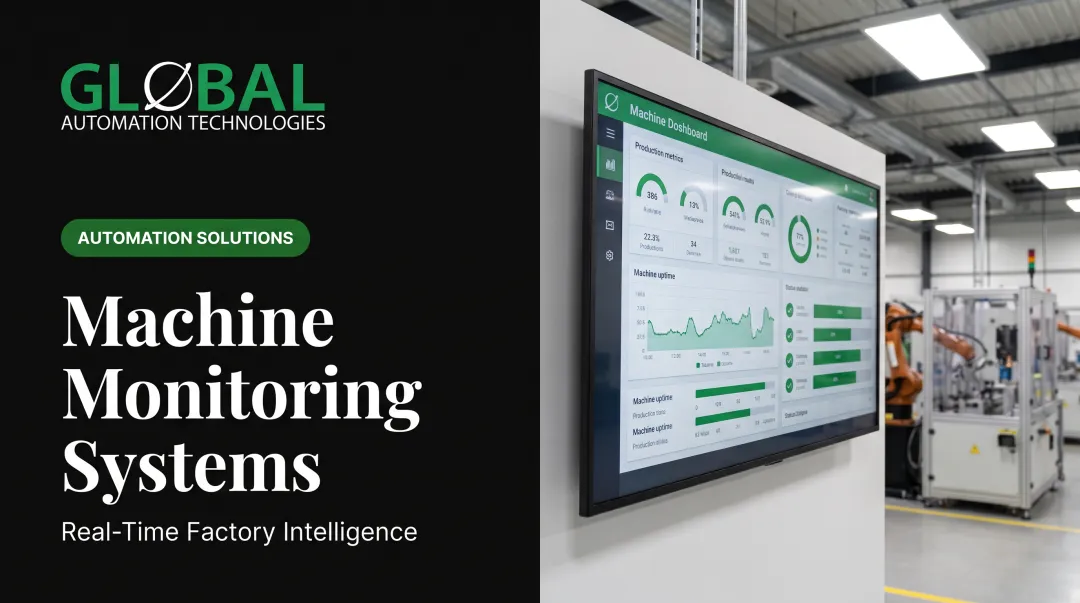
Real-time production line monitoring means continuously capturing and visualizing machine, process, and quality data as events unfold — not in a batch report pulled at 6 a.m. It's a step beyond traditional machine monitoring, which typically tracks the health of a single piece of equipment.
Production-level monitoring aggregates that data across machines, cells, shifts, and operators, giving plant managers a live view of OEE, throughput, and downtime across the whole line. As manufacturers add more automated cells, this cross-machine visibility becomes essential.
The gap is still wide, though. 70% of manufacturers still enter production data manually, according to the Manufacturing Leadership Council, and mixed fleets of old and new equipment make standardizing that data even harder.
Unplanned downtime compounds the problem. ABB's survey of 3,600 manufacturing decision-makers found 76% estimate downtime can cost up to $500,000 per hour.
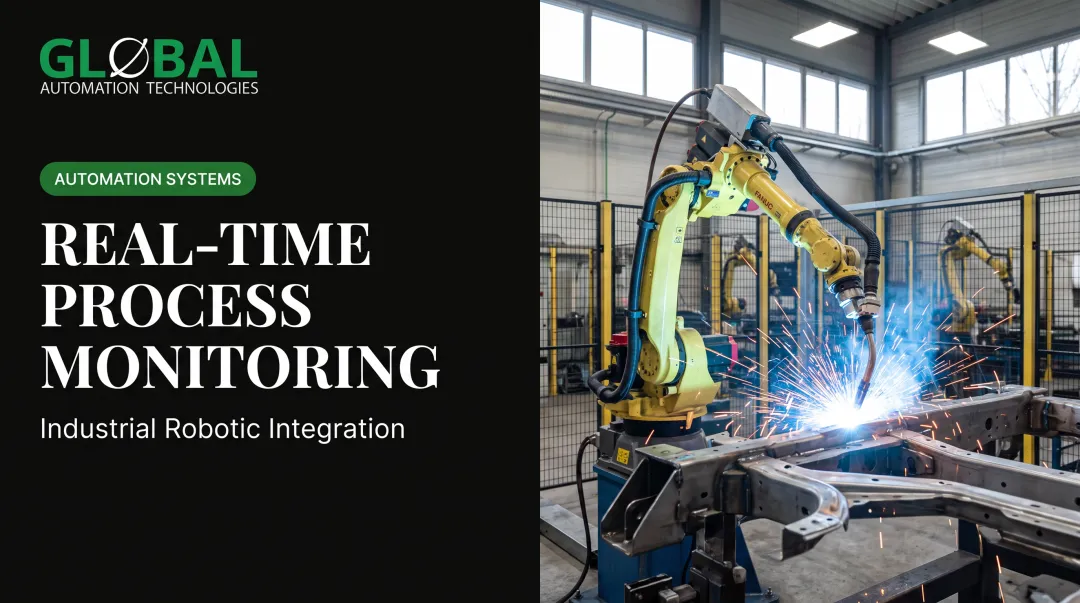
Even in highly automated cells, monitoring doesn't stop at the robot controller. Multiple signals layer together to catch defects before they move downstream:
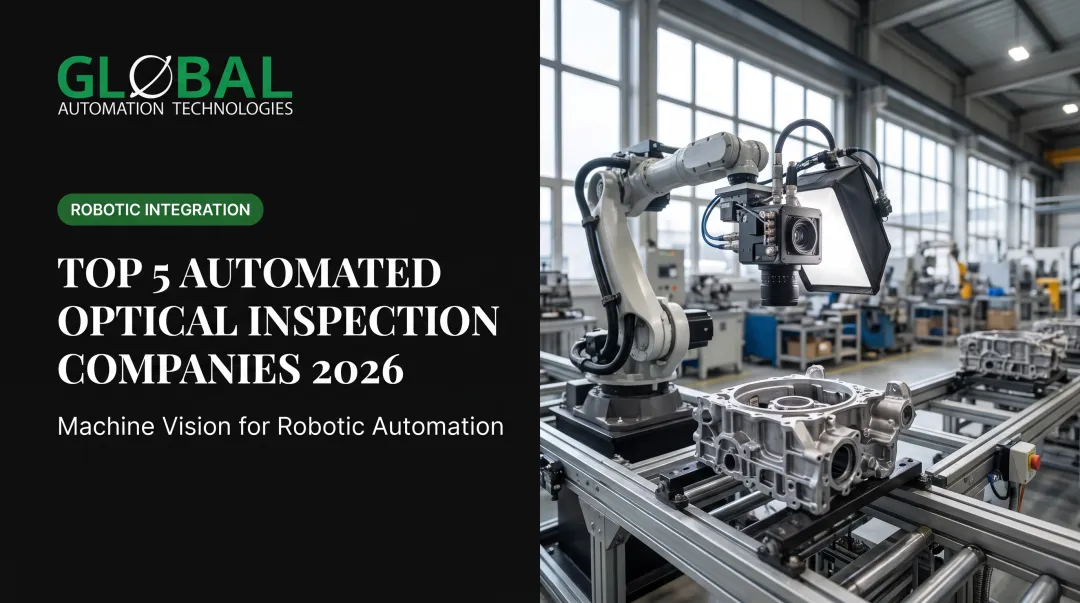
- Vision inspection verifies bead width, placement, and continuity in real time
- Flow sensors flag material issues before parts leave the station
- Predictive maintenance signals surface equipment risk before unplanned stops

Integrators like GLOBAL Automation Technologies, which holds Level 5 status in FANUC’s Authorized System Integrator program, build these checks into robotic dispensing and machine-tending systems, so an off-spec part never reaches the next station.
Here's how the top monitoring platforms stack up for 2026.
Top 5 Real-Time Production Line Monitoring Systems for 2026
These five platforms were shortlisted based on live data visibility, integration flexibility, scalability across multiple lines, and demonstrated adoption across manufacturing sectors.
MachineMetrics
MachineMetrics is an IIoT platform built for machine data collection and shop-floor analytics, with deep roots in discrete and CNC-heavy manufacturing.
Its edge devices plug directly into legacy controls using MTConnect, OPC-UA, Modbus, and proprietary connectors for brands like FANUC, Haas, and Siemens Sinumerik. That means older machines without native connectivity can still feed live data into the platform. The AI-driven downtime categorization automatically tags Pareto reasons by shift, cell, and operator, cutting out manual logging.
| Attribute | Details |
|---|---|
| Key Features | Edge device connectivity, automated downtime tagging, real-time OEE dashboards |
| Best For | CNC-heavy and discrete manufacturers needing fast legacy machine integration |
| Deployment Model | Cloud-based SaaS with edge hardware sensors |
Tulip
Tulip is a no-code frontline operations platform that blends human and machine data on the same dashboard — a gap most pure machine-monitoring tools leave open.
Operators log quality checks and process steps directly into configurable apps, while IoT gateways pull in machine data automatically. Manufacturers build and adjust dashboards without pulling IT into every change, which speeds up rollout on the floor.
| Attribute | Details |
|---|---|
| Key Features | No-code app builder, IoT device integration, real-time visual dashboards |
| Best For | Manufacturers wanting to blend operator input with machine data quickly |
| Deployment Model | Cloud/on-prem hybrid with app-based configuration |
Matics
Matics is a manufacturing-intelligence platform used across automotive, food and beverage, and personal care production lines, built around role-specific visibility.
Managers, operators, and QC teams each get dashboards tailored to what they actually need to act on — a plant manager sees factory-wide KPIs, while a technician gets machine-level alerts. Matics also connects modern equipment alongside analog machines and manual processes, which matters for facilities that haven't fully digitized every line.
| Attribute | Details |
|---|---|
| Key Features | Role-specific dashboards, live OEE tracking, machine and line-level alerts |
| Best For | Multi-line facilities needing persona-based visibility across roles |
| Deployment Model | Cloud-based subscription model |
42Q (Sanmina)
42Q is a cloud-based MES platform developed by Sanmina, built on more than 30 years of Sanmina manufacturing experience.
Its Global Ops Live module aggregates KPIs across multiple plants on a geographic map, which helps enterprise teams spot underperforming sites fast. The platform's AI agent, Arthur, surfaces insights without requiring a data analyst on staff. For regulated industries, 42Q documents full product genealogy and supports 21 CFR Part 11, EU MDR, and ISO 13485 traceability requirements.
| Attribute | Details |
|---|---|
| Key Features | Live dashboards, automated alerts, multi-plant visualization, AI-assisted insights |
| Best For | Enterprises needing multi-site visibility and regulatory traceability |
| Deployment Model | Cloud-native MES, subscription-based |
FreePoint Technologies (Factory MRI)
FreePoint Technologies is a Canadian provider of the Factory MRI system, built to retrofit older equipment without a full replacement.
Hardware-agnostic sensors connect to machines regardless of age, brand, or existing controls. Reporting focuses heavily on downtime root-cause analysis, which is exactly what shops with a mix of decades-old and newer equipment need most.
| Attribute | Details |
|---|---|
| Key Features | Retrofit sensor kits, downtime root-cause reporting, live production dashboards |
| Best For | Manufacturers with older, non-networked equipment needing fast retrofits |
| Deployment Model | On-prem hardware with cloud reporting layer |

How We Chose the Best Systems
Buyers make the same mistakes over and over: picking a platform based on brand recognition alone, or assuming their newest machines will be the hardest part of the integration. In reality, it's usually the 15-year-old stamping press or CNC that trips up a rollout.
We weighted four factors:
- Live data accuracy — does the platform capture events as they happen, or does it rely on periodic polling that introduces lag?
- Integration flexibility — can it connect to existing ERP/MES systems and legacy PLCs without a forklift upgrade?
- Scalability — does it work for a single pilot line today and a multi-plant rollout later?
- Demonstrated outcomes — is there evidence tying the platform to real downtime reduction or throughput gains, not just feature lists?
That integration focus matches LNS Research guidance favoring service-oriented, API-driven MES foundations over rigid custom builds. Flexibility now avoids a costly rebuild later.
Conclusion
The right monitoring system depends on what's already running on your floor: line complexity, legacy equipment, and where you plan to grow. A platform built for CNC shops won't necessarily fit a multi-plant regulated environment, and vice versa.
Start with one pilot line. Measure downtime and throughput for a few weeks, then decide whether to scale plant-wide.
If you're planning new robotic cells or a production line upgrade alongside a monitoring rollout, GLOBAL Automation Technologies builds real-time vision inspection and AI-assisted health monitoring into its turnkey robotic dispensing and machine-tending systems. Quality checks and predictive alerts ship as part of the cell from day one, not bolted on later.
Reach the team at info@globalat.com or +1 (810) 877-0329 to talk through a project.
Frequently Asked Questions
What is an example of a real-time monitoring system?
MachineMetrics, Tulip, and 42Q are all examples. Each captures live machine or line data (status, downtime, quality) and pushes it into dashboards and alerts operators can act on immediately.
What is a production monitoring system?
A production monitoring system is software that tracks output, quality, and machine status across a full line or facility in real time, not just a single piece of equipment.
How does real-time monitoring work?
Sensors and machine controllers capture data continuously, which gets transmitted through edge devices or gateways to a central cloud platform. Dashboards then visualize that data and trigger automated alerts when something drifts out of spec.
What is the difference between machine monitoring and production monitoring?
Machine monitoring tracks the health and status of one piece of equipment. Production monitoring aggregates data across the entire line (multiple machines, operators, and shifts) for full output and quality visibility.
How much does a real-time production monitoring system typically cost?
Pricing varies by deployment size, sensor hardware, and subscription tier. Tulip, for example, starts around $100 per interface monthly. Run a pilot on one line first to validate ROI before scaling across the plant.
Can real-time monitoring systems integrate with legacy manufacturing equipment?
Yes. Most modern platforms use IoT gateways, edge sensors, or protocol adapters like OPC-UA and Modbus to pull data from older machines without replacing them entirely.