
Flexible automation solves this problem. These are systems — usually robots plus supporting hardware — that can be reprogrammed to handle multiple tasks or product variants without ripping out tooling or shutting down for weeks.
This article covers real flexible automation examples across industries, how it differs from fixed and programmable automation, and what to look for in an integration partner.
Key Takeaways
- Reprogrammable robots and central controls let you switch products or tasks in minutes, not hours
- Typical cells cover machine tending, welding, painting/dispensing, palletizing, and material handling
- Faster changeovers and stronger ROI suit low-to-mid volume production better than fixed automation
- The right integration partner matters as much as the robot and tooling you choose
What Is Flexible Automation?
Flexible automation refers to programmable, reconfigurable systems that shift between operations through software or controller changes, not physical retooling. Under ISO 8373:2021, an industrial robot must be automatically controlled, reprogrammable, and multipurpose across three or more axes — that's the technical baseline for flexibility.
But reprogrammability alone doesn't make a whole system flexible. A robot with dedicated fixtures and single-purpose tooling can still function like fixed automation. True flexibility depends on the whole cell: adaptable tooling, sensors, material flow, and controls working together.
Here's how the three types compare:
| Type | Flexibility | Best fit |
|---|---|---|
| Fixed automation | Low — one dedicated task | Very high volume, no variety |
| Programmable automation | Moderate — new program per batch | Batch production, planned changeovers |
| Flexible automation | High — variants run with minimal changeover | Mixed models, shifting demand |

Core Components of a Flexible System
Every flexible automation cell includes:
- Part-processing machines (welders, paint guns, dispensers)
- Material-handling systems (conveyors, grippers, vision-guided transfer)
- Central controller coordinating the sequence
- Human oversight for programming, maintenance, and exception handling
Flexible Automation Examples Across Industries
This is where flexible automation earns its keep. Below are the applications showing up most often on real production floors.
Automotive Assembly and Welding
Automotive remains the single largest adopter of industrial robots. The US installed 13,500 automotive robots in 2025 alone, according to the International Federation of Robotics.
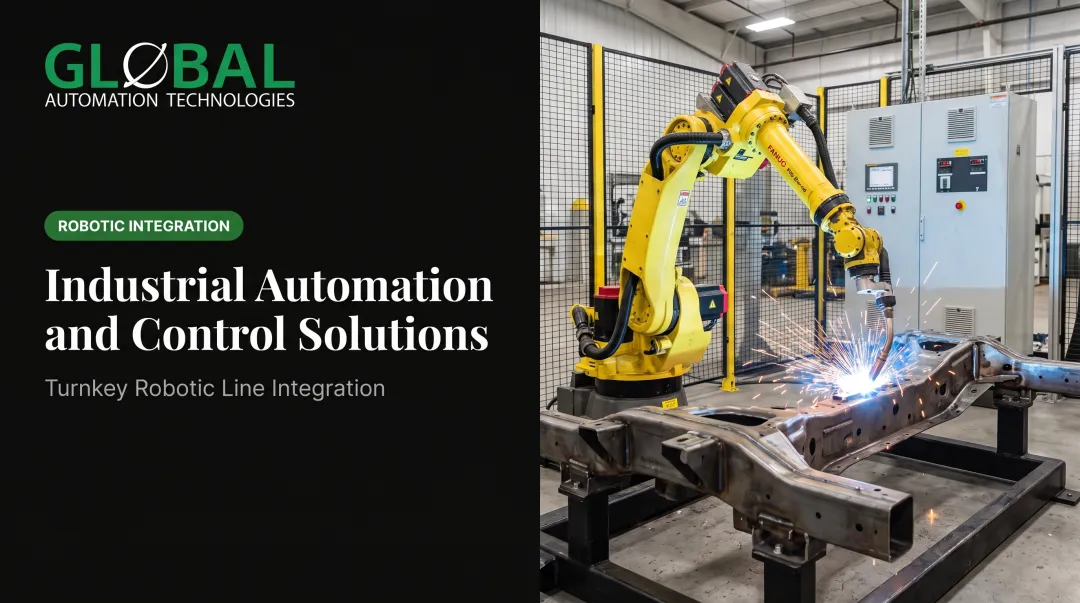
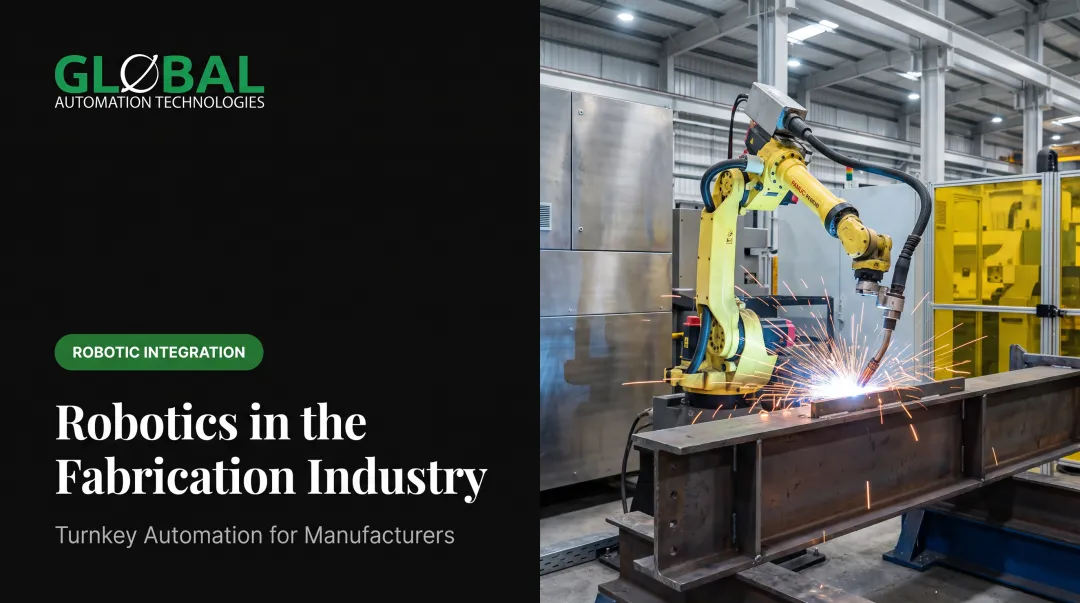
Robotic arms get reprogrammed to weld different body panels, install windshields, or mount wheels across multiple vehicle trims on a single line. No dedicated line per model is needed.
Robotic Machine Tending
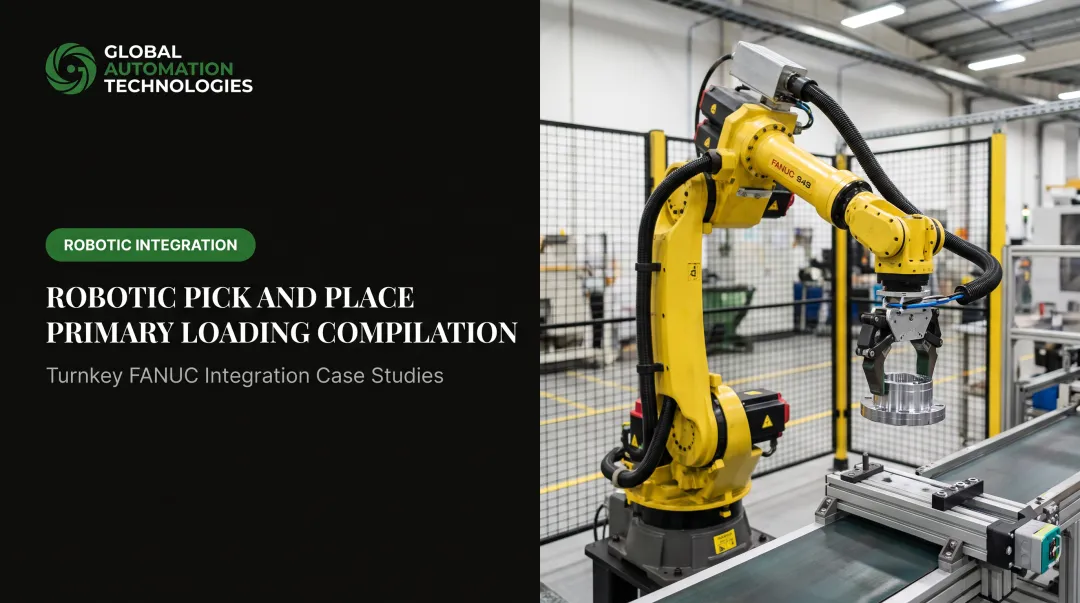
Robots load and unload CNC machines and presses across different part types without a human standing at the door all shift. GLOBAL's machine-tending cells typically pay for themselves in 12 to 18 months, driven by two things: more parts produced per shift with less direct labor, and unattended operation through breaks, shift changes, and overnight runs.
In multi-machine cells, one robot can serve two, three, or more machines. Scheduling, buffer stations, and part tracking keep each spindle running as close to continuous as possible.
Robotic Painting and Dispensing
Painting systems switch colors and parts while holding tight tolerances. GLOBAL's systems, for example, hold film build within specification. Robotic application also removes operators from spray booths entirely, cutting exposure to isocyanates, VOCs, and overspray particulates.
For dispensing and sealing, real-time bead quality validation combines vision inspection with flow monitoring to catch:
- Missed bead paths
- Thin or voided beads
- Over-application
Catching these at the dispensing station, before the part moves downstream, prevents scrap and rework.

Material Handling and Palletizing
Robots adapt to different box and pallet configurations in warehouses and end-of-line packaging. OSHA lists material handling and packaging among the most common industrial robot applications, largely because it's repetitive, physically demanding work well-suited to automation.
Heavy Equipment and Data Center Infrastructure
Flexible cells handle large, varied components such as server racks, electrical enclosures, and commercial vehicle parts. Robotic assembly systems here typically combine:
- Component handling and insertion
- Fastening and torque recording
- Testing and traceability
- Vision-based inspection
The same multi-machine scheduling logic used in machine tending applies directly to these larger, bulkier parts.
Electronics and Precision Assembly
Electrical and electronics manufacturing accounted for roughly 3,000 US robot installations in 2025 per IFR data. Reprogrammable robots handle soldering, inspection, and component placement, switching between product designs as orders change.
Benefits of Flexible Automation
Flexible automation pays off in ways plant teams feel on the floor and on the P&L:
- Runs multiple product variants on one line instead of dedicated equipment per SKU
- Absorbs design changes and demand shifts without long retooling downtime
- Catches defects in real time with sensors and vision, before parts move downstream
- Keeps operators out of hazardous work like spray painting and heavy lifting
One documented case: a NIST-supported machine tending project reported $10,000 in cost savings on a $55,000 investment, with workers reassigned to higher-value tasks rather than cut (NIST MEP). That's a single project, not a universal benchmark, but it shows the pattern.

Challenges to Consider Before Implementing
Flexible automation isn't a plug-and-play upgrade. Before committing, weigh these factors:
- Higher upfront investment than fixed automation — programming, sensors, and controls all add cost
- System complexity requiring skilled engineers for programming, integration, and ongoing maintenance
- Workforce retraining to shift teams from manual or fixed processes into flexible operations
The skills gap is real. US manufacturing may need up to 3.8 million additional workers between 2024 and 2033, according to the Manufacturing Institute and Deloitte. Staffing gaps often become as big a bottleneck as the equipment itself.
How to Choose the Right Flexible Automation Partner
Not every integrator can deliver the same depth. Look for these qualities:
- Full turnkey capability: layout, design, build, programming, validation, installation, and ongoing support, rather than piecing together multiple vendors
- AI-assisted simulation: programs get tested and optimized virtually before touching the production floor, cutting programming time from weeks to days and reducing startup surprises
- Combined engineering and staffing: GLOBAL Automation Technologies, a Level 5 FANUC Authorized System Integrator, pairs automation solutions, services and technical staffing under one roof. One call gets you the system and the engineers to run it, which helps automotive, Tier 1, and heavy industry plants juggling equipment needs and staffing shortages
- Cross-industry experience: a welding fix developed for automotive can often transform an aerospace or heavy-equipment line. Partners who've worked across sectors bring solutions a single-vertical specialist won't
Frequently Asked Questions
What do you mean by flexible automation?
Flexible automation means reprogrammable, reconfigurable systems that switch tasks or products with little or no downtime. Changeovers happen mainly through software, tooling, and controls—not a full line rebuild.
What are the three types of automation?
Fixed automation handles one dedicated task with little adaptability. Programmable automation changes through new programs but needs setup time between batches. Flexible automation runs multiple variants with minimal changeover.
What is an example of flexible manufacturing?
An automotive line where robots switch welding programs across vehicle models through software changes, so one cell handles multiple trims or body styles without a dedicated line per model.
How much does flexible automation cost compared to fixed automation?
Flexible automation usually costs more upfront because of programming, sensors, and controls. For mixed-model or lower-volume work, that investment often pays back through less changeover downtime and better asset utilization.
Which industries benefit most from flexible automation?
Automotive, heavy equipment, data center infrastructure, and general industrial manufacturing see the strongest returns. These sectors deal with frequent product variation and shifting demand.
How long does it take to implement a flexible automation system?
Scope and cell complexity set the timeline. Integrators that validate robot programs with AI-assisted simulation before install cut on-site debugging and bring systems online faster than program-at-the-robot builds.