
Introduction
Most manufacturers and enterprises aren't running 10 or 20 software systems anymore. They're running hundreds. Add robots, PLCs, and SCADA systems on the plant floor, and the integration challenge multiplies fast.
Many teams struggle with the same pain points:
- Manual data re-entry between platforms
- Siloed departments that can't see each other's data
- Production systems that never talk to the ERP upstairs
The result is wasted labor hours and costly errors that ripple through operations.
Automation integration tools solve this by connecting systems, software, and hardware so information and workflows move automatically.
This guide covers 30+ tools across iPaaS, RPA, ETL, API management, low-code automation, and industrial/manufacturing integration platforms—plus how to pick the right one for your environment.
Key Takeaways
- Automation integration tools connect software and plant systems so data and workflows move without manual handoffs
- Options span iPaaS, low-code/no-code, RPA, ETL, API management, and industrial integration platforms
- Pick tools for connector coverage, scalability, and security fit—not brand name
- Manufacturers need integration that reaches robots, PLCs, and MES, a gap most software-only lists miss
Overview of Automation Integration Tools in 2026
Automation integration means connecting software, hardware, and business systems so they exchange data and trigger actions automatically, without someone copying and pasting between screens.
The average enterprise now manages 897 applications, but only 29% of them are actually integrated, according to the 2025 MuleSoft Connectivity Benchmark Report. That gap is exactly what integration tools exist to close.
The same pressure shows up in spend: the global iPaaS market is projected to hit $15.9 billion in 2026, climbing toward $55.5 billion by 2033.
Growth spans two different operating environments under the "automation integration" label:
- IT/SaaS integration — connecting CRMs, ITSM tools, and ERPs
- Industrial/OT integration — connecting robots, PLCs, SCADA, and MES systems
Plant-floor and back-office stacks both need reliable connections, and both are covered below.
Types of Automation Integration Tools
Six categories dominate the 2026 landscape:
- iPaaS/middleware — cloud platforms linking enterprise apps
- Low-code/no-code automation — simple, trigger-based workflow builders
- RPA — bots that mimic human clicks and keystrokes
- Data/ETL integration — tools that move and transform data for analytics
- API management — platforms that secure and monitor API traffic
- Industrial automation integration — software connecting robots, PLCs, and plant systems
The list below groups 30+ tools into these six buckets, so you can jump straight to the category that matches your problem.

30+ Best Automation Integration Tools to Try in 2026
Every tool below was weighed against connector or device coverage, ease of deployment, security posture, scalability, and real-world adoption.
iPaaS & Enterprise Integration Platforms
These cloud-based platforms connect enterprise apps using pre-built connectors. They're built for complex, bidirectional workflows that span multiple companies and systems, not simple point-to-point tasks.
| Tool | Best For | Key Differentiator |
|---|---|---|
| Workato | Governing enterprise AI and automated workflows | Production-grade governance and execution controls |
| MuleSoft Anypoint | Enterprise integration, Customer 360, hybrid cloud | Library of 1,500+ pre-built connectors |
| Dell Boomi | Managing enterprise API complexity | Generates OpenAPI specs from natural language |
| Jitterbit | Low-code integration at enterprise scale | AI assistants build connectors and map data |
| ONEiO | Managed integrations for IT and MSP teams | Fully managed integration lifecycle |
| Exalate | Cross-company, cross-system sync | Real-time two-way sync with custom scripting |
| Azure Integration Services | Business-process automation, legacy modernization | 1,400+ prebuilt connectors with AI built in |
No-Code / Low-Code Automation & Workflow Tools
These tools let non-technical users build trigger-based automations without writing code. They're ideal for SMBs and departmental workflows that don't need enterprise-grade complexity.
| Tool | Best For | Pricing Model |
|---|---|---|
| Zapier | Teams building multi-step app workflows | Free through Enterprise, plan plus task usage |
| Make (Integromat) | Visual workflows connecting apps and AI | Free through Enterprise, credit-based |
| n8n | Teams running production workflows | Tiered by monthly workflow executions |
| Tray.io | Departmental to enterprise integrations | Usage and feature-based custom quotes |
| Power Automate | Low-code cloud flows and hosted automation | Per-user Premium; per-bot Process plans |
| Pabbly Connect | App-to-app data sync for small businesses | Flat monthly task allotments |
Robotic Process Automation (RPA) Platforms
RPA bots mimic human actions like clicking, typing, and copying to automate repetitive, rule-based tasks. They shine on legacy systems that don't have modern APIs to connect through.
| Platform | Best For | Key Feature |
|---|---|---|
| UiPath | Enterprise workflows across AI, bots, and staff | Scales from one user to thousands via cloud studios |
| Automation Anywhere | Streamlining repetitive cross-industry processes | AI/ML output can trigger downstream process actions |
| SS&C Blue Prism | Enterprise digital workforce management | No-code Design Studio with reusable objects |
| Power Automate RPA | Automating desktop apps and legacy websites | Built-in governance and org-wide monitoring |
| WorkFusion | AML, KYC, and compliance-heavy workflows | AI agents produce regulator-ready decision logs |
Data Integration & ETL/ELT Platforms
These platforms move, transform, and consolidate data across databases and warehouses, feeding the analytics and reporting layer that business teams depend on.
| Platform | Best For | Key Feature |
|---|---|---|
| Domo | Unifying cloud-warehouse data for analytics | Connects 1,000+ sources; no-code MagicETL |
| Fivetran | Fully managed data movement for analytics/AI | Managed lake service writes Iceberg and Delta formats |
| Informatica | Enterprise ingestion and cleansing at scale | CLAIRE AI recommends datasets and transformations |
| Talend Data Fabric | Unified integration, quality, and governance | Single platform spans ingestion through compliance |
| Airbyte | Extensible replication into lakes and warehouses | 600+ sources plus open-source connector builder |
| Matillion | Centralized pipeline management at scale | 150+ connectors and a no-code REST API builder |
API Management & Gateway Tools
APIs power most modern integrations, and these tools govern, secure, and monitor that traffic so it doesn't become a security liability.
| Platform | Best For | Key Feature |
|---|---|---|
| Google Apigee | High-volume APIs needing enterprise security | Proxy policies apply security and rate limits code-free |
| Kong Konnect | Platform teams governing API and AI traffic | Hybrid deployment with PII sanitization |
| Postman | Collaborative API development and testing | Tests HTTP, GraphQL, gRPC, MQTT, and AI APIs in one place |
| AWS API Gateway | Publishing and securing APIs at scale | Generates client SDKs across multiple languages |
| Azure API Management | Hybrid and multicloud API governance | Centralized routing, throttling, and observability |
Industrial & Manufacturing Automation Integration Tools
This is the category most software round-ups skip entirely. Manufacturers don't just need CRMs talking to ERPs. They need robots talking to PLCs, and PLCs talking to MES and ERP systems upstream.
| Tool | Best For | Key Feature |
|---|---|---|
| FANUC ROBOGUIDE | Designing and simulating robotic workcells | 64-bit engine handles large cells and detailed CAD |
| Siemens TIA Portal | System integrators and plant operators | Generative AI engineering agent inside the platform |
| Rockwell FactoryTalk Optix | HMI, visualization, and IIoT data management | Web-based design with multi-user collaboration |
| PTC Kepware | Connecting legacy OT devices to software | Combines multiple protocol drivers in one server |
| RoboDK | Offline robot programming and simulation | No-programming interface with guided program generation |
Simulation software is only half the equation, though. An experienced systems integrator matters as much as the platform—because the tool only pays off when the cell is programmed, connected, and running.
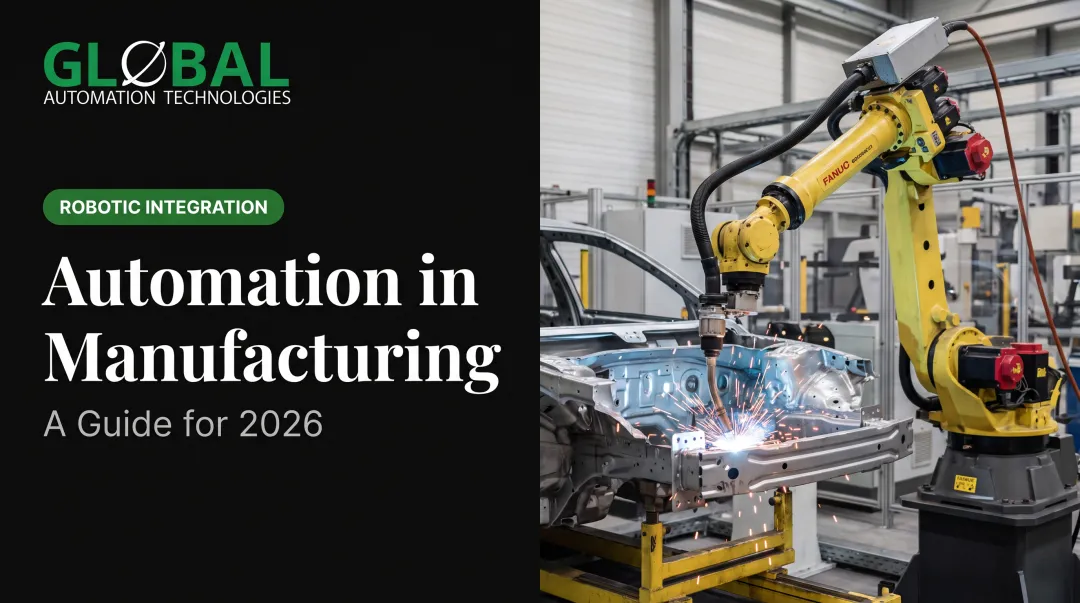
GLOBAL Automation Technologies, which holds Level 5 status in FANUC’s Authorized System Integrator program, applies AI-assisted simulation to model, test, and optimize robot programs before code hits the production floor. That front-loaded approach cuts robot programming time from weeks to days by resolving conflicts virtually instead of through trial and error on the shop floor.
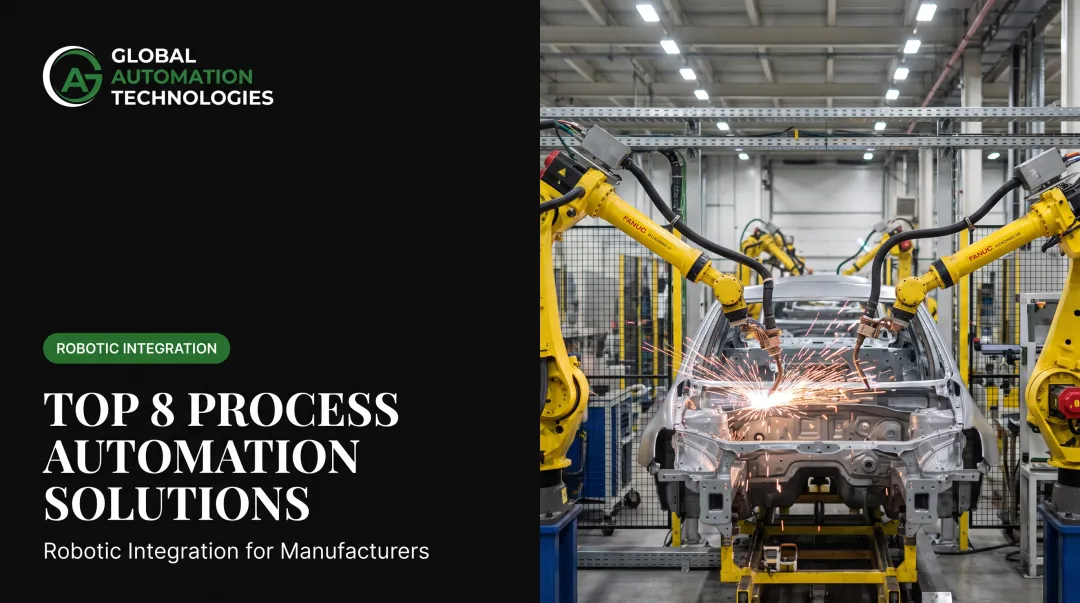
GLOBAL's turnkey robotic system integration also builds in SCADA and IoT connectivity, PLC integration, and data traceability—linking robotic cells to plant-floor MES and ERP for automotive, Tier 1, and heavy industry manufacturers.
How We Chose the Best Automation Integration Tools
Every tool on this list was evaluated the same way:
- Connector and device coverage — support for systems you already run and ones you're likely to add
- Deployment flexibility — cloud, on-premises, or hybrid options that match your IT/OT environment
- Security certifications — encryption, access controls, and compliance standards for your industry
- Real user adoption — actual deployment signals, not just marketing claims
The most common buying mistake is choosing a tool for brand recognition alone. Check whether it supports both current and near-future systems—including OT and industrial equipment if those sit in your environment.
These criteria map to real outcomes: faster deployments, fewer integration failures, and lower total cost of ownership once implementation and maintenance are included.
Conclusion
There's no single "best" automation integration tool. The right choice depends on whether your gap is IT/SaaS-focused, RPA-driven, or rooted in physical, industrial systems.
Pilot any shortlisted tool against a real use case first. Watch how it handles your actual data volume, not a demo environment. Then assess scalability and support before signing a long-term contract.
For manufacturers whose integration challenges reach beyond software into robotic systems and production lines, GLOBAL Automation Technologies delivers both the automation systems and the engineers to run them. Controls engineers, robot programmers, commissioning engineers, and more design, deploy, and maintain each project end to end.
Frequently Asked Questions
What is an automated integration?
Automated integration is the practice of connecting systems so they exchange data automatically, without manual intervention. It covers software stacks (CRMs, ERPs) and industrial systems (robots, PLCs).
What are the different types of integrations?
Common types include API integration, application integration, business process/B2B integration, and data integration. Manufacturers should also account for industrial/OT integration, which connects robots, PLCs, and SCADA systems to plant-floor software.
What is the difference between automation and integration?
Integration is the technical work of connecting systems so they can exchange data. Automation is the broader goal of removing manual work from a process, often built on top of that integration.
Are no-code tools enough for enterprise-level integration needs?
No-code tools handle simple workflows well, but at enterprise scale they often lack depth for complex data mappings and bidirectional sync, as noted in TechTarget’s no-code overview. Some integrations still need basic programming skills.
How much do automation integration tools typically cost?
Pricing ranges from free no-code tiers to enterprise iPaaS contracts at tens of thousands of dollars per year, with industrial integration projects running higher. Budget for implementation and maintenance, not just the license fee.
Can automation integration tools connect industrial or manufacturing systems with IT systems?
Yes, but generic SaaS iPaaS tools usually can't bridge PLCs, robots, and MES/ERP systems on their own. That gap typically requires specialized industrial integration platforms paired with an experienced systems integrator.