
Introduction
Most manufacturers know they need automation. Fewer know who actually builds it.
Robot manufacturers like FANUC, ABB, and Yaskawa sell the hardware. A robot arm sitting on a pallet is still just a component. Turning that component into a working, safety-compliant work cell requires mechanical design, controls engineering, programming, and coordination most in-house teams lack bandwidth for.
That's where a robotic systems integrator comes in.
This guide breaks down exactly what an integrator does, how they differ from a robot manufacturer, the specializations that matter most, and what to look for when you're ready to hire one.
Key Takeaways
- A robotic systems integrator designs and delivers a complete, application-specific work cell
- Integrators follow a structured process: audit, design, simulate, build, test, install, and support
- Most specialize by application (welding, palletizing, dispensing) and by robot brand
- RIA/A3 certification and OEM authorization are the two credibility markers worth checking
- Combined integration-plus-staffing models close both the equipment gap and the talent gap
What Is a Robotic Systems Integrator?
A robotic systems integrator is a company that designs, engineers, builds, programs, and installs a complete robotic work cell tailored to a specific manufacturing process. Integrators take responsibility for making the robot useful on your floor, from tooling through commissioning.
Robot manufacturers such as FANUC, ABB, KUKA, and Yaskawa build general-purpose hardware. That hardware needs application engineering before it can function in production, including:
- End-of-arm tooling matched to the part being handled or processed
- Safety systems: guarding, light curtains, interlocks
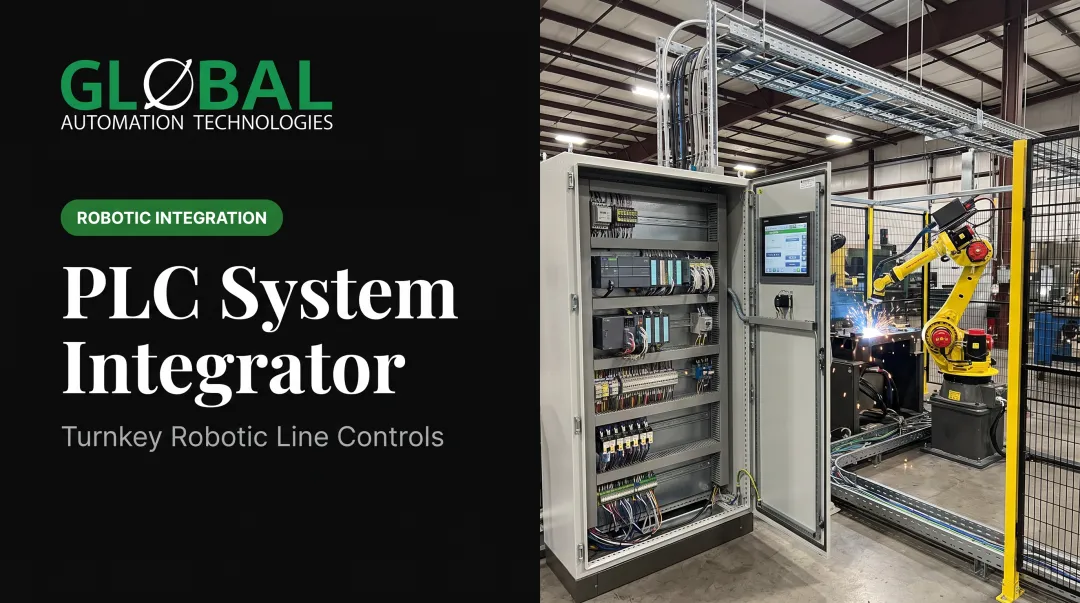
- PLC and controls integration so the robot talks to the rest of the line
- Vision systems for part location, inspection, or quality checks
An integrator's technical scope spans mechanical design, electrical and controls engineering, robot programming, and safety compliance delivered as one coordinated package rather than a pile of separate purchase orders.
Robotic Systems Integrator vs. Robot Manufacturer
The manufacturer builds and sells the robot arm. The integrator determines which robot fits your application, then builds everything around it: tooling, conveyors, sensors, and guarding.
Control Engineering describes the integrator's role as the project hub responsible for coordination, purchasing, logistics, and delivering a turnkey solution. FANUC builds a great robot. GLOBAL, as a Level 5 FANUC Authorized System Integrator, decides which FANUC robot and builds everything that surrounds it.
Robotic Integration vs. Broader Automation Integration
"Robotic integration" focuses specifically on deploying robots for a defined task. "Automation integration" is the wider discipline: coordinating robots, PLCs, software, and plant-wide control systems working together across an entire line or facility. Robotic integration is usually a subset of a broader automation integration project, not a separate category entirely.
What Does a Robotic Systems Integrator Actually Do?
An integrator's work isn't a single transaction. It follows a structured project lifecycle, and skipping steps is usually where projects go sideways.
- Process audit and ROI analysis — Engineers assess current workflow, throughput goals, and cycle times, then calculate payback period and total cost of ownership before recommending anything.
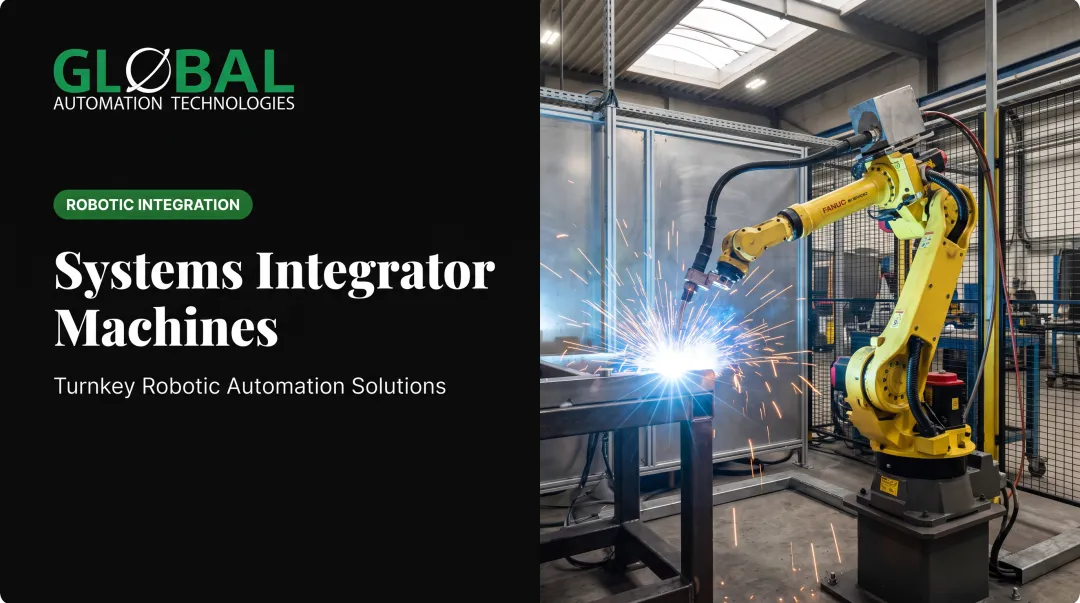
- System design and engineering — Engineers specify the robot, end-of-arm tooling, safety systems, and cell layout for the application—welding, dispensing, machine tending, or another process.
- Simulation and offline programming — Digital simulation validates robot movements, reach, and collision risk before a single piece of steel gets cut.
- Build, FAT, and installation — The integrator builds and tests the cell in-house during factory acceptance testing (FAT), then installs and commissions it on the plant floor with site acceptance testing (SAT).
- Training and ongoing support — The team trains operators and maintains the cell with preventive service so performance holds up long after go-live.

AI is compressing that timeline. Integrators like GLOBAL now use AI-assisted simulation tools that let engineers fully model and refine robot programs in a virtual environment before deployment. That's cut robot programming timelines from weeks down to days in many cases, eliminating much of the trial-and-error that used to eat up on-site commissioning time.
Ongoing support has evolved too. Rather than waiting for a breakdown, AI-driven predictive maintenance health checks flag developing issues before they cause unplanned downtime, so teams can fix problems on a planned schedule instead of during a line stop.
Types of Robotic Systems Integrators and Specializations
Most integrators specialize by application rather than trying to cover every possible use case. Specialization is how they build real process depth.
Common specializations include:
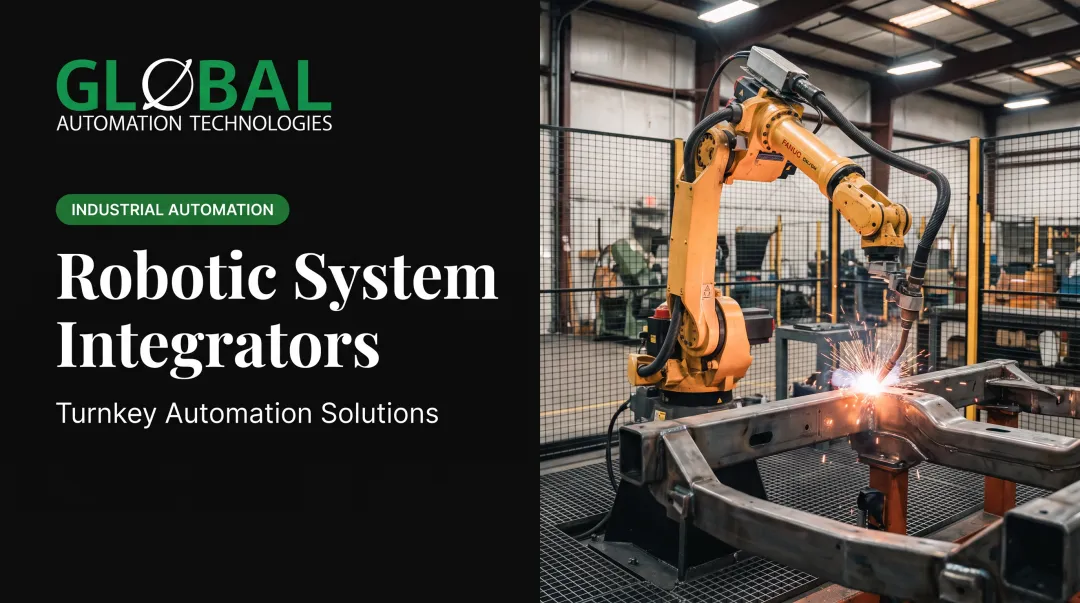
- Welding: arc welding, spot welding, and structural joining
- Machine tending: CNC loading, press tending, injection molding support
- Material handling and palletizing: pick-and-place, conveyor integration, vision-guided handling
- Dispensing and painting: sealants, adhesives, topcoat, powder coating
- Assembly and inspection: fastening, torque capture, quality verification
Integrators also tend to become authorized or certified by specific robot brands. FANUC's Authorized System Integrator (ASI) program is a common example. That designation affects which robots an integrator recommends, how quickly they get parts, and what level of manufacturer support backs the project.
A welding-focused integrator isn't automatically the right fit for a palletizing project, and vice versa. When evaluating a potential partner, ask what percentage of their completed projects match your application type. Brand experience matters, but process-specific experience matters more.
Key Benefits of Working With a Robotic Systems Integrator
The case for hiring an integrator usually comes down to three things: output, cost, and safety.
- Increased throughput and consistency: Robots maintain repeatable cycle times and quality standards that manual processes struggle to match, especially across multiple shifts where operator fatigue creeps in.
- Measurable cost savings and fast payback: Machine tending cells typically pay for themselves within 12 to 18 months through more parts per shift and fewer hours on repetitive load-unload work. Operators move into inspection and process improvement instead.
- Improved workplace safety: Integrators design cells that pull operators away from hazardous tasks such as welding fumes, paint overspray, and repetitive heavy lifting.

Those safety gains are measurable. NIOSH data shows lifting is implicated in 37-49% of compensable low-back pain cases in manual material handling, and good job design (including automation) can reduce that burden significantly.
Robotic paint and coating systems make this concrete. Removing an operator from a spray booth eliminates direct exposure to isocyanates, VOCs, and overspray particulates, all recognized occupational hazards with long-term health consequences.
How to Choose the Right Robotic Systems Integrator
Not all integrators are built the same, and the wrong choice costs more than money. Here's what actually separates a solid partner from a risky one.
- Certification. RIA/A3 Certified Robot Integrator status (est. 2012) requires an on-site audit, safety risk assessment, and key personnel review—an independent competence check, not a marketing badge.
- Robot brand authorization. Confirm authorized partner status with major manufacturers. It affects pricing, parts access, and technical support after go-live.
- Industry-specific experience. Ask for case studies and references in your sector (automotive, heavy equipment, general industrial) and application. Broad experience doesn't replace relevant experience.
- Full turnkey capability. Prefer one partner for layout, design, build, programming, validation, installation, commissioning, and training. Juggling multiple vendors invites finger-pointing when something breaks.
- Post-installation support. Confirm preventive maintenance, remote diagnostics, spare parts, and rapid troubleshooting. A strong install with no support plan is a ticking clock.
- Safety standards fluency. They should know ISO 10218, ISO 13849-1, and ANSI/A3 R15.06-2025, and explain how risk assessments fold into the final design. If they can't, keep looking.
What Makes GLOBAL Automation Technologies Different
GLOBAL Automation Technologies brings together three distinct offerings: turnkey automation solutions, engineering services, and technical staffing. That means a single call gets you both the automated system and the engineers who know how to run and maintain it.
Founded in 2009, GLOBAL has spent 17+ years turning that model into:
- A proven global base of robotic deployments across automotive OEMs, Tier 1 suppliers, and heavy industry manufacturers
- Engineers embedded directly on customer contracts, from controls to mechanical and project management
- Status as a Level 5 FANUC Authorized System Integrator, with recognition as #1 purchaser of FANUC robots among North American integrators in 2025
GLOBAL builds primarily on FANUC platforms, using AI-assisted simulation to shrink programming timelines and AI-driven predictive maintenance to catch equipment issues early. As the company puts it: "The system builder knows what the staffing client needs. The staffing team knows what the system requires."
For manufacturers who need both a working cell and the people to keep it running, that loop is the whole point. You can start with a feasibility study to see where the biggest opportunity sits on your line.
Frequently Asked Questions
What is a robotic systems integrator?
A robotic systems integrator designs, builds, and installs customized automation around a client's production process. The scope covers tooling, safety systems, programming, and installation—not just the robot itself.
What is the difference between a robot manufacturer and a robotic systems integrator?
The manufacturer (FANUC, ABB, Yaskawa) builds the robot hardware itself. The integrator engineers the full application-specific cell around that hardware, including tooling, controls, safety guarding, and programming.
How much does it cost to hire a robotic systems integrator?
Costs vary by complexity and scope. A complete robotic welding cell can range from $120,000 to $500,000 or more depending on architecture. Request a quote or ROI analysis for your process.
What certifications should I look for in a robotic systems integrator?
Look for RIA/A3 Certified Robot Integrator status, which independently audits safety and technical capability. Also check for robot-brand authorized integrator status, which confirms manufacturer-level training and support access.
How long does a typical robotic integration project take?
Timelines depend on system complexity. A single work cell is typically faster than a multi-line install, which needs deeper programming and coordination. Ask for a milestone schedule before signing.
Can a robotic systems integrator also help with engineering staffing needs?
Some integrators, including GLOBAL, combine automation solutions, services and technical staffing. Manufacturers get both the equipment and the engineers to run it from one partner instead of two vendors.